
This post may contain affiliate links. Please read my privacy policy.
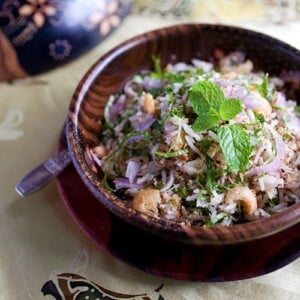
Nasi Ulam is a fragrant, herbed rice dish popular in Malaysia. This easy and authentic recipe combines steamed rice with fresh herbs, dried shrimp, and toasted coconut for a delicious and aromatic meal.
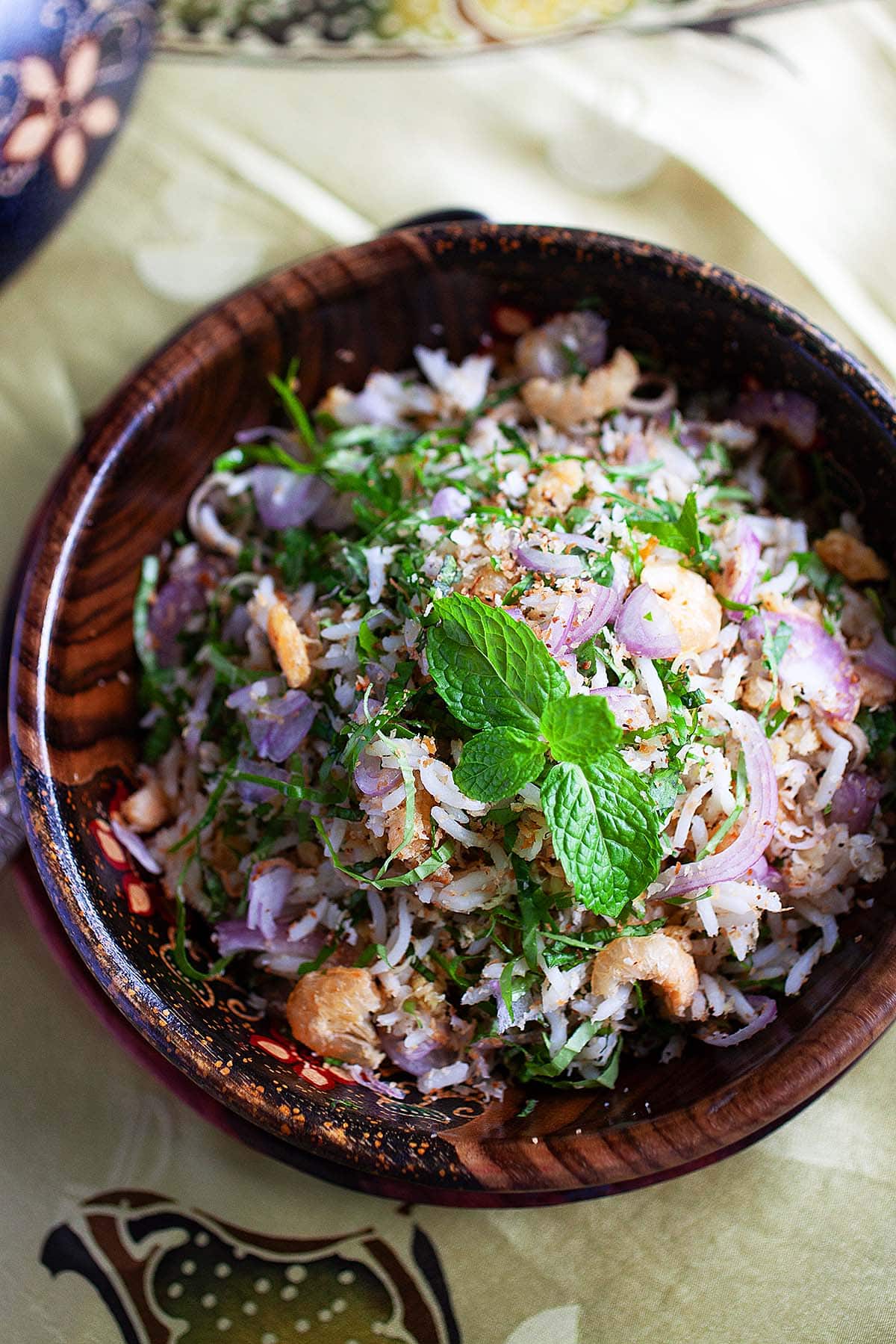
Herbed Rice
Nasi Ulam is Malaysian herbed rice, cherished by many in Malaysia, especially the Malays and the Nyonya Peranakan (Straits-born Chinese). This traditional dish is a delightful mix of steamed white rice with various local herbs, tossed with toasted coconut (kerisik), sliced shallots, lemongrass and dried shrimp. It’s a much-celebrated recipe for many Malaysians.
In Malaysia’s diverse, multi-ethnic society, consisting of Malays, Chinese, Indians, and Eurasians, nasi ulam herb rice is beloved by people from all backgrounds, regardless of race, ethnicity, religion, or origin.
The appeal of Nasi Ulam is clear: it’s incredibly delicious, aromatic, healthy, and highly appetizing. It pairs wonderfully with a side of meat or fish but can also stand alone as a complete meal.
For more easy and delicious Malaysian recipes, check out my Nasi Lemak next!
Herb Rice Recipe
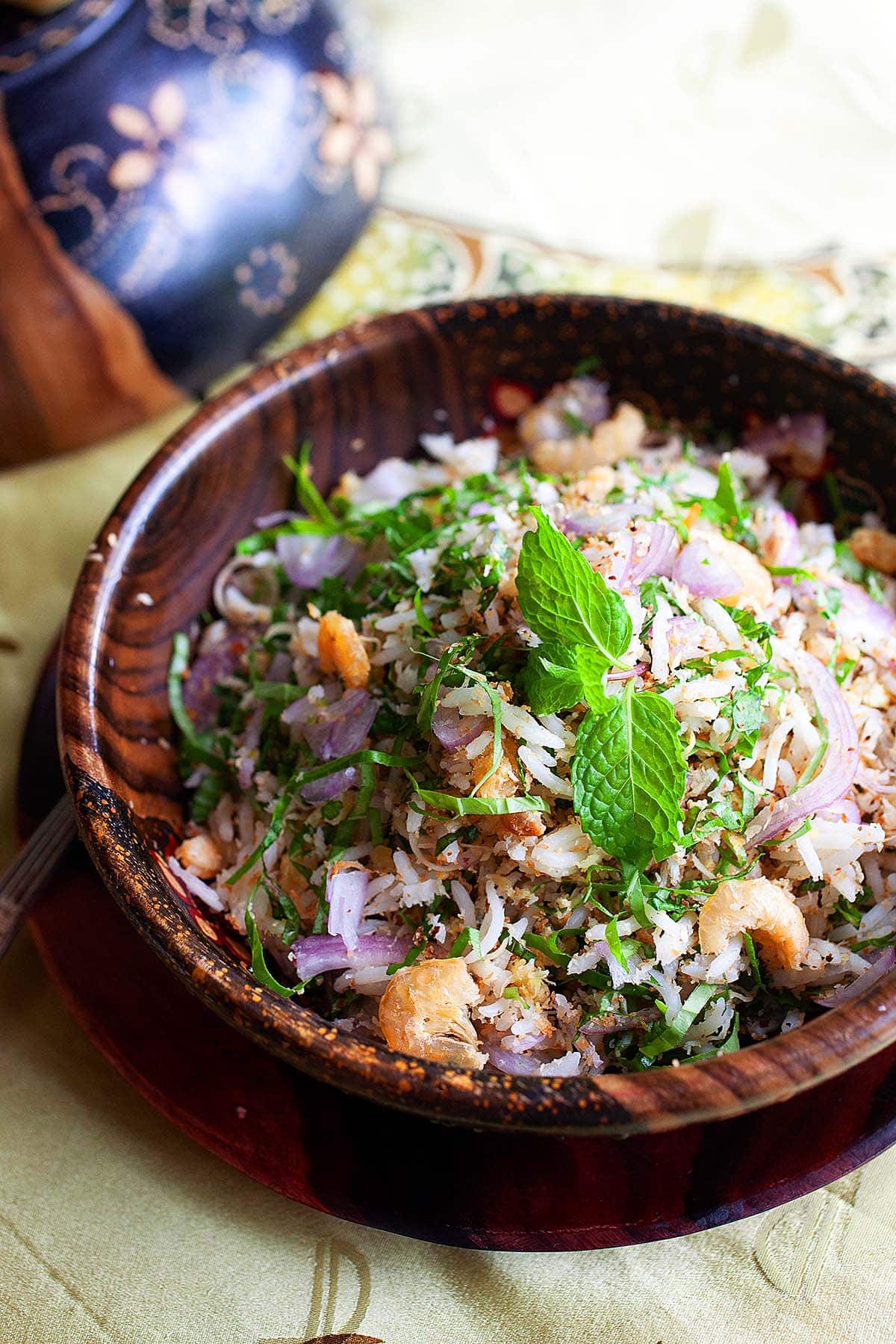
Nasi Ulam combines “nasi,” meaning rice in Malay, and “ulam,” which refers to the assortment of herbs traditionally served with meals, hence this iconic herb rice dish is named after the main ingredients.
In Malaysia, ulam is often compared to a salad and typically eaten with sambal belacan, our beloved spicy condiment.
For herbed rice recipe, the herbs are finely sliced and mixed directly into the rice along with other flavorful ingredients.
The result is a uniquely Malaysian dish that blends the exotic, earthy aromas of various herbs with dry-toasted shredded coconut (kerisik) and rice, creating a richly fragrant and deliciously satisfying meal.
Ingredients
In my childhood, I loved watching my Nyonya grandmother prepare this recipe. It was a family affair, with my mother and aunt helping her slice a variety of herbs. Here are the list of ingredients needed:
- Steamed rice
- Dried shrimp
- Toasted coconut or kerisik
- Lemongrass and shallots
- Daun kadok (wild betel leaf), daun Kesom (polygonum leaf or Vietnamese mint leaf), daun kunyit (turmeric leaf), mint leaves
- Bunga kantan (torch ginger flower)
- Kaffir lime leaf
- Bird’s eye chilis or Thai chilies, optional
Many of these herbs grew in our family garden, making it easy to gather fresh ingredients. Outside of Malaysia, some of these exotic herbs can be hard to find, so I’ve adapted my recipe to make it more accessible.
A trip to your local Asian market, especially Vietnamese or Thai grocery stores, should help you find most of the ingredients needed for this delicious dish.
How To Make Herbed Rice
Making this is not hard, but it does require some time, much like nasi lemak, Malaysia’s national dish.
However, I can assure you that the end result is rewarding, as once you have tried this, especially toying with the interplay of the different herbs in this mixed herb rice, you will be instantly converted.
Helpful Tips For Home Cooks
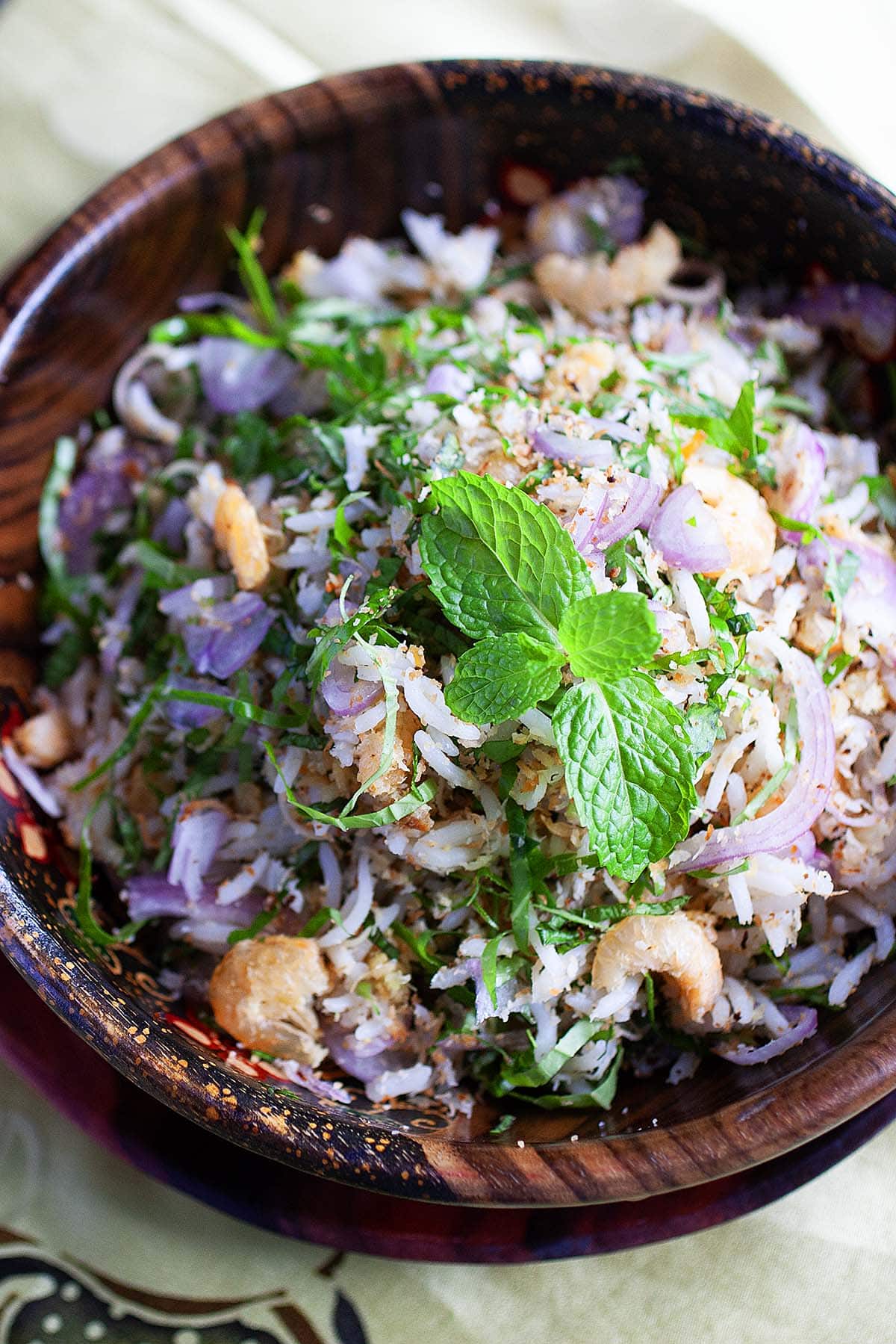
To make authentic herbed rice at home, please follow my cooking tips below:
- Herbs: Use a variety of fresh herbs to get the authentic flavor. You can experiment with different herbs based on availability.
- Coconut: If you can’t find fresh grated coconut, you can use desiccated coconut and toast it in the same way.
- Adjusting heat: Control the heat by adjusting the amount of bird’s eye chilies according to your taste.
Frequently Asked Questions
Yes, absolutely. If you can’t find specific herbs like daun kadok, daun kesom, you can skip them altogether, or use more Thai basil and mint leaves, or add cilantro as substitutes.
I use jasmine rice, but any long grain rice will be ideal. Avoid short grain rice or Calrose rise. You may use basmati rice, or even brown rice. Just make sure you don’t use rice that is sticky in texture to make herb rice.
Nasi Ulam can be spicy depending on the amount of bird’s eye chilies used. You can adjust the level of spiciness to your preference by adding more or fewer chilies. In my recipe, bird’s eyed chilies are optional.
Yes, you sure can! It can be made vegetarian or vegan by omitting the dried shrimp and substituting it with chopped peanuts for added texture and flavor. Use only plant-based ingredients to make the recipe vegetarian or vegan.
Yes! Dried anchovies or ikan bilis is a great substitute.
Just fry them on medium-low heat until crispy. You may add fried achovies as toppings, or chop them coarsely before adding to the rice.
This recipe is only 277 calories per serving.
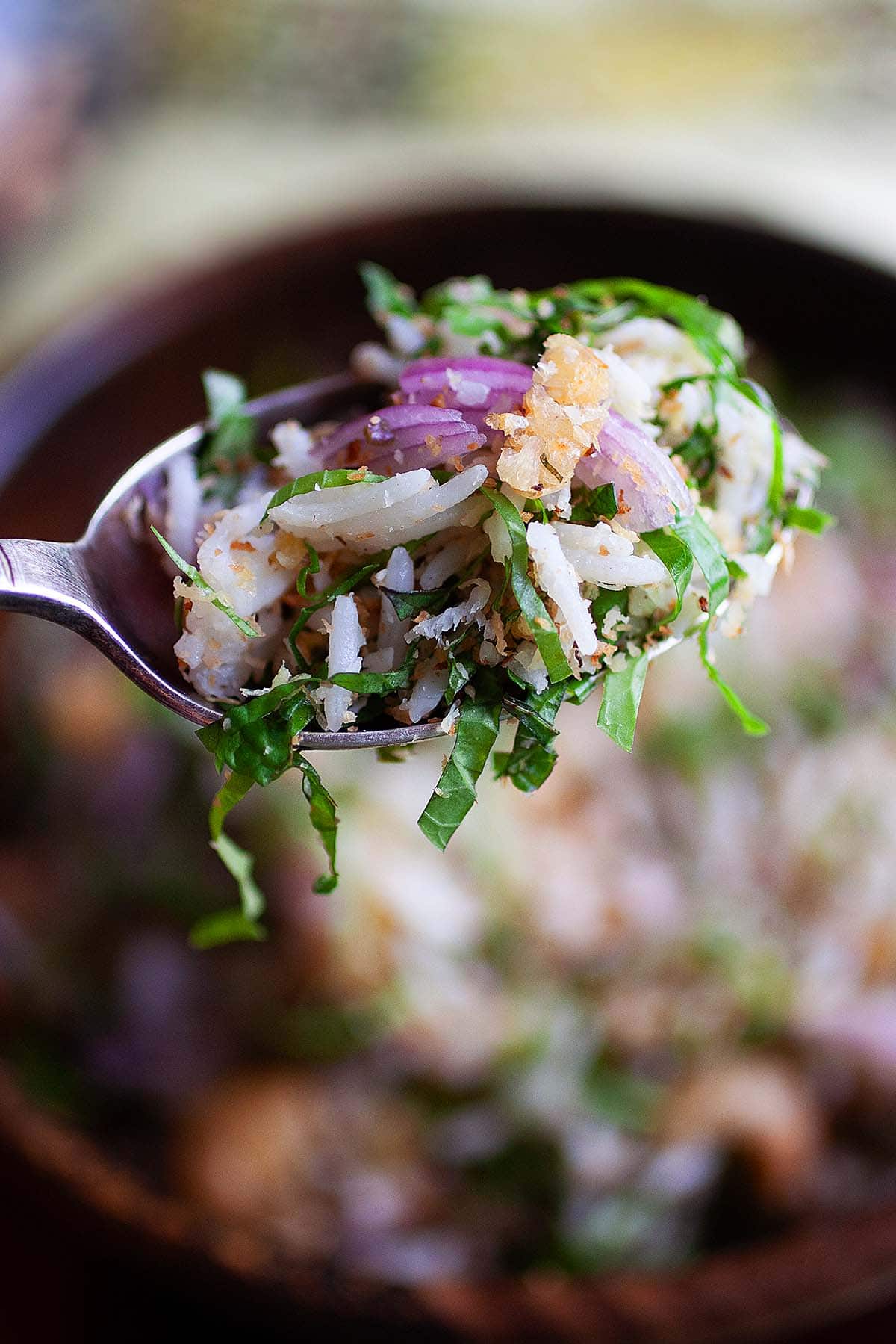
What To Serve with Nasi Ulam
For a wholesome Malaysian meal at home, I recommend the following recipes.
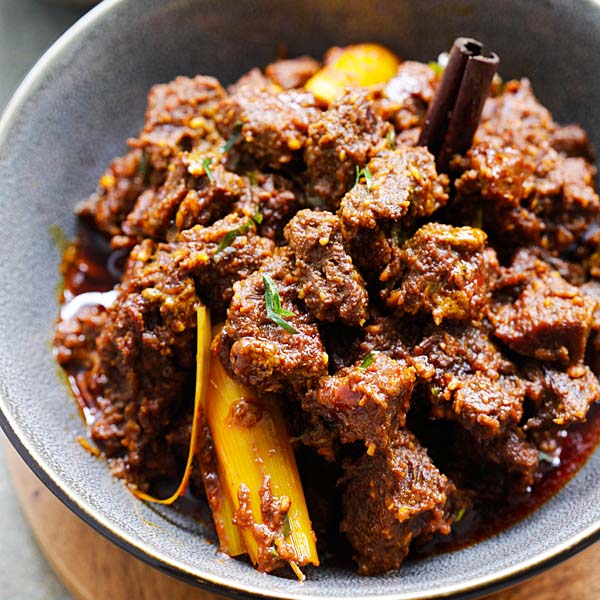
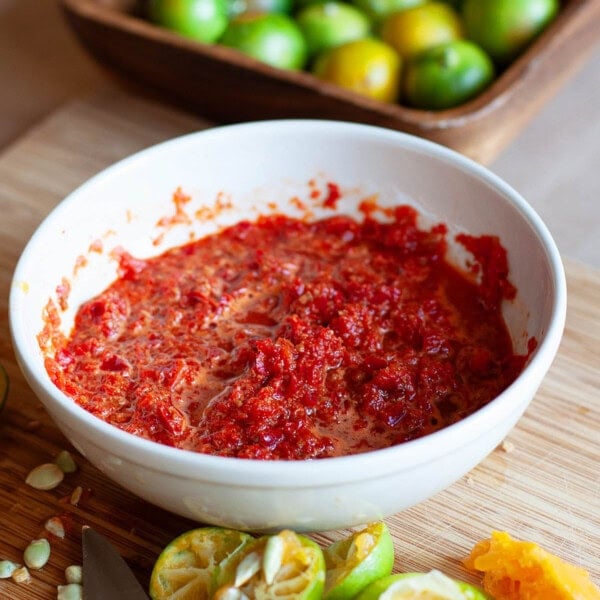
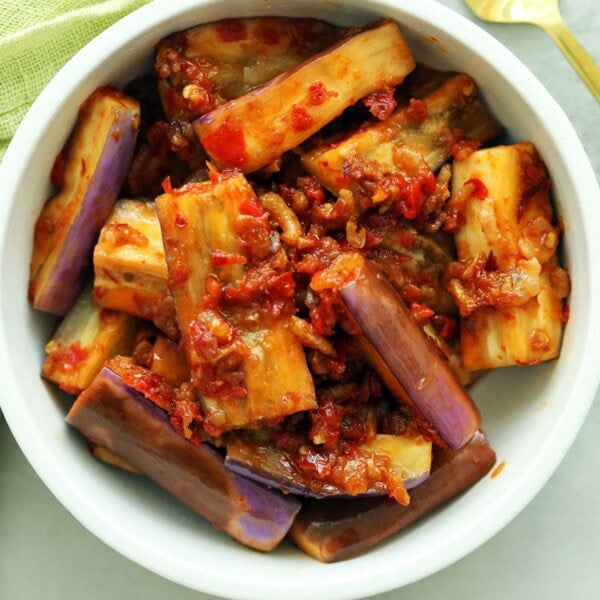
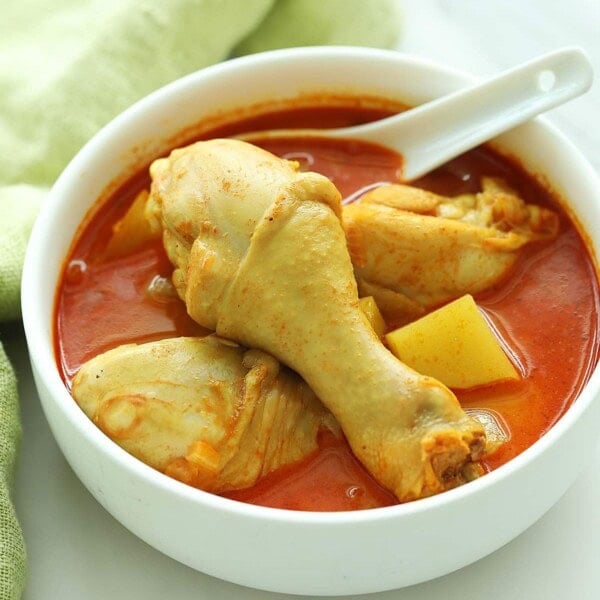
I hope you enjoy this post as much as I do. If you try my recipe, please leave a comment and consider giving it a 5-star rating. For more easy and delicious recipes, explore my Recipe Index, and stay updated by subscribing to my newsletter and following me on Facebook, Pinterest, and Instagram for new updates.
Herbed Rice Recipe (Nasi Ulam)
Ingredients
- ⅓ cup dried shrimp
- ½ cup fresh or frozen shredded coconut
- 2 cups cooked rice, chilled
- 5-6 daun kadok, wild betel leaves, finely sliced
- ¼ cup Thai basil leaves, finely sliced
- ¼ cup mint leaves, finely sliced
- ¼ cup daun kesom, polygonum leaves, finely sliced
- 3 kaffir lime leaves, finely sliced
- 5 shallots, peeled and thinly sliced
- 1 lemongrass, white part only, thinly sliced
- 1 teaspoon salt
- 1 teaspoon sugar
- 3 dashes white pepper powder
- 3 dashes black pepper powder
Instructions
- Soak the dried shrimp in warm water until softened. Coarsely pound them using a mortar and pestle. Heat a wok and dry toast the pounded shrimp until they are dry or fragrant, being careful not to burn them.
- Make the shredded coconut into kerisik by stir-frying it continuously in a wok until it turns golden brown. Transfer to the mortar and pestle and pound until fine. Set aside.
- In a large bowl, combine the cooked rice with all the herbs, shallots, toasted coconut, and dried shrimp. Add the salt, sugar, and peppers, and toss to combine well. Serve immediately.
Notes
Nutrition
Nutrition information is automatically calculated, so should only be used as an approximation.






Thanks so much for the recipe, Bee. Made it twice and it’s truly the most easy-to-follow and delicious version of the recipe available out there. Though I live in Singapore, I cannot find many of the more traditional Nyonya herbs required too these days. With your recipe, I find that it doesn’t compromise too much of the taste despite that. So thank you!
Hi..love love Nasi Ulam! Because I live in Malaysia I hv access to all the herbs.. n then some! I tint my rice blue using blue pea flower soaked in water. To take it to a whole new level..I add fish sauce instead of salt. Gives it this rich umami flavour reminiscent of khaow jam! And eating it with sambal belacan is a must!
Awesome, sounds yummy!
Hi there! May I know why you need to dry-fry the shrimp? Can I just use them once I’ve soaked and drained them?
Thank you!!
Yes you can.
There is no deep-frying and there is no fresh shrimp. You need to do the following steps to make the dried shrimp taste very good. Here is the instruction: Soak the dried shrimp in warm water until softened. Coarsely pound them using a mortar and pestle. Heat up a wok and dry toast the pounded shrimp until they are dry or smell aromatic. Do not burn the dried shrimp.
Bee,
You missed a few ingredients which are quite important! Try it and you will find a big difference as it will have better in depth flavours.
These are the ingredients!
1) Daun Kunyit
2) Kunyit (Tumeric)
3) Use Dried Salted Fish (instead of salt for better flavouring)
4) Cekur Leaves.
And to all the readers, nasi ulam is best paired with Tau Yu Bak (Black Sauce Pork Belly) and Sambal Tiger King Prawn with sambal belachan.
That’s how my family of nyonya family tree past down their recipes to their daughters and sons who love cooking.
I made this in the US and I couldn’t get all the ingredients. My late grandmother was a Nyonya too and she would grow some of the herbs in the garden. :)
Ahhhh ok. Understand now! I am glad you are part of nyonya blood yourself!
So for fellow Malaysians who are staying in Malaysia, please do follow Bee’s recipe and if you can find what I have added on top of Bee’s recipe, you will be glad that you did as it changes the flavour!
Thank you for sharing a dish which only very very few restaurants in Malaysia still practice. Glad you have revive it online!
For those who do not know, nasi ulam ingredients especially the various leaves helps to digest our digestive system much easier.
I’ve found an awesome solution. I go to my local pasar malam on Tuesdays and get it for RM5 a portion…about USD$1.20. Problem solved. Sorry, just teasing…living in Penang, Malaysia has its privileges in food. I love to have honey and spice basted chicken with my Nasi Ulam. Or if you want to go all Nyonya…
Vinegar Pork Trotter
Duck with Yam
Hong Bak
Gulai Tumis Stingray
Loh Bak (Fried Pork Spring Roll)
Ju Hu Char (Fried Cuttlefish salad)
Inche Kabin (Spiced Fried Chicken)
Hi Danny, I happen to chance your reply to Bee. Hope you see this comment. Unfortunately, we did not get the recipe my aunt used to have. Will you be able to share with me your recipe as we love it and I will like to try making it. Even though my aunt does not use tumeric but uses tumeric leaves, I thought I should still give your family recipe a try.
Bee, thanks for sharing the peranakan family heritage Nasi Ulam. Appreciate it too.
Many thanks in advance. Kim Lian
Dear Bee,
I am writing to ask a question about the Nasi Ulam. It is a lovely recipe – I know I will love it – but is the coconut dry-fried until golden or in some oil of some sort? And do I assume that the shrimps are also dry-fried? Please can you just let me know? I would be so grateful. Otherwise I might ruin the dish and waste those precious ingredients! ….
Thanks so much.
Best wishes
Ingrid
Thailand.
Hi Ingrid, yes, dry dried the coconut, no oil. The dried shrimp you can dry fried but not necessary.
Since you’re in Thailand, Fry the shredded coconut without oil until browns like the coconut used in Meng Kham.
Interesting. We have a very similar dish here in south India with peanuts instead of the shrimp, coriander and curry leaves instead of ur picks – just plain coconut rice. The satvik version has ginger and asafoetida but no shallots/garlic
Local Nasi Ulam also serves with a portion of fried peanuts.