
This post may contain affiliate links. Please read my privacy policy.
Indonesian Sate or Sate. Sate are marinated meat skewers grilled to perfection and served with peanut sauce. You can use pork or chicken to make these easy sate babi or sate ayam.
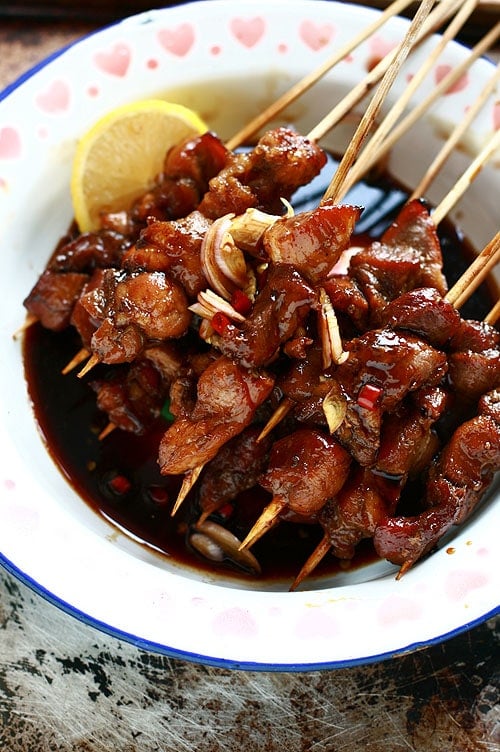
Indonesian Sate Recipe
This Indonesian sate recipe is contributed by Mochachocolata Rita.
This mouthwatering and tantalizing sate recipe calls for either pork or chicken.
If you make the sate with pork, it’s called sate babi. If you use chicken, it’s called sate ayam.
Cooking Tips On Making The Best Indonesian Sate
To make sure you have juicy, flavorful and authentic Indonesian sate, make sure you follow the cooking tips below:
- Always grill your sate sticks or skewers over charcoal fire, if you can.
- Use an oven or indoor grill if you don’t have an outdoor grill.
- DO NOT deep fry sate. It’s a culinary sin to deep fry these meat skewers.
Frequently Asked Questions
This recipe is only 645 calories per serving.
What To Serve With Indonesian Sate
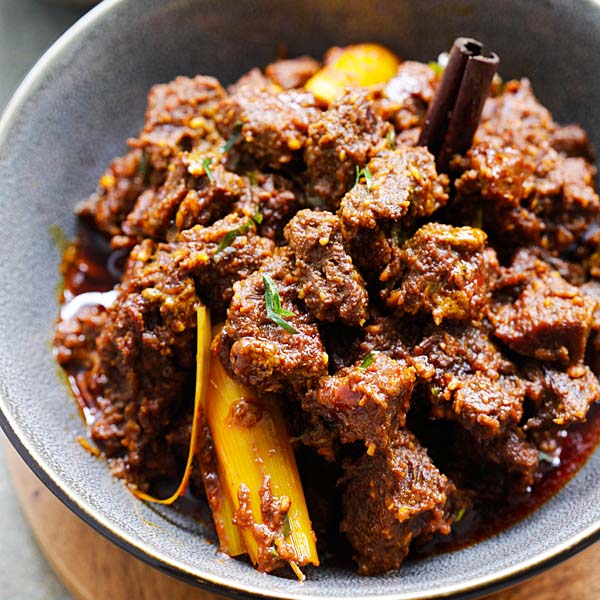
Serve this dish with other Indonesian recipes. For an authentic Indonesian meal at home, I recommend the following recipes.


I hope you enjoy this post as much as I do. If you try my recipe, please leave a comment and consider giving it a 5-star rating. For more easy and delicious recipes, explore my Recipe Index, and stay updated by subscribing to my newsletter and following me on Facebook, Pinterest, and Instagram for new updates.

Indonesian Sate
Ingredients
Sate Marinade
- 1 lb pork shoulder, or chicken meat, thigh and breast meat
- 3 dashes garlic salt
- 3 dashes paprika
- 1 dash ground white pepper
- 2 teaspoons ground coriander
- 2 teaspoons ground nutmeg
- 1 teaspoon ground cumin
- 1 teaspoon olive oil
- 2 cloves shallot, thinly sliced
- 1 teaspoon soy sauce
- ½ cup Kecap Manis, Indonesian sweet soy sauce
Basting Mixture for Grilling
- ¼ cup Kecap Manis
- 1 teaspoon fish sauce
- 1 clove shallot, thinly sliced
- 2 tablespoons fresh lime juice
Peanut Sauce
- 1 cup roasted peanuts, or bottled crunchy peanut butter
- 1 tablespoon olive oil
- 1 clove garlic
- 2 cloves shallot
- 1 teaspoon ground cumin
- 2 teaspoons ground coriander
- 3 dashes ground white pepper
- 2-3 tablespoons palm sugar , or brown sugar, to taste
- Salt, to taste
Instructions
Sate:
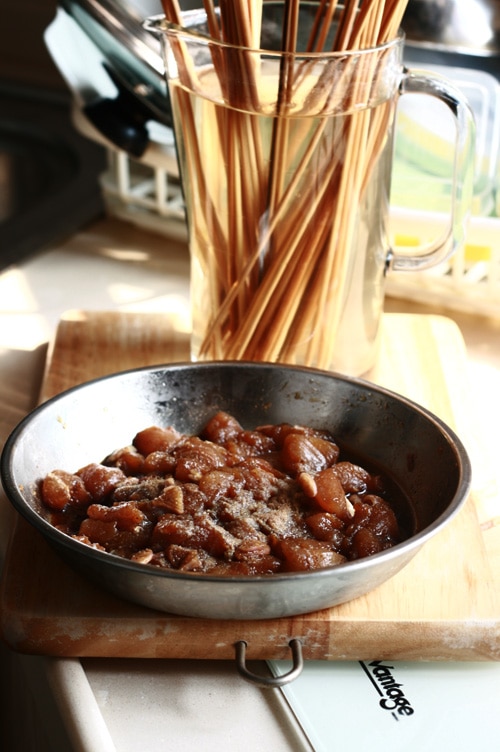
- Cut the meat into bite-sized cubes and marinate with all the satay marinade ingredients. For the best flavor, marinate for at least 2 hours, preferably overnight in the fridge.
Skewering Sate:
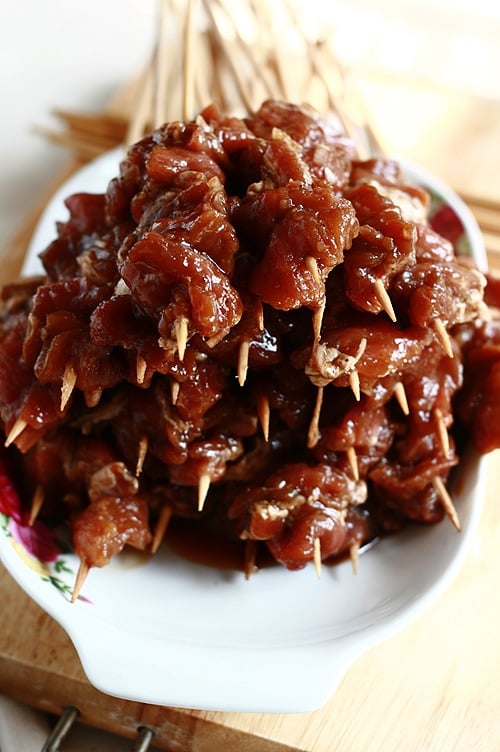
- Pre-soak the bamboo skewers in water overnight. Assemble 4-5 pieces of meat on each skewer, mixing fatty and lean meat cubes. Repeat until all the meat is used.
Grilling and Basting Sate:
- For the best results, grill the satay over a charcoal fire. While grilling, brush the basting mixture on both sides of the satay. They are done when you see charred marks on both sides.
- You can also grill the satay in a preheated oven at 200°C (392°F) by placing the skewers on a baking sheet for about 15 minutes, or until you see charred marks on the satay. Brush the basting mixture on the satay before grilling in the oven. Turn the satay over, baste the other side, and continue grilling.
Peanut Sauce:
- Process all the ingredients for the peanut sauce in a food processor until well combined.
- To serve, place the peanut sauce on a plate and add a dash of fish sauce. Drizzle generously with kecap manis and squeeze lime juice over it. Mix well. If desired, add one or two freshly chopped red chilies to the peanut sauce. Dip the satay into the sauce before eating. The satay can also be served with steamed rice or lontong (rice cakes).
Notes
Recipe Contributor: Mochachocolata Rita.
Nutrition
Nutrition information is automatically calculated, so should only be used as an approximation.






Loved this recipe, marinated the chicken overnight. Very popular with our guests and great flavor. Making again this weekend!
My mother was born in Jakarta. For Christmas I wanted to give her memories from when her father was alive and we would spend the day stuffing wantons and skewering chicken for satay. Thank you for your recipe. It is the only satay recipe I will use, very close to my grandfather’s. Unfortunately he died without sharing his recipe. Thank you for helping me give my mother a wonderful Christmas gift.
Authentic sate is roasted close to the fire and served medium to medium rare.
Also in the street version and little sate stands the meat is often basted with the peanut sauce while cooking which gives a delicious roasted flavor.
I have seen several people asking how much kg of meat u used, but so far you have not answer one of those questions. So here goes mine :P. How many kg did you use ?
I used 4.4 pounds of pork butt not much bone so I was able to cut l20 pieces to skewer my sate. Hope this helps
My satay turns out rock hard when it cooled a bit, what did I do wrong? ?
You might have overcooked it.
Helpful :D