
This post may contain affiliate links. Please read my privacy policy.
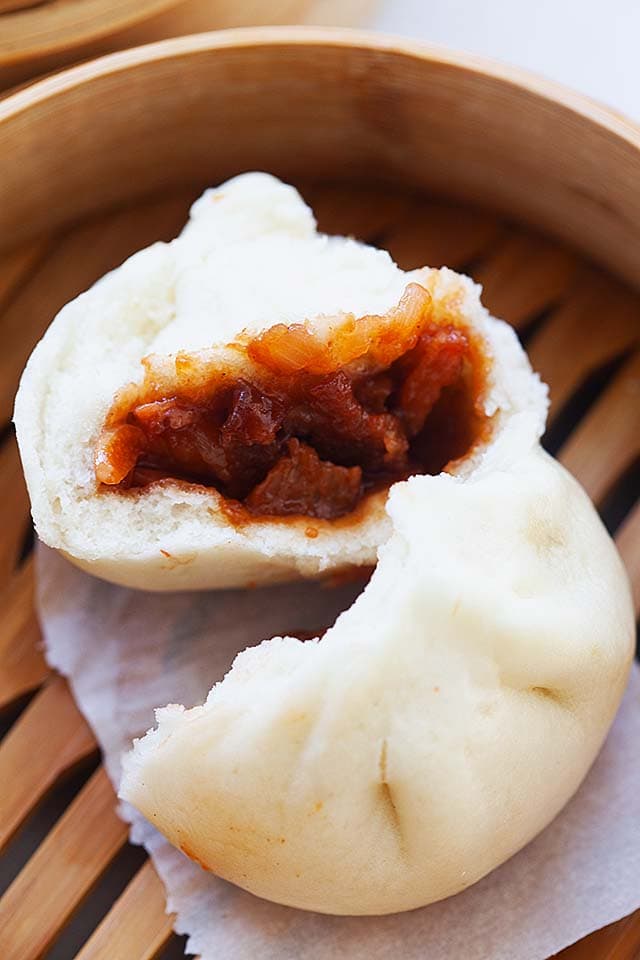
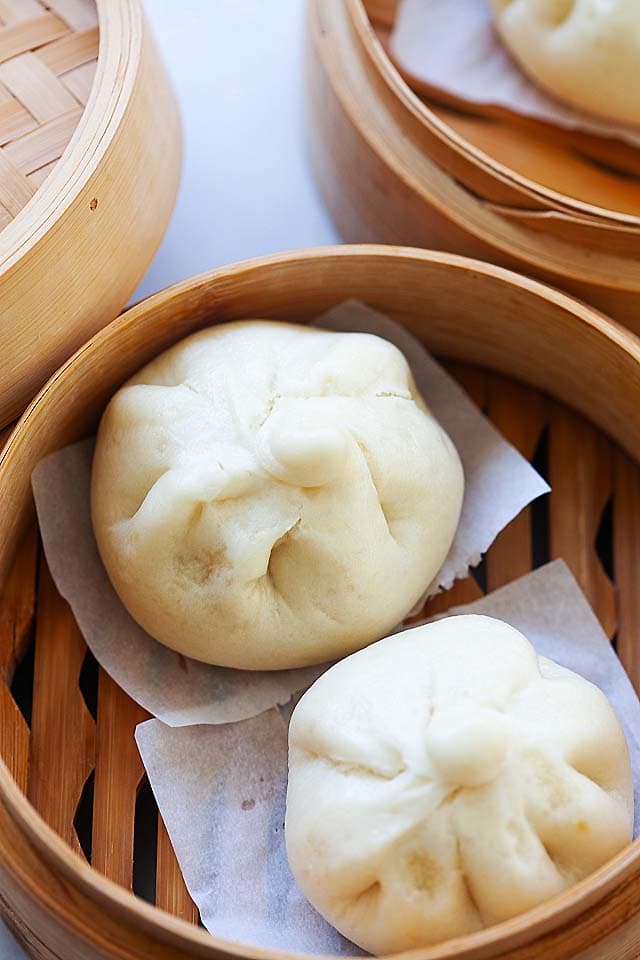
Char Siu Bao are steamed pork buns. Soft, fluffy steamed buns filled with Chinese BBQ pork or char siu. Easy, authentic and the best char siu bao recipe!
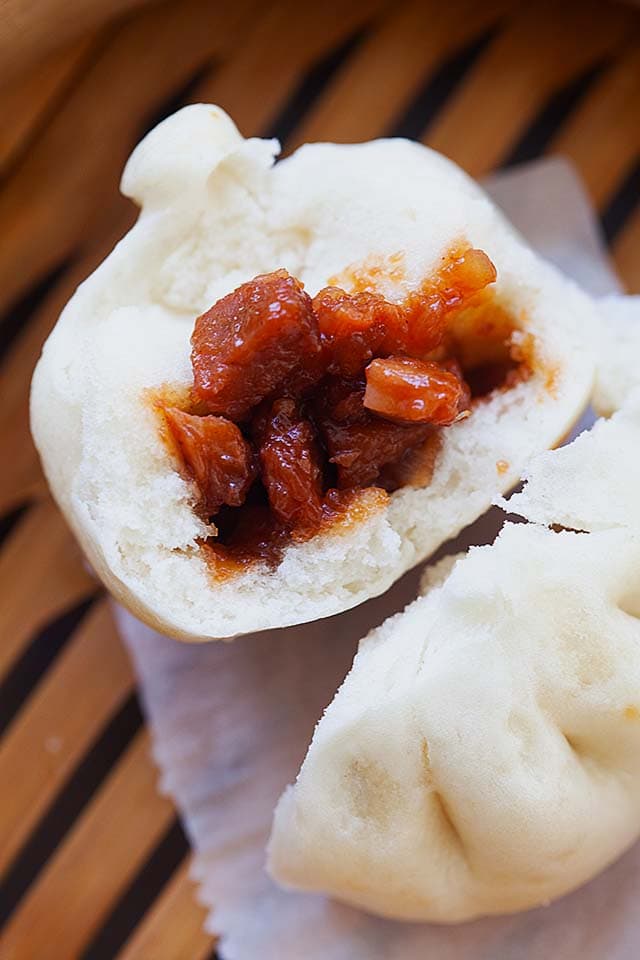
Cha Siu Bao Recipe
Cha Siu Bao (also spelled as Cha Siu Bao or Char Siew Bao) is one of the signature dishes in dim sum restaurants around the world.
Called 叉烧包, or cha shao bao in Chinese, they are a Chinatown classic!
Originated from Guangzhou in mainland China, Cha Siu Bao is a delicacy.
These Cantonese steamed pork buns are found in many Cantonese-Chinese restaurants serving dim sum.
Imagine soft, fluffy white steamed buns filled with savory char siu or Chinese BBQ pork filling in a sweet and savory char siu sauce; they are absolutely delicious!
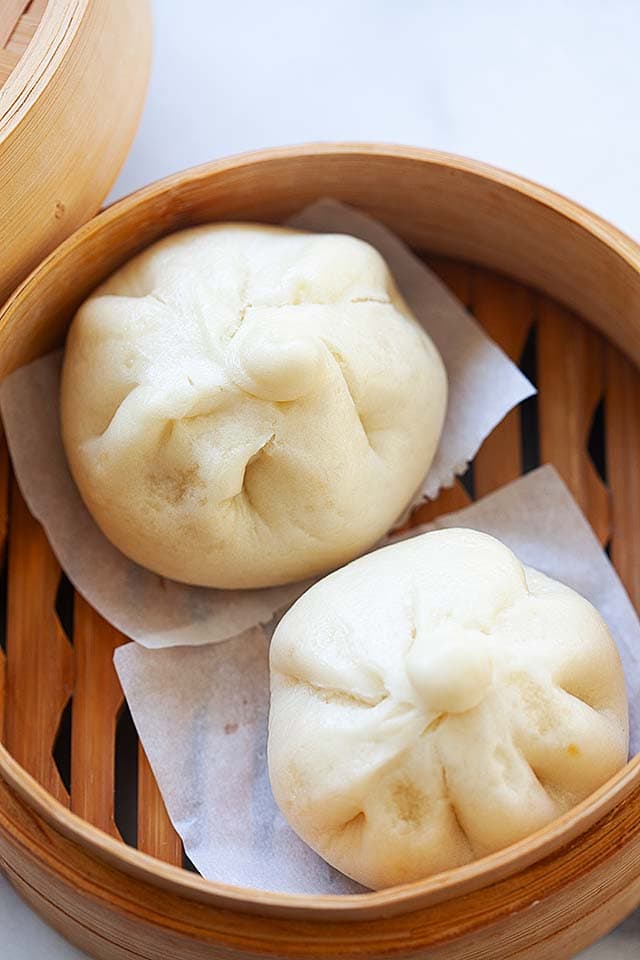
Ingredients
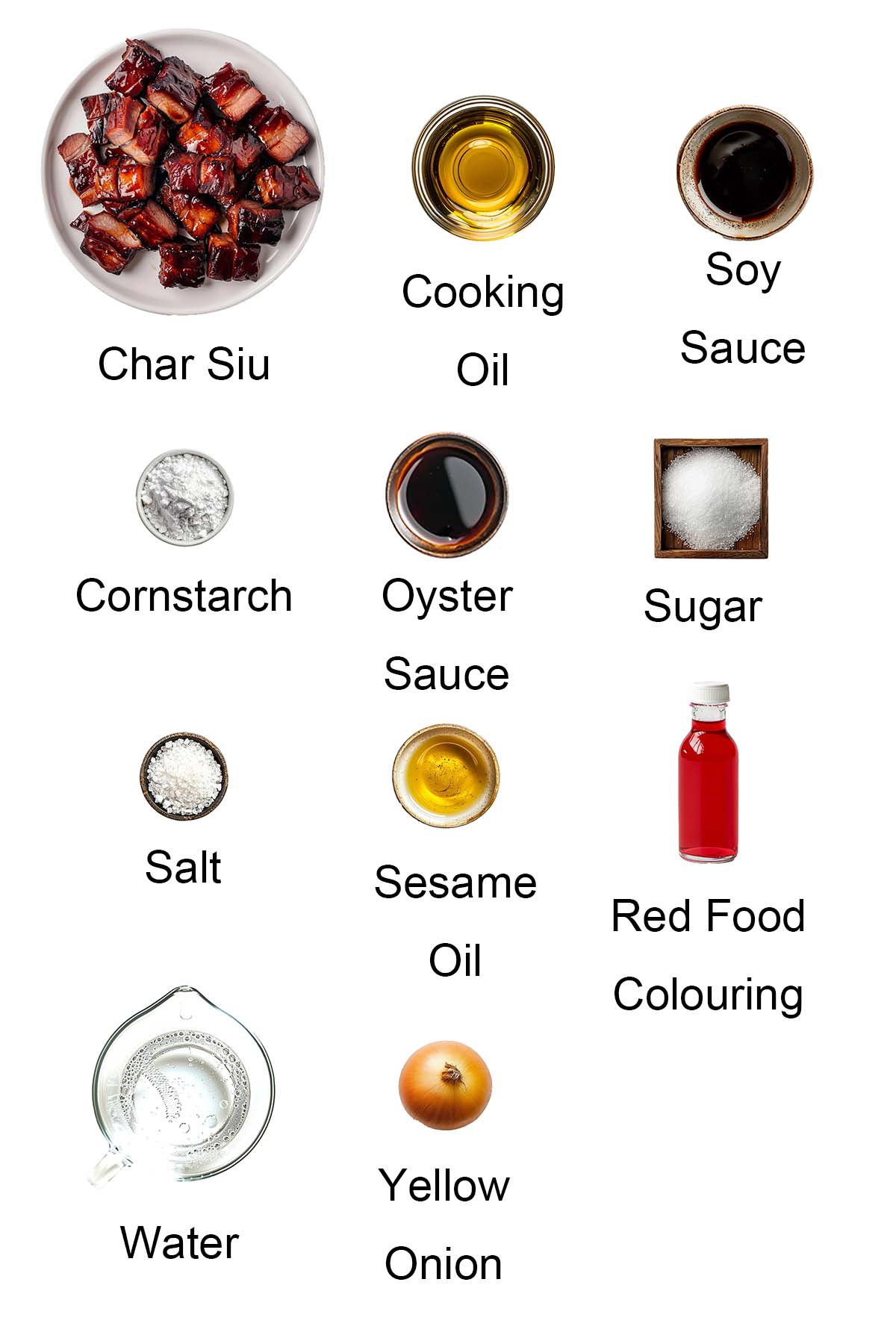
Ingredients For Char Siu Bao Filling
- Char siu
- Cooking oil
- Soy sauce
- Cornstarch
- Oyster sauce
- Sugar
- Salt
- Sesame oil
- Red food colouring
- Water
- Yellow onion
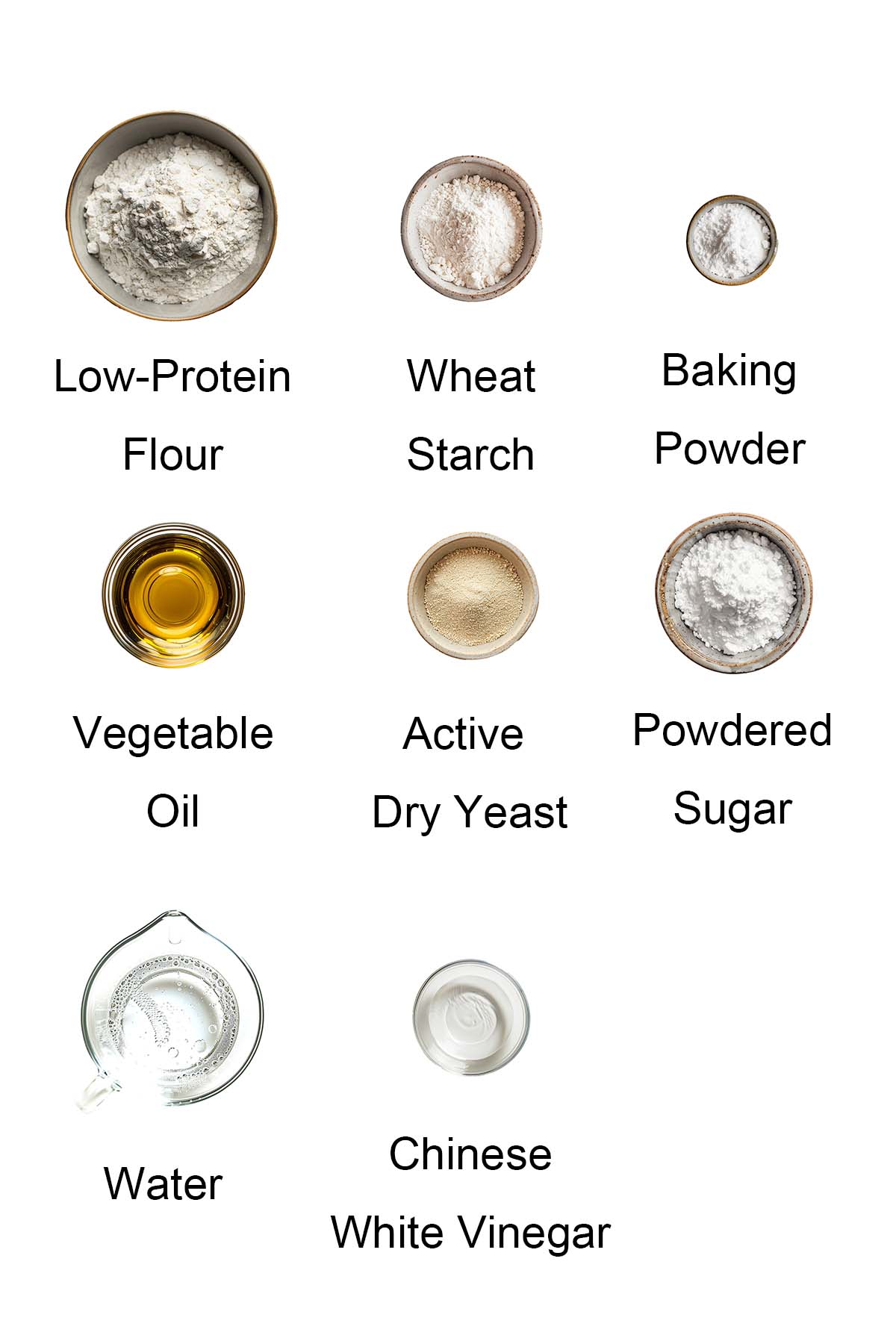
Ingredients For Char Siu Bao Dough
- Low-protein flour
- Wheat starch
- Baking powder
- Vegetable oil
- Active dry yeast
- Powdered sugar
- Water
- Chinese white vinegar
See the recipe card for full information on ingredients.
For soft and fluffy homemade steamed buns, you need a mixture of low-gluten flour and wheat starch.
The low-gluten flour is called Hong Kong Flour in Malaysia and you can get the flour from supermarket.
If you can’t find Hong Kong flour, you may use cake flour as the substitute.
The end result will be softer and fluffier steamed buns compared to all-purpose flour.
How To Make Char Siu Bao
Heat oil in a pan over medium heat and sauté the onion for 1–2 minutes until fragrant. Add the char siu, soy sauce, oyster sauce, sugar, sesame oil, and red food coloring (if using). Stir-fry for another 1–2 minutes, then season with salt to taste.
In a small bowl, mix the cornstarch with water to make a slurry. Pour it into the pan with the char siu mixture and simmer over low heat until the sauce thickens. Remove from heat and let the filling cool completely. Then divide it into 16 equal portions and set aside.
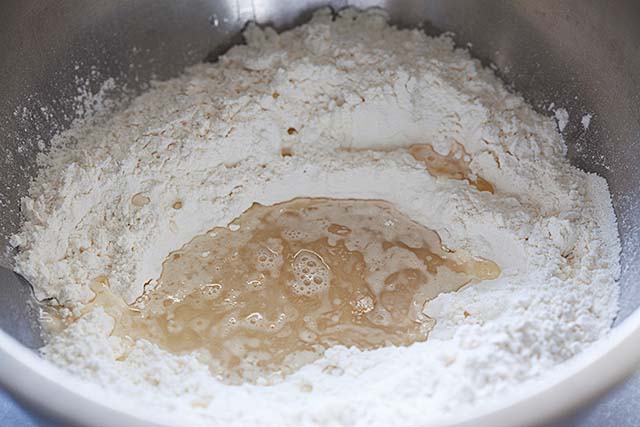
Sift the flour, wheat starch, and powdered sugar into a large mixing bowl. Make a well in the center and pour in the yeast, lukewarm water, and vinegar or lemon juice (if using). Stir gently to dissolve the yeast, then gradually mix in the flour. Add the vegetable oil and stir until a rough dough forms.
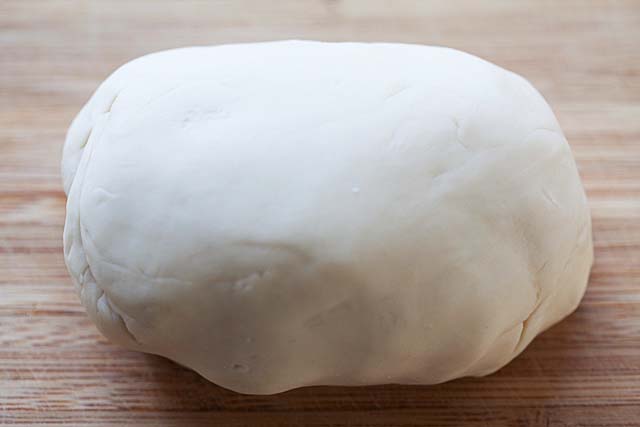
Knead the dough by hand for about 15 minutes, until it becomes soft, smooth, and slightly shiny. Cover it with a damp cloth and let it rise in a warm place for 60 to 90 minutes, or until noticeably puffed. Dissolve the baking powder in cold water and sprinkle it over the dough. Knead again until fully incorporated. For extra fluffy buns, let the dough rest for another 10 minutes before shaping.
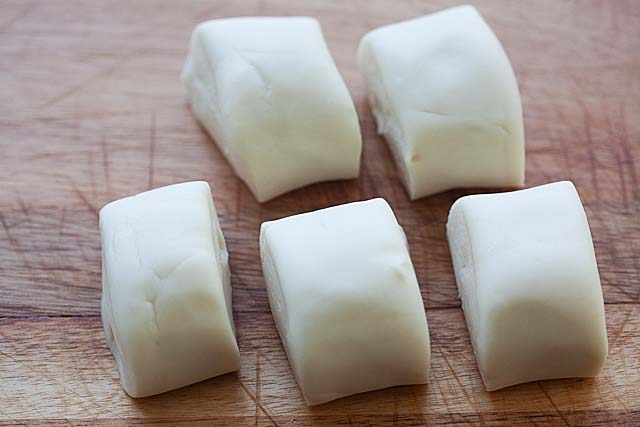
Cut the dough into 16 equal portions using a sharp knife or bench scraper. Cover the pieces with a damp cloth or plastic wrap to prevent them from drying out while you shape them.
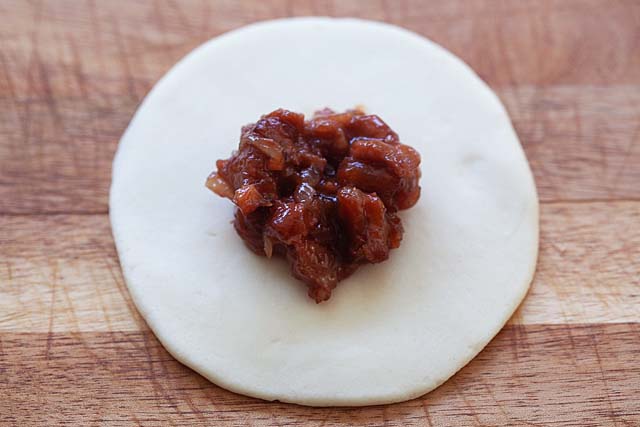
Roll each dough ball into a 3-inch (7 cm) circle using a rolling pin. Place one portion of the char siu filling in the center of each circle.
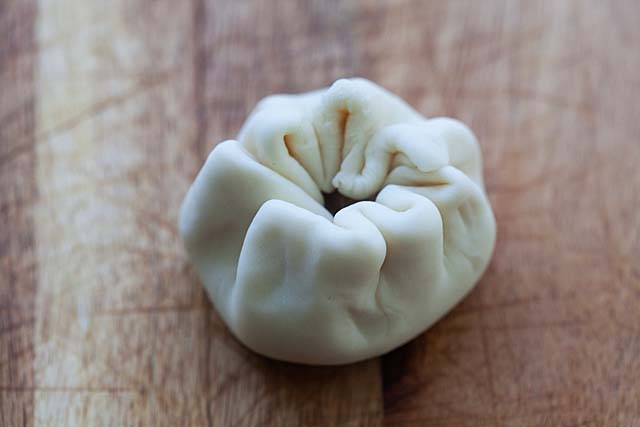
Gather the edges of the dough around the filling.
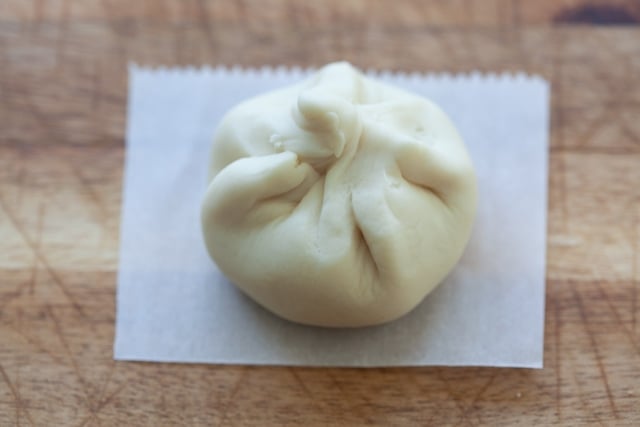
Pinch and twist the top of each bun to seal it tightly, enclosing the filling completely. Place each char siu bao on a 2″ x 3″ (5 cm x 7 cm) piece of parchment paper. Repeat the process until all 16 buns are shaped and sealed.
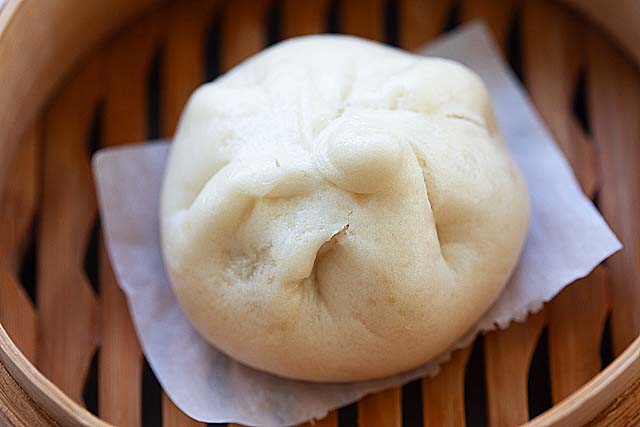
Place the buns in a steamer, leaving about 1 inch (2.5 cm) of space between each one to allow for expansion. Lightly mist the buns with water. Steam over high heat for 10 minutes in a preheated steamer. (For whiter buns, you can add 1 teaspoon of Chinese white vinegar to the steaming water.) Once done, remove the buns from the steamer and serve warm.
Cooking Tips
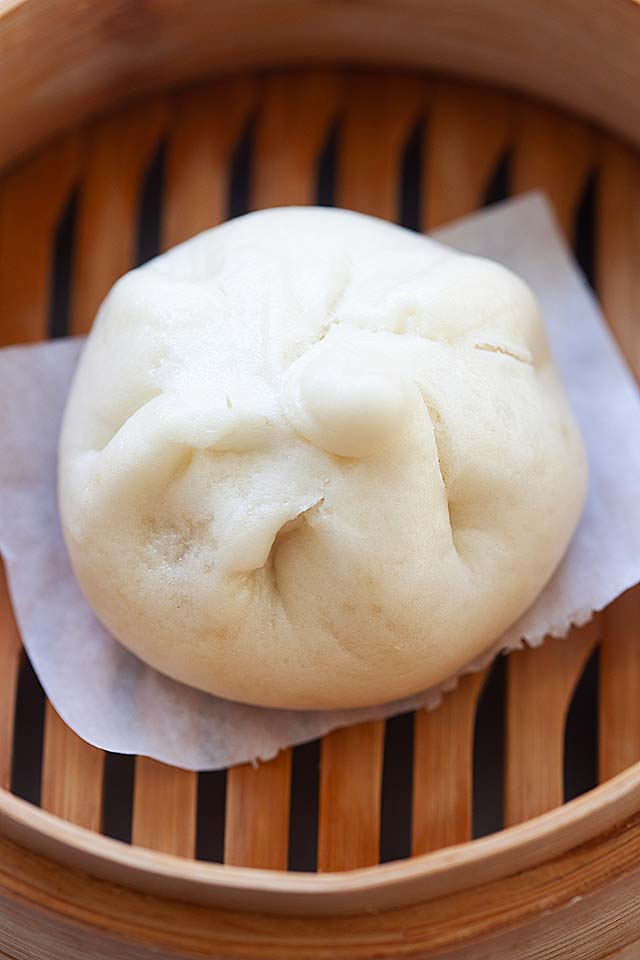
To make dim sum restaurant quality char siu bao or steamed pork buns, please following the cooking tips below:
- If bigger bun is desired, divide dough into 12 equal portions.
- There is no need to rest the char siu bao dough after adding in the baking powder. If time allows, rest it for 10 minutes to get fluffier buns.
- Add Chinese white vinegar into the steaming water to produce whiter buns. This is an optional step.
- The steamer must be preheated before steaming the buns. They will not rise properly without the hot steam.
- Spray the surface of the buns with water mist will help to produce steamed buns with beautiful and smooth surface.
- DO NOT open the steamer’s lid during the steaming process.
- If there are yellowish spots on the steamed buns, it means the baking powder is not properly dissolved.
Frequently Asked Questions
I don’t recommend freezing but you can certainly keep them in the refrigerator.
Pack the leftovers in a plastic bag and keep in the fridge for up to a week.
To serve, just reheat them in a steamer or microwave for 1 minute.
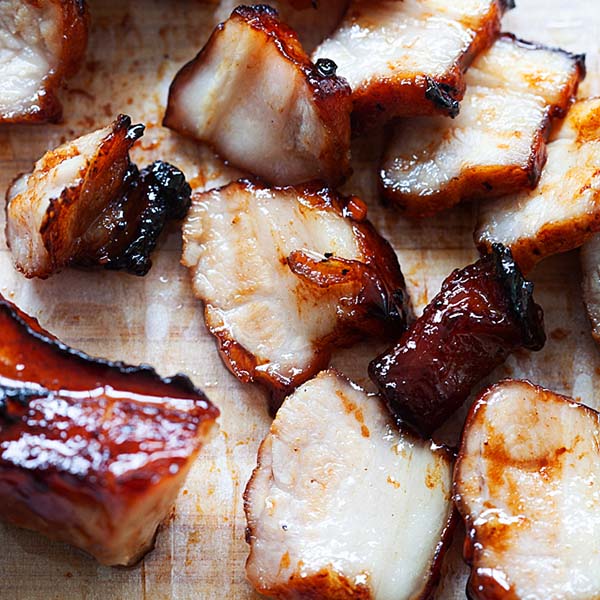
For the filling, use homemade char siu for the best results. You can also use char siu from restaurants.
Each bun is only 193 calories.
What To Serve With This Recipe
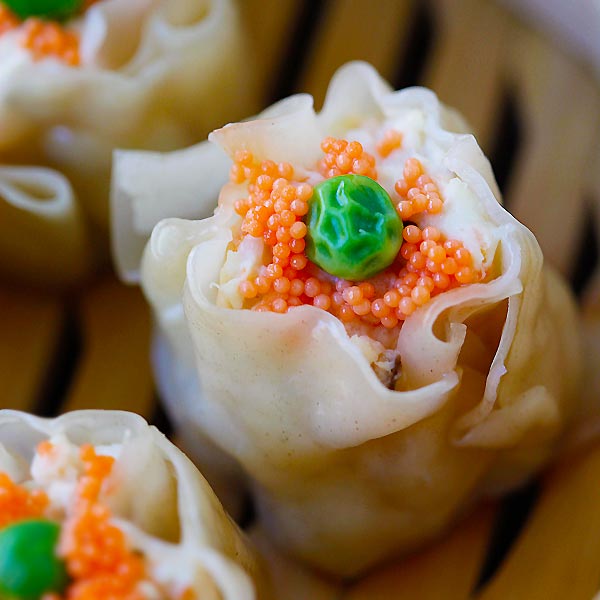
Serve this dish with other Cantonese dim sum or Chinese appetizers. For a homemade dim sum meal, I recommend the following recipes.

I hope you enjoy this post as much as I do. If you try my recipe, please leave a comment and consider giving it a 5-star rating. For more easy and delicious recipes, explore my Recipe Index, and stay updated by subscribing to my newsletter and following me on Facebook, Pinterest, and Instagram for new updates.
Other Recipes You Might Like

Char Siu Bao (Steamed Pork Buns)
Ingredients
Char Siu Filling:
- 1/2 tablespoon cooking oil
- 1 small yellow onion, diced
- 250 g (9 oz) char siu, diced
- 1 tablespoon soy sauce
- 1 tablespoon oyster sauce
- 1 teaspoon sugar
- 1 teaspoon sesame oil
- 1-2 drops red food coloring, optional
- salt, to taste
- 1 1/2 tablespoons cornstarch
- 150 ml water
Char Siu Bao Dough:
- 280 g (10 oz) low-protein flour, (Hong Kong flour), cake flour or all-purpose flour
- 100 g (3½ oz) wheat starch
- 90 g (3 oz) powdered sugar
- 8 g (⅕ oz) active dry yeast , or instant yeast
- 160 ml lukewarm water
- 1/2 teaspoon Chinese white vinegar, or lemon juice, optional
- 30 g (1 oz) vegetable oil
- 10 g (¼ oz) baking powder
- 10 ml cold water
Instructions
Char Siu Filling:
- Heat oil in a pan and sauté the onion for 1 to 2 minutes. Add the char siu, soy sauce, oyster sauce, sugar, sesame oil, and red food coloring (if using). Stir-fry for 1-2 minutes, then add salt to taste.
- Mix the cornstarch and water together, then add it to the filling. Simmer on low heat until the sauce thickens. Remove the filling from the pan and let it cool. Divide the filling into 16 portions and set aside.
Char Siu Bao Dough Recipe:
- Sift the flour, wheat starch, and powdered sugar into a large mixing bowl. Make a well in the center of the flour mixture and add the yeast, lukewarm water, and vinegar or lemon juice (if using). Gently dissolve the yeast in the water. Slowly incorporate the flour mixture and then add the vegetable oil.
- Knead the dough by hand for 15 minutes, or until a soft, smooth, and shiny dough forms. Cover the dough with a damp cloth and let it rise for 60 to 90 minutes, or until it has expanded in size. Dissolve the baking powder in the cold water, then sprinkle it over the dough and knead until well combined. For fluffier buns, let the dough rest for 10 minutes after adding the baking powder.
- Cut the dough into 16 equal portions and divide them accordingly.
- Using a rolling pin, roll each dough ball into a 3-inch (7 cm) circle. Place a portion of the filling in the center.
- Wrap and fold the dough over the filling.
- Pinch and twist the dough to enclose the opening, ensuring the char siu bao is tightly sealed at the top. Place each bun on a 2" x 3" (5 cm x 7 cm) piece of parchment paper. Repeat until you have made 16 buns.
- Arrange the buns in a steamer, leaving about a 1-inch (2.5 cm) gap between them. Spray a light mist of water over the buns and steam in a preheated steamer on high heat for 10 minutes. (You may add 1 teaspoon of Chinese white vinegar to help keep the char siu bao white.) Remove the buns from the steamer and serve warm.
Notes
- If bigger bun is desired, divide dough into 12 equal portions.
- There is no need to rest the char siu bao dough after adding in the baking powder. If time allows, rest it for 10 minutes to get fluffier buns.
- Add Chinese white vinegar into the steaming water to produce whiter buns. This is an optional step.
- The steamer must be preheated before steaming the buns. They will not rise properly without the hot steam.
- Spray the surface of the buns with water mist will help to produce steamed buns with beautiful and smooth surface.
- DO NOT open the steamer’s lid during the steaming process.
- If there are yellowish spots on the steamed buns, it means the baking powder is not properly dissolved.
Nutrition
Nutrition information is automatically calculated, so should only be used as an approximation.






Hi, why is the baking powder dissolved in water then sprinkled over proofed dough? Can it.be incorporated into the dry ingredients?
Thanks
It’s added after the first proof to give the buns extra lift and a fluffier texture. If you add it at the start, it can lose strength during proofing and the buns may not be as light.
Any plans to make a Baked BBQ Pork bun? I enjoy those.
Can the baked version have bread or AP flour instead of wheat flour.
Thx
Hi Shar, thanks for the suggestion.
Thank you SO much for this recipe. I make it at least once a month and it’s amazing. Can I freeze them to cook later if I made a big batch?
Sure you can freeze the filling.
Is there another name for a wheat starch? Or are there any substitutes?
Afraid to use a different one. Also I have never used a yeast ( don’t know the difference between the two) really shows not a baker.
Been to an Asian grocery but could not find wheat starch.
It’s called wheat starch. Please try to buy online.