Even though I tout Rasa Malaysia as the online source for Asian cooking and recipes these days, I don’t have any Filipino recipes! When I started thinking about having Filipino guest writers, I immediately thought of ChichaJo of 80 Breakfasts. I adore her beautiful blog, writing style and fab food photography. So, please welcome 80 Breakfasts to Rasa Malaysia as ChichaJo shares with us the recipe, origins, and various adaptations of Filipino adobo. Drool!
My Filipino Adobo
Guest Writer: 80 Breakfasts
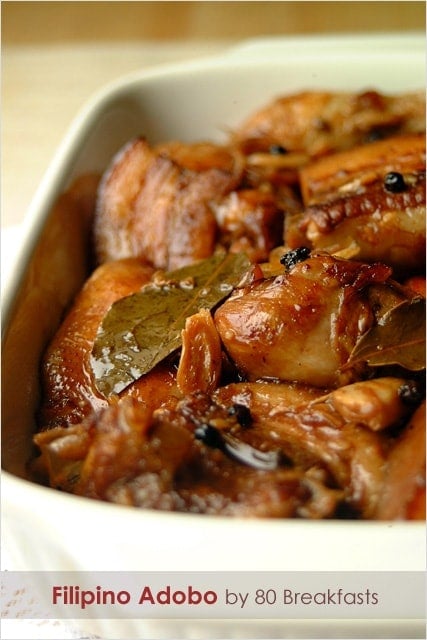
Although I love my local cuisine just as much as the next Filipino (which is to say a lot!), I am an absolute beginner when it comes to cooking Filipino food. That’s why, when Rasa Malaysia asked me to guest-write a post on a Filipino dish I was a bundle of nervousness, despite being over-the-moon flattered! I am just at the beginning of my journey through Filipino cooking and I am still fumbling through some of the twists and turns. Even so, I was very excited and I knew what I wanted to write about – adobo! Aside from it being one of those dishes that are immediately related to the Philippines, I am currently in the thick of adobo experimentation. You see, I never cooked this dish when I was younger (it was always prepared by someone else) so it is only now that I am flush with infatuation at adobo’s many faces….(get adobo recipe and learn various adobo adaptations after the jump)
There are as many adobo recipes as there are Filipinos. Maybe more. I certainly have more than one. Just taking into account recipes which would fall under categories like “the original”, “traditional”, or “best-ever” would fill up volumes and volumes of books…each varying from the next. That isn’t even considering all the reinventions, fusions, and new versions that this simple dish is going through!
And adobo’s origins? Another minefield of confusion! Spanish? Mexican? Indigenous? With soy sauce? Without? Soy sauce came to us by way of the Chinese, so any adobo made before that would only have had salt. Does that mean any adobo touted as “traditional” or “original” shouldn’t have soy sauce? Logical to some, a sacrilege to others!
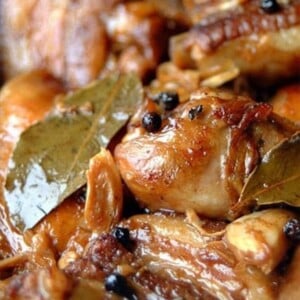
Knowing this, when it comes to adobo, I proceed with both caution and abandon. I can loosely say though, that Filipino adobo is a stew or a simmer of meat or vegetables cooked with vinegar. The most common versions uses chicken or pork or both, with soy sauce to flavour, as well as bay leaf, black pepper, and garlic. The pillars of adobo. That being said, we also have versions using squid (adobong pusit), long beans (adobong sitaw), and water spinach (adobong kang kong). I have seen people use everything from baby back ribs to catfish in adobo. Some like to cook their adobo without the soy, using salt instead, or even patis (fish sauce). Some like to add coconut cream towards the end of cooking (my late grandfather’s favourite). There are Spanish-influenced adobos that use red wine and smoked paprika. There are also Chinese versions that use star anise and oyster sauce. Others like to add liver spread or liver pate to thicken the sauce. Different regions of the Philippines argue as to what is the best vinegar to use for adobo and there are heated debates about when you can stir the sauce (never stir until the vinegar has burned off most of its acids!).
I don’t think there is, or will ever be, a truly definitive recipe for Filipino adobo. Despite some lovely Filipino cookbooks finally making themselves seen locally and beyond, Filipino cooking in general is still so personal, so familial – recipes are stories and myth and fables, shared over the kitchen table, handed over to friends and family like gifts. I can’t help but love this dish all the more for its refusal to be pinned down, along with its questionable and uncertain past. For me, adobo eludes as much as it entices…and that is what always has me coming back for more.
So instead of sharing The Recipe For Filipino Adobo, I am sharing with you My Recipe For Filipino Adobo. This isn’t my only recipe, much as it isn’t my only “adobo story”. This is my basic “springboard” recipe from which more adobo adventures start.
Ingredients:
- 1/2 cup white cane vinegar
- 1/4 cup toyo (our local soy sauce)
- 3/4 – 1 cup water (you may not use all of it)
- 3 chicken legs (drumstick) and 3 chicken thighs (I like to use dark meat – this should come to about 600-650 grams of chicken)
- 350-400 grams pork belly (the part with the bone, skin on), cut into generous chunks (about 2 inches)
- 1 1/2 teaspoons whole black peppercorns
- 8-10 cloves garlic, just slightly bashed, skin still on (do not peel!)
- 2 bay (laurel) leaves
- Freshly cracked black pepper, a few twists
Method:
- Put all the ingredients except for the water in a Dutch oven or any heavy duty pot and leave for about 30 minutes to marinate.
- Place the pot over medium heat, add 1/2 cup water, and bring to a boil. Lower the heat to a simmer and simmer without stirring until most of the vinegar’s acid has been cooked off – you will know when this is done because it won’t smell as sharp and “sting-y”.
- Keep simmering over low heat until the chicken is very tender - about 40 minutes to an hour. Taste the sauce. If it’s too salty or too sharp for your taste, add some of the remaining water. I usually end up using 3/4 cup total.
- When chicken is tender, remove the pieces from the pot and set aside. At this point the garlic will be very tender as well – you can mash some (not all!) of the cloves against the sides of the pot to incorporate it into the sauce.
- Keep simmering on low heat a further 30 minutes to 1 hour or until pork is meltingly tender.
- When pork is very tender, remove from pot and set aside.
- Keep simmering sauce until reduced to your desired consistency. Taste the sauce and if you’d like a bit of sweetness, stir in a pinch of brown sugar – I like to do this but you certainly don’t have to.
- Heat a skillet with some oil over high heat. When the oil is hot, fry the chicken and pork pieces to brown.
- When the sauce has reduced to your desired consistency add the browned chicken and pork back to the pot. Toss gently and remove from heat.
- You can eat it at this point but it gains depth of flavour if you let it rest for a day.
As with men and chocolate, I like my adobo dark, which is why I use soy sauce. I also like to mix pork and chicken, despite arguments to the contrary. I may make adobo using only pork, but I will hardly ever make it using only chicken. The pork makes the whole dish, especially the sauce, more robust so I consider having to fish out of the chicken mid-way a step well worth it. I urge you to use pork belly that has still got the bones attached and skin on – then make your butcher cut it into nice chunks (I like biggish pork chunks in my adobo). The bones and skin will work wonders towards giving your sauce more body. Frying the chicken and pork after they’ve been cooked is a messy affair – I confess, sometimes I skip it – but it really does make a difference and the caramelized bits of fatty pork and chicken skin will make cleaning an oil spattered kitchen seem like a small price to pay. One of the oldest adobo adages is not to stir the sauce until the vinegar burns off most of its “acid”. Another bit of advice I’ve heard is to always leave the garlic skin on. I can’t say I totally understand either, but I do like the feeling that I’m following some age-old, almost mystical, piece of wisdom – so I go ahead and do it anyway!
I believe the beauty of adobo is really in its changeability and adaptability so I encourage you to experiment! Here are some of my own adaptations (collected from different people, books, and my own wandering imagination) to get you started:
- Pop one star anise into the pot to give it a brilliant fragrance and a Chinese flavour.
- Add a peeled hardboiled egg towards the end of cooking…my husband loves this!
- Add one peeled sweet potato to add a touch of sweetness.
- Experiment with different types of vinegars! I also make a version that uses red wine vinegar – and instead of chicken and pork I use lamb shanks and I add in some peeled pear quarters.
- Add a handful of peeled pearl/spring onions to the mix – they will get all melty as the adobo cooks and enrich the sauce.
- Slow cook your adobo in the oven while you do chores around the house.
- Use leftover adobo (flake the meat) for awesome fried rice!
Related Posts:
Get new recipes via RSS and reader or subscribe via email


{ 31 comments… read them below or add one }
I just love adobo and your pics are making me dying for it……….
May I use some of your pics on my site when I start the food section?
My site is at
http://www.malaysian-explorer.com
Cheers!
The Malaysian Explorer
Reply
Growing up in Qatar we knew many Filipino families and one of the things I quickly fell in love with was this adobo chicken. I have never really made it myself at home because I simply did not trust the recipes I found. But Joey - this is great and I will certainly be making this one! Thanks!
Reply
2 common meats but an its uncommon match! But if creativity is to reign let’s break the rules. Even oral tradition about vinegar and garlic. To keep or to experiment. Philippines are so rich with her many influences. I find them adventurous and warm, like this recipe. Please surface more of these familial secrets!
Reply
Hi,
I stumbled upon your blog when I was looking for the recipe for fried chinese bun. Do you by any chance have the recipe for that? Tried it once and would like to actually do it myself at home. Hope you can help. Thanks :)
Reply
Fancy reading you here, ChichaJo. :)
Can’t think anyone better to represent home-cooked Pinoy food than you.
And to Bee Yin. Thank you for taking an interest in Filipino Food. Much appreciated. :)
Reply
I’ve been experimenting with adobo recipes, too, especially for the slow cooker. I’m not a pork person, so I won’t be trying this one, but the photos look lovely and just like the adobo of my dreams.
Reply
I made this once years ago and loved it. I think I will make some tonight. Love your creative tips about the star anise and such. Great picture.
Reply
Yeeeah! Filipi-no! Filipi-no! (Uh, I’m singing “Bebot” by the Black Eyed Peas). Anyway, there’s good reason this is our national dish– all that garlic and black pepper gives it a lovely, deep flavor. I want this with a heap of rice now!
Frying leftover rice in the oil/sauce from adobo is also a great treat!
Reply
We love adobo in our house. thank you for the excellent writeup and beautiful picture! I am especially intrigued that some people use liver pate to thicken the sauce. What a delicious adaptation!
We normally use apple cider vinegar, although I think this is just to make it easier for those who can’t find Filipino vinegars locally. Living in the Bay Area, we have lots of Asian groceries with Filipino food aisles - should pick up some different vinegars to try out.
We’ve just posted a recipe for tau yu bak - pork braised in soy sauce that is at its core like adobo without the vinegar. I think I like adobo better, though, because of the vinegar.
Reply
Nice writeup! I love dishes that have no set recipe since it leaves a lot of room for the imagination. You’re adobo recipe is pretty similar to mine, but I really like that you added pork belly along with the chicken (I’ve always done one or the other).
Reply
This is the best looking adobo I have ever seen! Can’t wait to try this…the caramelization is amazing and adds such appeal to the dish. I’ve heard the same thing about garlic skin… I do notice that the garlic has a sweeter flavor if you leave the skin on.
Reply
Wow! So nice to read so many positive comments on Adobo! :) Thanks everyone!!!
Veron, nice to hear some good feedback on the garlic skin tradition :)
Bee! Thanks again for taking an interest in Filipino food and making space for us on your wonderful blog!!! :)
Reply
Looks absolutely fantastic. I bet the flavours were amazing
Reply
Hi,
Any idea where to get white cane vinegar in KL? I want to try this recipe but dont know where to get this vinegar.
rgds
Reply
I have my own adobo recipe but I’m always on a look-out for better recipes, not just for adobo. I’m looking forward to trying this.
Thanks for sharing, great site.
Reply
I have my own adobo recipe but I’m always on a look-out for better recipes, not just for adobo. I’m looking forward to trying this.
Thanks for sharing, great site.
Reply
Hi Malaysian Explorer! With regards to my adobo pics please email me at eighty_breakfasts(AT)yahoo(DOT)com :) Glad you like them! :)
Reply
Oh my goodness, a fantastic adobo recipe! Thank you, both of you! I am making adobo this week, for sure! I will stay tuned to both blogs for more Filipino recipes (and am crossing my fingers for lumpia recipes, soon). :)
Reply
Dear webmaster,
I recently visited your blog http://www.rasamalaysia.com and I want to place some advert pages on your site for a full year. Regarding the client I will place links for my client related to food and health.
For now please let me know how much you expect for this ad if it is possible.
Awaiting for your awesome reply.
jemsgooding@gmail.com
Reply
Thank you for finally including a filipino dish in your site. sometimes i feel filipinos are the forgotten asians..hehee… adobo is soo good.. in fact, this recipe made me want to do it for dinner this week!
Reply
This sounds so fantastic, and I love the photograph.
Reply
Great write-up, Joey! I’ll definitely try combining chicken and pork the next chance I get.
And thanks, Bee, for including a filipino recipe on your site!
Reply
now a true blue asian site for asian recipes..philipino included..
Reply
I’ve never tried mixing meats in our adobo but will try soon. There is no definitive adobo recipe, because we’re all tinkering with ours. ;)
Great write-up!
Reply
One thing my wife and I add to our adobo is chunks of chayote squash. The crunchy texture and slightly sour taste improve the stew immensely. I throw two chayote, cut into 1 inch chunks, every time I make it. The chayote is firm enough that it can be added at the same time as the meat.
Reply
The first time I tried making Filipino Adobo turned out to be an EPIC FAIL, it turned really dark, and even my dog wouldn’t dare and eat it. I tried your recipe, and the Lord be praised, it was sooo good! My Mom even said I can go ahead and get married “pwede ka nang mag-asawa”, but then I said to her…Mooom, I’ve been married for 3 years now! “My goodness” she said, “What have you been feeding him?” Thanks so much for this recipe! I’m now officially allowed inside the kitchen!
Reply
HI,
Thank’s for your Adobo recipe, i’m glad to know that garlic taste better with skin in it…
And your adobo look’s mouth watering to me in the picture, i love trying to cook it combining chicken and pork belly… Thank’s for this lovely recipe…
Reply
Rasa Malaysia replied:
Nidz - thanks for trying this adobo recipe. Thanks for the compliments, too! :)
Reply
Hi!
I have to agree that is one awesome delicious-looking adobo!
I have a question though -
If I want to brown the meats in the oven - on what temperature and how long??
I hope somebody could answer this question =)
Reply
My husband claims he remembers Filipinos in the Manilla or Tarlac areas using a sweet soda (like Sprite) in their Adobo…have you heard of this variation?
Reply
Star anise in adobo. Something new! I had a disastrous start cooking adobo. And that’s because my husband took over. He used a lot of garlic. I love garlic and even I felt it was too much! Photos made me hungry but the only thing at arm’s reach is a red apple. Too healthy for me. LOL
I love adobo! Thanks for that star anise tip.
Reply
I’ve always been curious about what “adobo” actually was. I would hear different things from a lot of people. So it’s good to hear that its definition is a bit hazy.This sounds like some good comfort food. Good work 80 Breakfasts!
Reply
Rasa Malaysia replied:
Yes, Joey rocks.
Reply