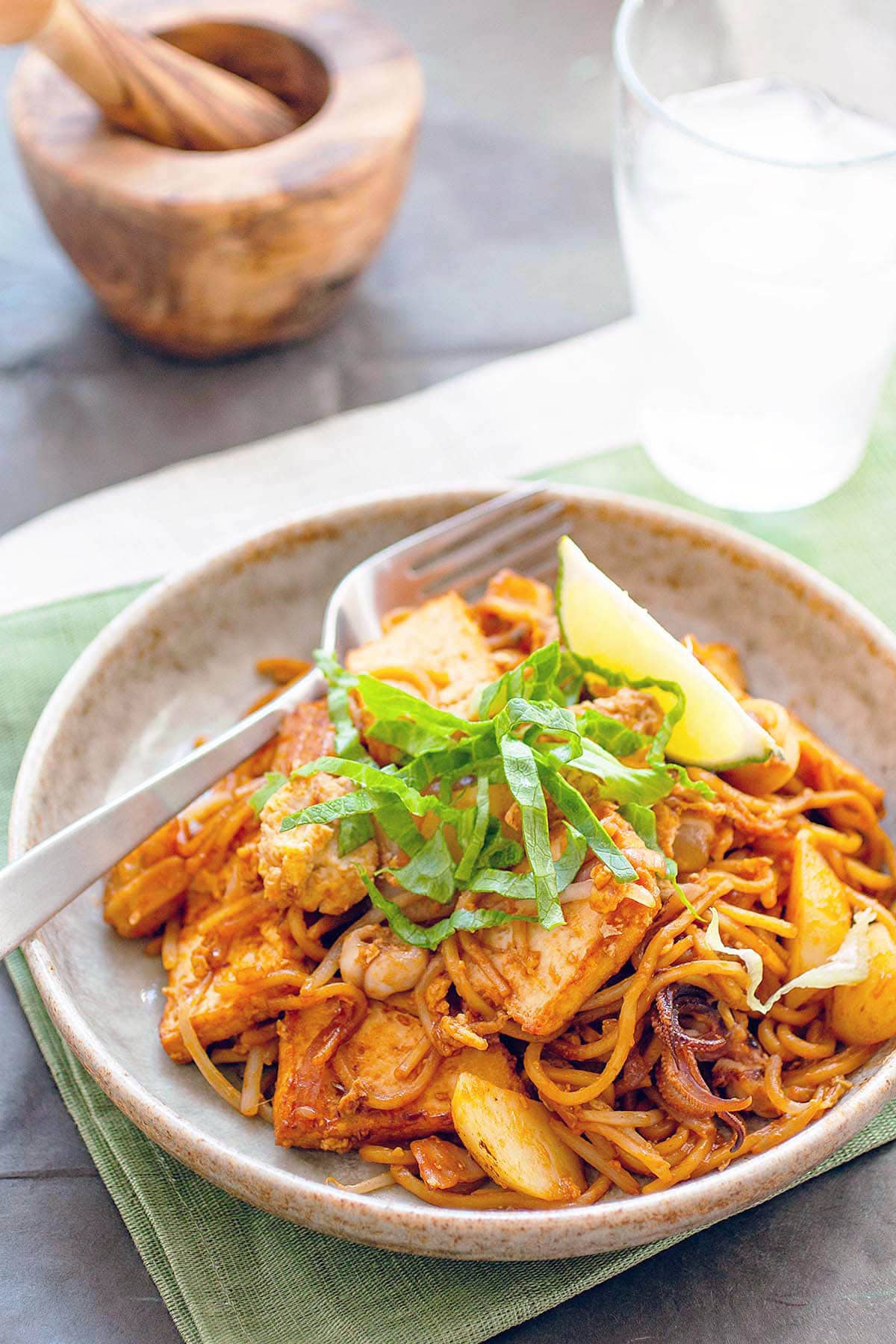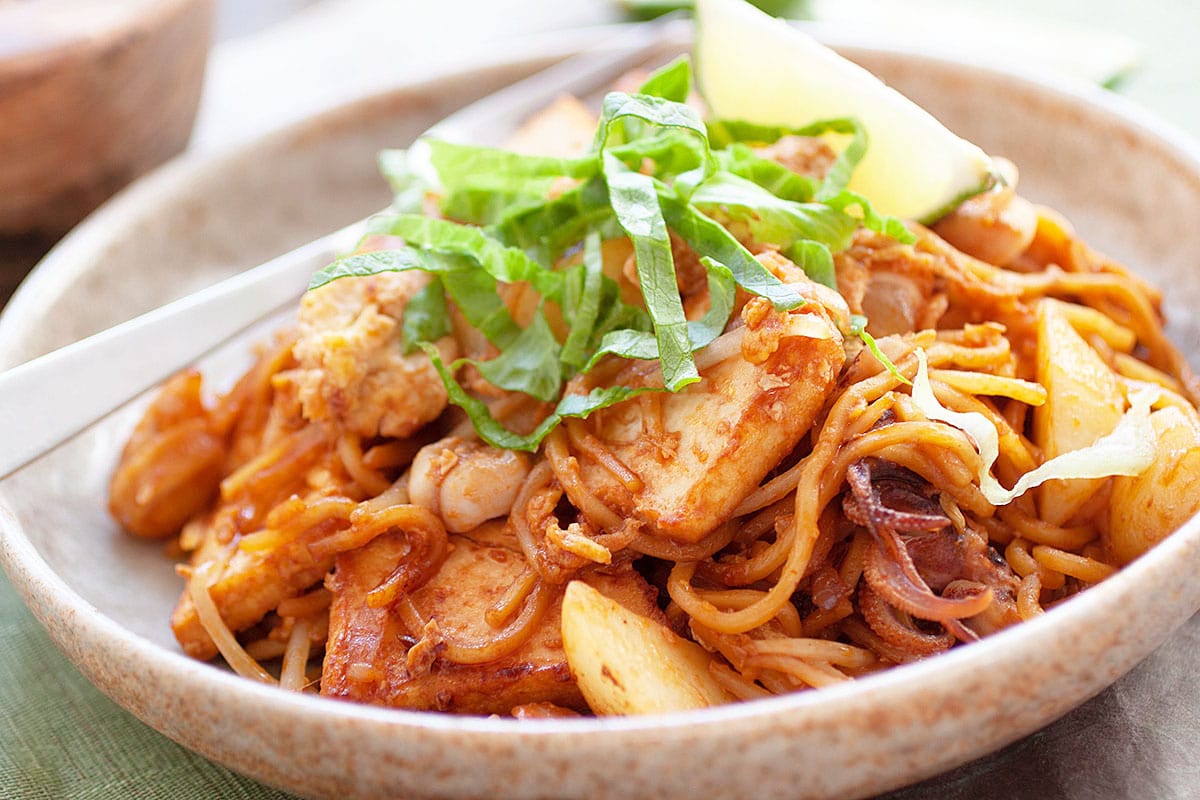
Lydia of The Perfect Pantry needs no introduction. A professional food writer, author, cooking instructor, and food blogger extraordinaire, Lydia’s “The Perfect Pantry” is packed with very useful food-related articles, resources, and drool-worthy recipes. Lydia has been a supporter of Rasa Malaysia since the very early days. Her comments are always warm, insightful, but most of all, she has a genuine appreciation for Malaysian cuisine. So, you could imagine how delightful and excited I was when Lydia agreed to pen a guest post for this humble blog, and that she would share her story about mee goreng. Please welcome The Perfect Pantry to Rasa Malaysia as Lydia takes us on her travel in Malaysia many years ago, and narrated how she fell in love with mee goreng or spicy fried noodles. Enjoy!
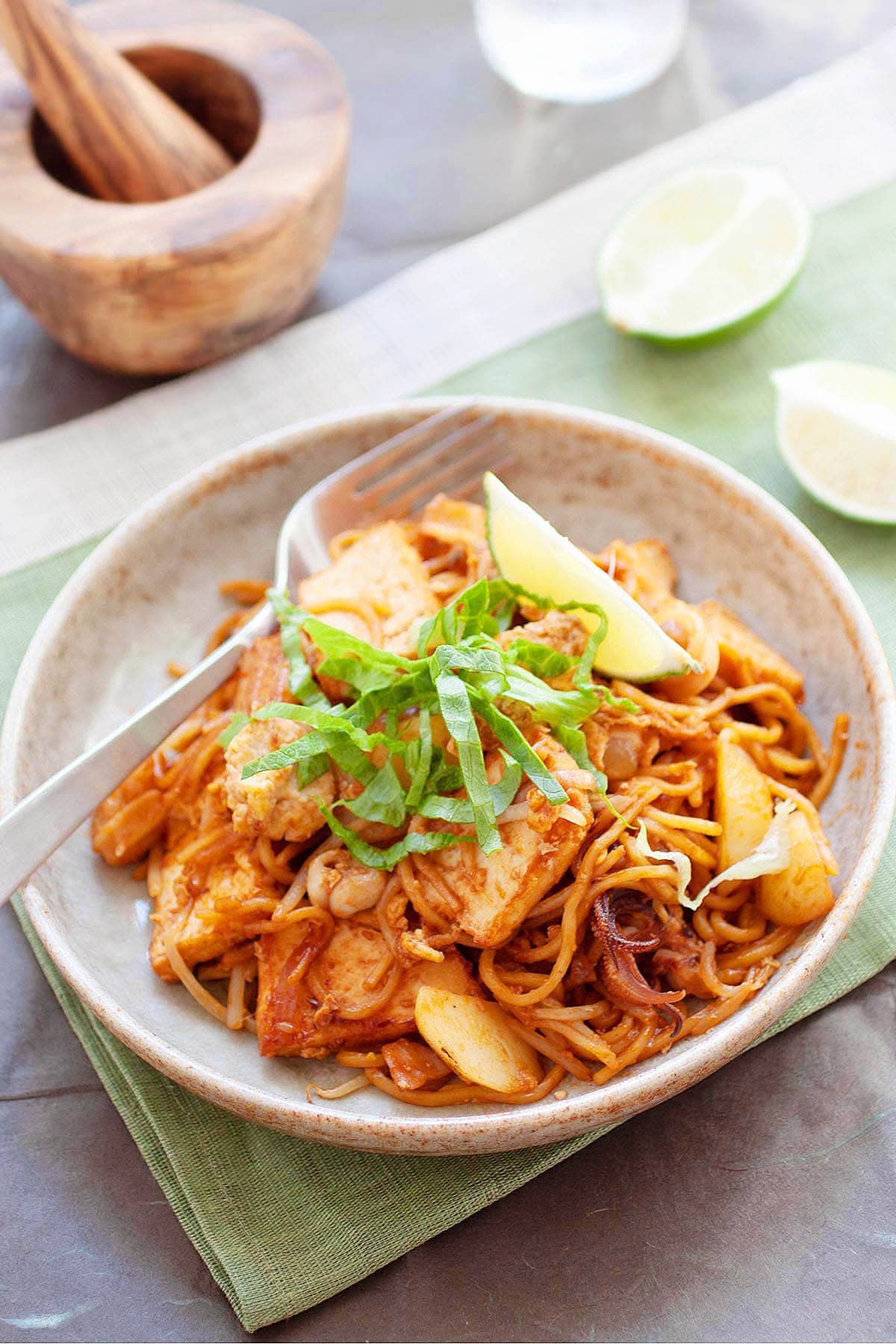
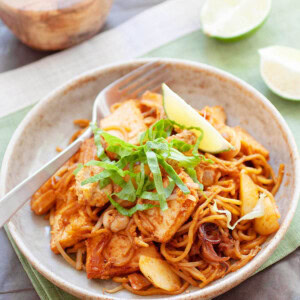
Mee Goreng (Spicy Fried Noodles)
Guest Writer: Lydia Walshin of The Perfect Pantry
By the time we reached the tiny night market, a row of stalls under a tent on the road between Kuantan and Kuala Terengganu, I’d already tasted at least a dozen different versions of mee goreng, the Indian-inspired stir-fried noodle dish of my dreams.
We had arrived in Kuala Lumpur a week or so earlier, by train from Singapore. A city of nearly seven million people, KL embodied the juxtapositions that are Malaysia: old and new, Chinese and Indian, traditional and modern, in everything from architecture to industry to fashion and, yes, to food.
Our hotel in KL, chosen for its proximity to mass transit, sat atop the central bus station. Despite the chaos below, the hotel was clean and basic, and the budget-friendly room rate included a buffet breakfast. I’m sure there was lots of fruit and cereal, but mostly what I remember was the huge bowl of mee goreng…(learn how Lydia made her very first mee goreng after the jump)
Noodles for breakfast; from the first bite, I was in heaven. The noodles were a perfect balance of salty, spicy and dry (not in a sauce), tossed with cabbage and potatoes and egg and other things I can’t quite recall.
I began to see mee goreng everywhere–not in an hallucinogenic way, but for real, stir-fried to order at pushcarts all over the city. I watched, tasted, and tried to figure out how to make it, but each bowl was different, some more spicy, some without potatoes, some topped with chunks of tomato or shrimp or fried scallions, or not.
After a side trip to Melaka, we left KL and crossed to the east coast, where we began our trip north from Kuantan to Kota Bharu, meandering along the shore roads, stopping in small fishing villages, visiting markets and batik factories, taking a boat ride here, buying a sarong there, eating mee goreng at least once a day, and sometimes twice, never exactly the same.
And so we came upon the night market, on the beach on a tiny road just south of Kuala Terengganu. From the five or six stalls, we selected the one that made mee goreng. Ted and Cousin Martin sat at a small table, relaxing and watching television, but I’d had enough. I had to learn how to make the noodles that had become my obsession.
At the rear of the stall, a small counter separated the sitting area from the “kitchen,” which was a single-burner propane stove and a tiny fridge. I walked to the back, and asked the stall owner if she spoke English. She did not, nor did I speak Bahasa Malaysia. So, smiling and gesturing, I tried to say, “May I please watch you cook the noodles?”
Next thing I knew, she grabbed my arm, and pulled me to the rear of the counter. She stuck a spatula into my hand, and with a smile on her face, began to point to ingredients. I realized that she wanted me to cook! Okay, I thought, I can do this. And so we began, teacher and student. She would point to an ingredient, and then to the wok. Put this here, now stir, now add this, yes, add more and so on, until, in what seemed like a nanosecond, I had created my very first mee goreng.
I walked out from behind the counter, carrying dishes of fried noodles, to the total amazement of my husband and cousin. It was the best mee goreng anywhere in Malaysia. I’m absolutely sure of it.
Later that evening, I tried to write down what I’d learned in the night market kitchen, but I couldn’t quite remember all of the ingredients. And when I got home and began to recreate the dish, I never could get it quite right.
Years later, I interviewed chef Alfred Chua, who had opened a small storefront restaurant in Boston’s South End. When I learned he was from Malaysia, I asked him why my mee goreng never tasted the same as the noodles I’d had on my travels. He explained that a lot has to do with heat; our home stove burners simply do not get hot enough to dry out the noodles.
Undeterred, I asked him to teach me how to make his family’s version of mee goreng. I’ve played with his basic recipe a bit, and this is as close as I’ve come to the noodles I made in the night market kitchen.
Fresh Chinese egg noodles, chili sauce, dark soy, oyster sauce, shao hsing wine and fried shallots are available at Asian markets. Serves 5-6 as part of a family-style meal, 3-4 as a main dish.
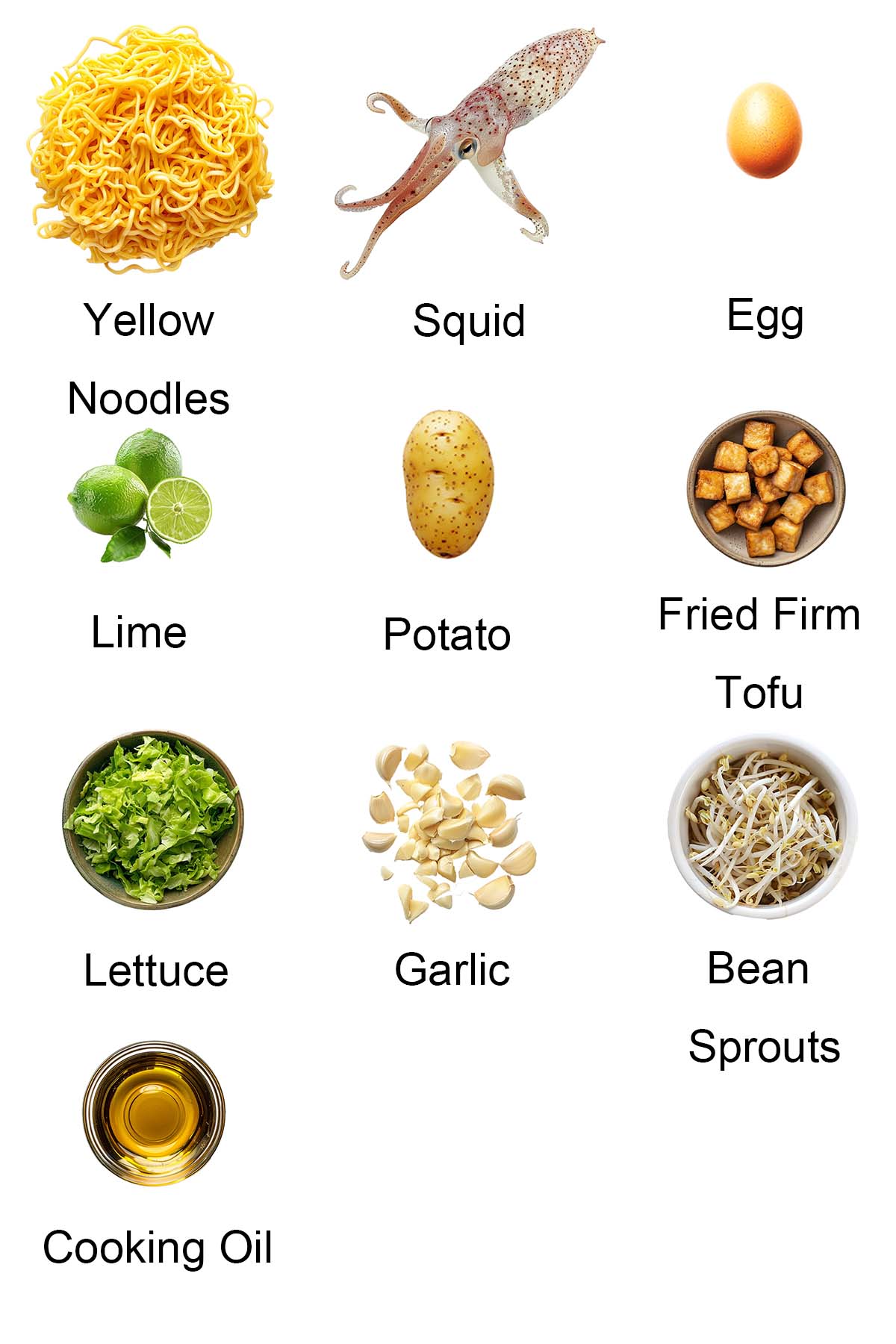
Ingredients:
2 cups fresh Chinese egg noodles
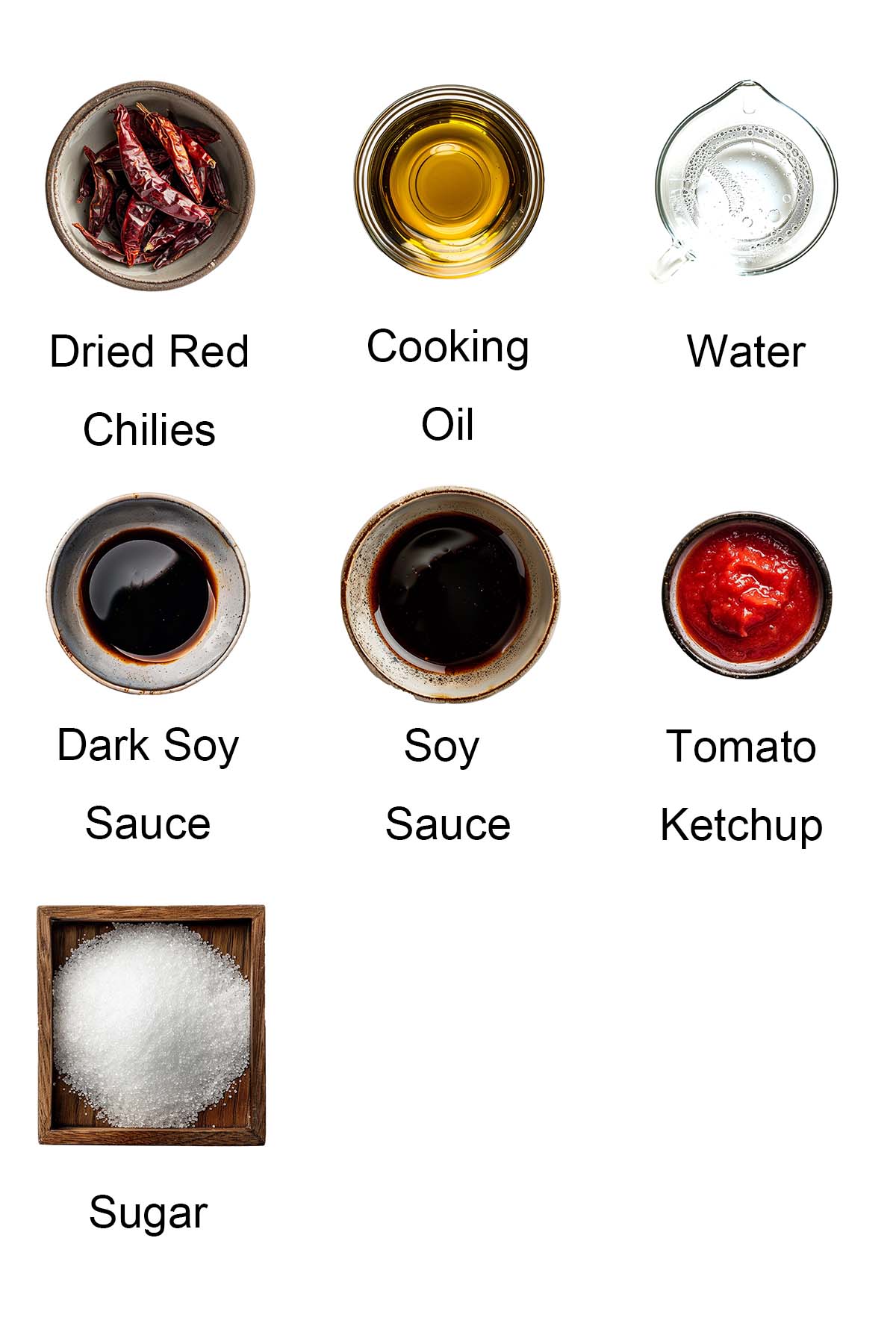
2 Tbsp chili sauce (Sriracha), or more to taste
1 tsp dark soy sauce
1 tsp sugar
1/4 tsp salt
3 Tbsp oyster sauce
3 Tbsp ketchup
2 Tbsp vegetable or canola oil
2 eggs
1 tsp minced garlic
1 cup mung bean sprouts, rinsed
1/2 cup shredded cabbage
1/4 lb shrimp, peeled and deveined
1/4 lb boneless chicken breast, cut into 1/2-inch cubes (or leftover shredded cooked chicken)
2 Tbsp shao hsing wine
1/4 tsp white pepper
2 Tbsp scallions, sliced
2 Tbsp fried shallots (available packaged at Asian markets)
Method:
Bring a large pot of water to a boil. Cook the noodles for 30 seconds, drain, and rinse with cold
water. Set aside.
In a small bowl or measuring cup, combine chili sauce, dark soy, sugar, 1/4 tsp salt, oyster sauce and ketchup. Stir to combine, and set aside.
In a large wok (at least 12 inches in diameter) preheated over high heat, add the oil. Crack the eggs into the wok, stir vigorously until the eggs are lightly scrambled and just set, then add the garlic, noodles, bean sprouts, cabbage, shrimp, chicken, and 3/4 cup water. Stir-fry continuously until noodles are cooked, 3-5 minutes (depending on the heat of your wok), making sure to also cook the chicken and shrimp. Add chili sauce mixture, and keep stirring until well combined. The noodles should begin to get a bit drier (no liquid left in the bottom of the wok). Add shao hsing wine and white pepper, stir to combine, and remove from heat. Garnish with scallions and fried shallots.
Related Posts:
- Nasi Goreng Recipe (Indonesian Fried Rice)
- Char Kuey Teow (炒粿條/Penang Fried Flat Noodles)
- Mee Siam (Spicy Rice Vermicelli) Recipe
- Yakisoba (Japanese Fried Noodles/焼きそば)
- Clams Recipe: Hoy Lai Ped (Spicy Clams in Thai Roasted Chili Paste)
Get new recipes via RSS and reader or subscribe via email


{ 26 comments… read them below or add one }
That’s a gorgeous looking mee goreng. Love the vibrant colors!
Reply
It’s so interesting to see a non-Malaysian cooking a Malaysian noodle dish ! The best ‘mee goreng’ I had ever tasted came from the Indian hawker who pushed his cart, charcoal stove and all, around inner Georgetown in the 80s. I used to skip lunch so I could order that plate of fragrant noodles :) I liked the reddish gravy that was used to moisten the noodles - gravy made from tomatoes & potatoes. In addition to a good heat in the wok, the cook’s frying skills also determine the quality of a plate of ‘mee goreng’. When the Indian hawker took time off to visit his family in India, there would be a substitute cook at his stall. But the taste just wasn’t the same and you could tell by the shorter line of customers :)
Reply
I remember that day very well. It was such a surprise to turn around and see Lydia behind the counter at the night market stall, cooking our dinner!
It was the same night market that Lydia and Martin got very excited to find a taste of home - a tube of Pringles well past its sell-by date.
Reply
This is the kind of noodles I love -non-sauced but flavorful! Delicious write-up Lydia!
Reply
Not to criticize, but as far as I can remember, mee goreng tend to have a darker color, whether it is Malay, Indian or Chinese style. At least those in Kuantan and KL that I’m used to eating.
By the way, in US, I tend to use spaghetti instead of the Chinese yellow noodles. Since home stove is not hot enough, by the time the noodles reach the desired temperature, the Chinese yellow noodle tend to get a little soft. El dente spaghetti holds up much better :)
Reply
luke replied:
oh, what u said is true. but indian mee goreng in malacca is orange in colour(as seen in picture), abit charred on it would taste better :D
Reply
I love mee goreng. The mee goreng in Penang is very good, spicy and have potatoes, squid, and fried fritters. Have you tried the mee goreng in Penang?
Reply
John P, thank you — the noodles were a bit more reddish in real life.
June, I never seemed to have two mee gorengs that were the same, so I can imagine that even within the same family, two people would make it differently. Penang was the last stop on our travels through Malaysia, and I was still eating this dish every day, so perhaps I accidentally found your hawker!
Ted, gosh, I’d forgotten all about those stale Pringles….
Veron, I love the dryness of the noodles in this dish, too. Of course I also love gloppy sauced noodles. I love all noodles — but I really think these are my favorite.
Jay, most of the mee goreng I tasted did have a darker sauce, and the sauce for this recipe is also quite dark. The noodles were a bit more red than they seem in the photo, but because I don’t put tomatoes into the dish, it’s not as red as some other versions I’ve had. It does have that tomato-chile-soy taste that you would recognize instantly as mee goreng, though. I hope you’ll try it.
My Taste Heaven, we did have mee goreng in Penang. I remember one with squid and shrimp that was delicious. What are the fritters?
Reply
It sounds delicious. I’d love to go there and eat it myself, but if not, I must have Lydia make this for me sometimes when I visit her again. Great post, great photos, and as an earlier commenter has already said, very fun seeing a non-Malaysian cooking a Malaysian dish.
Reply
dear lydia
great work!
but the population of kl is about 1.8million, unless u in include the rest of the klang valley.
Reply
And there are Malays in Malaysia, not just Chinese and Indians ;) I’ll still try your recipe though!
Reply
Looks absolutely delicious! Someday I’d love to go and try some myself.
Reply
This mee goreng is both my hubby and my’s TOP favourite. Since I had introduced the Penang mee goreng (at Esplanade food court) to my hubby, he got hooked with it. Now he only eats the mee goreng sold at Esplanade food court, Penang.
Lydia, you have done it so well! Can’t believe it’s your first attempt! I feel so homesick now. Hehehe!
Reply
very interesting story! yeah its true that many times our domestic kitchens cant replicate outside food becos we lack the big burners..
the noodle makes me crave for some now..
Reply
I agree with June Ong, it’s very interesting to see an American (Lydia) makes a Malaysian mee goreng dish. Great job Lydia. I love your travel story in Malaysia and the mee goreng story. I have always wanted to try cooking behind those propane stoves myself, pretending to be a hawker.
Reply
Kalyn, I’d love to make this for you!
Sureshchong, I looked up the population figures and was also surprised to find that what they consider the KL metropolitan area had grown so much since our visit.
Budak, the woman who taught me to make mee goreng was Malay, of course!
Donna, I would visit Malaysia again in a heartbeat if I had the opportunity. My husband and I loved everything about our travels there.
lk, your comment makes me want to return to Penang and find this hawker stand!
Lotsofcravings, until the chef told me, I never realized that it’s the high heat that dries out the noodles and makes them taste so good. Even with my 15,000 BTU burner cranked to high, I can’t replicate the heat of a restaurant kitchen. Still, this recipe is delicious, and I hope you’ll try it.
NYMY, I’ll always be grateful to the woman at the night market who was so willing to teach me by letting me do the cooking. Of course if I’d been a better student, I wouldn’t have had to wait so many years until I learned how to make this!
Reply
my indonesia maid crack d egg in while d noodles half cooked though..must use a gas stove and high heat required! recommend to cook d prawn and chicken separately then add in..
Reply
Lydia, you must try the mee sotong (mee goreng with squid) in Esplanade, Penang. It’s the best plate of mee goreng in the world! Your mee goreng looks very yummy too. Good job trying to make Malaysian food.
Reply
Dear friend
We visited Singapore and Malasia last month, we tried many recipies but roti jala and chicken curry we liked most ,thanks for your recipe I shall try this definitely.
Reply
Yumz…I’m up and hungry at this unearthly hour! Yikes! Anyway, take a look at me blog…Yakitori for you ;o)
Reply
Your mee goreng looks great!!
Reply
Gee, that looks sooo good! I’m a sucker for Chinese noodles!
Cheers,
Rosa
Reply
Hello,
We bumped into your blog and we really liked it - great recipes YUM!!! YUM!!!.
We would like to add it to the Petitchef.com.
We would be delighted if you could add your blog to Petitchef so that our users can, as us,
enjoy your recipes.
Petitchef is a french based Cooking recipes Portal. Several hundred Blogs are already members
and benefit from their exposure on Petitchef.com.
To add your site to the Petitchef family you can use http://en.petitchef.com/?obj=front&action=site_ajout_form or just go to Petitchef.com and click on “Add your site”
Best regards,
Vincent
petitchef.com
Reply
This is one of my favorite (if not the #1!) Malaysian dishes…the type I could (and will!) eat over and over when I finally do visit Malaysia (so far I have only had it in restaurants here which I’m sure are not as good!) :) Lovely guest post! Love the story of making the mee goreng in the stall!
Reply
Rasa Malaysia replied:
Joey -when are you going to Malaysia? Air Asia is so cheap and convenient, you should really go. Please don’t forget to visit my hometown Penang, which has the best mee goreng. :)
Reply
Hi, how are you? It looks once again very yummy! Great photos too! Nice work ;-) cheers
Reply
Rasa Malaysia replied:
Claude - I thought you have forgotten about my blog :) Thanks always for your compliments.
Reply
hi! they do look great and i bet they taste great too!!
I’m from penang and i can assure you that the best mee goreng in this whole world is in Penang. Hahahaha
Sorry don’t mean to hurt anyone but it is true
chowwwww!!!!!!!
Reply
Made this and YUM, YUM, YUM, YUM, YUM!!!!
Reply