Spotlight

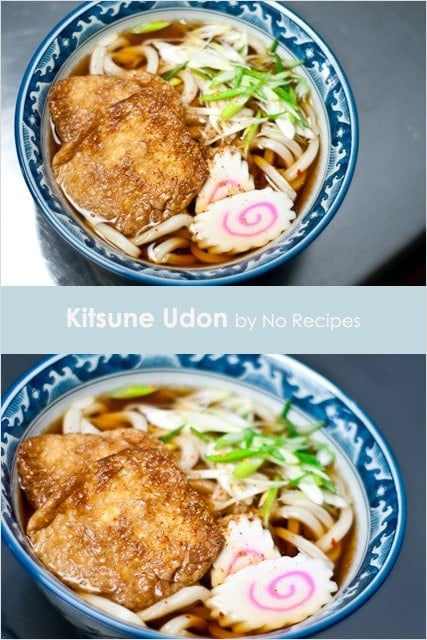
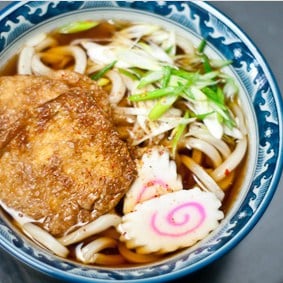
Udon Recipe (Kitsune Udon and Dashi)

February 15th, 2009Recipes, Japanese Recipes, Recipes26 Comments
print Kitsune Udon Recipe
Makes 2 bowls of udon

Ingredients for Dashi:

4 1/2 C water
1/4 C loosely packed kezurikatsuo (shaved bonito)
3″ piece of dried dashi kombu (optional)

Ingredients for Abura-age:

1/4 C water
15 niboshi
2 Tbs soy sauce
1 Tbs mirin
1 Tbs sugar
4 squares of abura-age (thin deep fried tofu)

Ingredients for Udon:

200g dry udon or 300g fresh Udon
4 C dashi
2 Tbs soy sauce
1 Tbs mirin
2 tsp sugar
salt to taste
2 scallions cut on the bias
4 slices of naruto or kamaboko cut on the bias (fishcake)

Method:

For the dashi, bring the water to a boil in a pot. Once it boils, turn the heat down to maintain a gentle simmer (boiling makes the stock cloudy). Put the kezurikatsuo into a disposable tea bag, or wrap it in cheese cloth and tie the top. Drop the satchel in the water along with the kombu if you are using it. You can also just put the kezurikatsuo straight into the water and strain it when the stock is done. Let this steep for about 15 minutes, then discard the tea bag, or strain the stock into another pot and discard the solids.

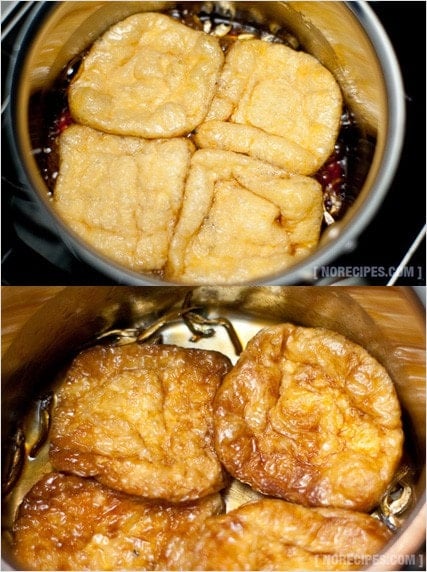
For the Abura-age. Add everything except the abura age into a small pot and bring to a boil. Once the sugar has dissolved, add the abura-age and simmer, flip several times until most of the liquid is absorbed and the abura-age is a deep brown color. Transfer from the pot to a small bowl and allow it to cool a bit. When it’s cool enough to handle, press out some of the excess liquid. You don’t want to squeeze all the liquid out, just enough to keep it from being salty.

Boil a large pot of water and boil the udon for the length of time specified on the package. If the instructions are in Japanese, click here to figure out how long you should boil it for. Make sure the noodles are al dente as they will be sitting in a bowl of hot broth and you don’t want them to go soggy before you’re done eating them. When they’re done, rinse them under cold water to stop the cooking.

To finish it all off, put the dashi, soy sauce, mirin and sugar into a pot and heat until it comes to a simmer. Taste it and add salt if you feel like it needs more. Add the noodles to heat through, then divide them into two bowls. Top with the seasoned abura-age, scallions and naruto then pour the broth over everything. For a little extra color and kick, you can serve this with shichimi togarashi (Japanese 7 spice chili flakes).

Tagged as:

SHARE THE RECIPE & PHOTOS:

Share

Get More Delicious Recipes Below:

  • Udon Noodles (Yaki Udon)

    Udon Noodles (Yaki Udon)

    When it comes to Japanese noodles, there are the big three: ramen, soba, and udon. Udon (うどん) noodles are thick and white, made with wheat flour and salted water. Udon is very popular in and outside of Japan—dishes such as tempura udon and kitsune udon are widely eaten… Udon noodles are available in Japanese/Asian supermarkets, or regular supermarkets with an…

  • Braised Mushroom with Dashi

    Braised Mushroom with Dashi

    I love mushrooms for as long as I can remember, even when I was a little kid. I love mushrooms of all sorts, shiitake, button, enoki, straw mushrooms—canned or fresh. One of the great things about the United States is that I can get fresh mushrooms easily. They are readily available at the market… Whenever I get some fresh shiitake…

  • Soba Recipe (Japanese Buckwheat Noodle)

    Soba Recipe (Japanese Buckwheat Noodle)

    Just a couple of weeks ago, my friend Marc at No Recipes shared his udon recipe with Rasa Malaysia readers. In his guest post, Marc also shared his dashi recipe–the building block of Japanese cuisine. Finally, I knew what to do with the giant piece of kombu (dried seaweed) and dried bonito flakes in my pantry–two classic Japanese ingredients that…

  • Beech Mushrooms Recipe

    Beech Mushrooms Recipe

    In my Asian market, there are always abundant choices when it comes to mushrooms—shiitake, enoki, button, portobello, buna shimeji, chicken drumstick/king oyster mushrooms, etc. I love mushrooms as they are one of the healthiest foods to eat, plus they are low in calories and are often organically grown. This week, both white and brown beech mushrooms (buna shimeji mushrooms) are…

26 comments... read them below or add one

  1. Loooren says:

    Actually, the name “kitsune udon” comes from the old belief that abura-age is their favourite food. Just in case you’d like to know ^_^

    1
  2. Craftpassion says:

    Wow, looks delicious… I love UDON and Ramen. The pictures really makes me feel hungry!

    2
  3. Maria says:

    I am loving this one!! Udon is so tasty!

    3
  4. Anonymous says:

    I love kitsune udon. The kitsune is always so tasty with all the essence soaked into the kitsune. I don’t like the tempura udon because the tempura becomes soggy. Thanks for this udon recipe! :)

    4
  5. Jennifer says:

    What a great dish.. I love all the components that go into it!

    Thanks for sharing the recipe!

    5
  6. helen says:

    It’s great to see you here, Marc.

    My childhood trauma? Chinese dumplings. My mom would send me to school with a thermo lunchbox full of pork and cabbage dumplings she made herself, accompanied by little packets of soy sauce and sesame oil. I was taunted. This was in the 80s, before pot stickers and gyozas became mainstream.

    6
  7. david santos says:

    Great menu and good food! Congrats!!!!

    7
  8. Marc @ NoRecipes says:

    Loooren, ahhh that makes much more sense. Thanks!

    Thanks Craftpassion, udon is so much easier to make (not to mention healthier) than ramen. Give it a try sometime:-)

    Helen, yea early 80′s was around the time I was going through my trauma, so I can relate. Thanks for sharing your story:-)

    8
  9. vegetable says:

    Mean kids. Take comfort in that what you were eating was so much better than that processed drek.

    Love kitsune soba. And since I lived in Japan for 9 years I’m thoroughly missing it and much else these days, that is, when I don’t cook at home or go to my favourite J. restaurant. Trouble is, I want to do that almost every day.

    Thanks for the recipe. :)

    9
  10. Mike says:

    I am so glad you guest post on Rasa Malaysia, and very happy to have discovered your blog. Love the detailed write up about the ingredients and the recipe. Dashi is so good and healthy even French chefs use them nowadays.

    10
  11. white on rice couple says:

    Marc, I completely agree with you about dashi. Since I started cooking with it, there’s no comparison to the flavors and umami.
    This is a beautiful and delicious dish! Wish I had a bowl of this beautiful noodle comfort today.

    11
  12. Marc @ NoRecipes says:

    @Vegetable, I’m sure they weren’t trying to be mean, kids are just very honest. I know what you mean about wanting wanting to go to J restaurants all the time, unfortunately I think it’s also probably the most expensive Asian food.

    12
  13. Rita says:

    Marc, any suggestion for vegetarians that want to have the same great japanese flavours in a soup? How do they do at restaurants I wonder…huummm…. Great post, thanks so much for sharing your knowledge with us.

    13
  14. Marc @ NoRecipes says:

    @Rita, While you could use just kelp or a combination of kelp and shiitake for your stock, to get the truly authentic flavor it needs the dried fish.

    Most restaurants use the dried powdered dashi which is typically a combo of dried seafood with MSG although there are some brands that have MSG-free powdered dashi.

    14
  15. Carolyn Jung says:

    It’s freezing and raining here. A huge bowl of udon would be just the ticket on a day like this.

    15
  16. oh my gosh. i adore kamaboko!! I wish I knew where to get it near-by!! I ALWAYS stuff my face when I go home from college!!

    16
  17. Rose says:

    Just imagine how much PBJ and a pack of Cheetos along with other fast-food American mothers packed brought childhood obesity. Now it’s time for them to abhore fatty food and learn from your mother’s wisdom. You grew up to be such a talented, healthy, (and pretty!!) cook and I really admire you for overcoming dreadful moments from the kindergarten.

    17
  18. Pingback:Basic Udon with Pan-Fried Tofu « Big Scary Kitchen

  19. Pingback:52 Breakfasts: #13 « Snapping Dreams

  20. Mike C. says:

    Hello, thank you for the great recipe! I’m a university student, so quick delicious recipes are always good to find! :)

    20
  21. Now that’s what I was looking for – a genuinely authentic udon recipe that would remind of the year I spent teaching English in Japan! Thank you so much, most of the udon recipes on the internet are just about plain old noodles, I was starting to doubt that anyone knew what real udon was!!!

    21
  22. Pingback:Kitsune (“Fox”) Udon | Eat It, Atlanta

  23. Pingback:Miso Soup Recipe « Cooking with Alison

  24. Bou says:

    I made this last nite and it was soo good! Thanks!

    24
  25. Pingback:This Week’s Menu «

  26. Pingback:Kitsune Udon and Cucumber Wakame Sunomono « Dinner With Weijia

Leave a Comment

Your email address will not be published. Required fields are marked *

*

You may use these HTML tags and attributes: <a href="" title=""> <abbr title=""> <acronym title=""> <b> <blockquote cite=""> <cite> <code> <del datetime=""> <em> <i> <q cite=""> <strike> <strong>