
This post may contain affiliate links. Please read my privacy policy.
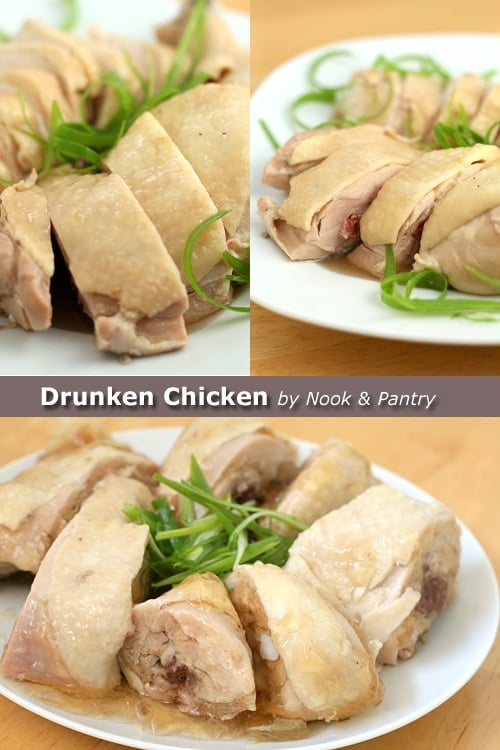
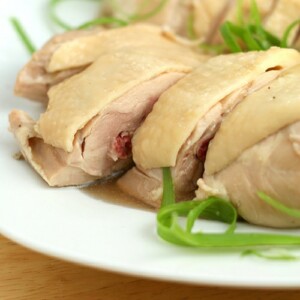
Drunken chicken is a Shanghainese cold dish where chicken is steeped in rice wine, hence "drunken chicken." This drunken chicken recipe is by Nook & Pantry.
Nook & Pantry is a food blog I follow and admire since the early days. Over the past few years, I have watched the blog blossoms with mouthwatering recipes and seriously exceptional food photography.
Authored by Amy, Nook & Pantry is a journal of Amy’s cooking. I love the recipes on Nook & Pantry—simple, delicious, and down-to-earth everyday dish. Please welcome Amy as she shares her family’s drunken chicken recipe, a Shanghainese dish that I truly enjoy.
When Bee asked me to write a guest post for Rasa Malaysia, I immediately said yes. Rasa Malaysia is one of my favorite food blogs and writing a guest post is a tremendous honor. Agreeing was a no-brainer—choosing a recipe, on the other hand, was the hard part.
I was torn between a recipe that showcases the wonderful seafood we have here in the Pacific Northwest or something that pays tribute to my Chinese heritage.
While we both love seafood, but in the end, because of Bee’s focus on Asian cuisine, I settled on the latter. My family is from Shanghai and drunken chicken is a well-known specialty of the region. Summer is coming to an end but for areas of the country still experiencing lingering heat, this cool and refreshing recipe could be just what you’re looking for.
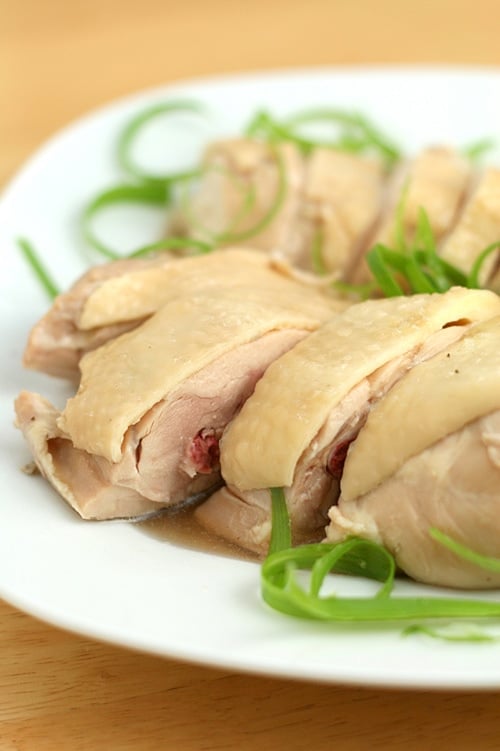
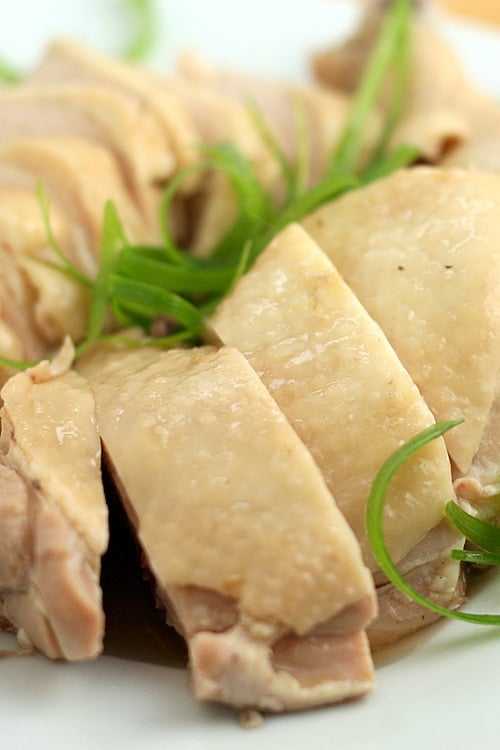
When I visited my relatives in Shanghai many years back, I remember my uncle made the best drunken chicken. He pulled out an unassuming looking Tupperware from the fridge, but inside sat bite-sized pieces of chicken with a shiny, bouncy skin, surrounded by wine spiked aspic.
Drunken chicken is traditionally made with a whole chicken but no matter how delicately I cook the chicken, the breast meat is never as tasty as the dark meat.
The first time I made this, I used a whole chicken, but the second time I used just the leg quarters and was much happier with the results. There are two techniques you can use to cook the chicken.
The more traditional way is to poach a whole chicken gently in a pot of barely simmering water. The plus side is that huge pot of water transforms into the most delicious chicken broth that’s great for soups. Or you can steam the chicken.
Dark meat is way more forgiving of the higher heat in the steamer. No one likes dried out, cardboard chicken breast no matter how much booze you soak that sucker in. After steaming, the chicken legs release about a cup of gelatin packed chicken stock concentrate and after it’s mixed with shao hsing rice wine, it solidifies into a delicate aspic.
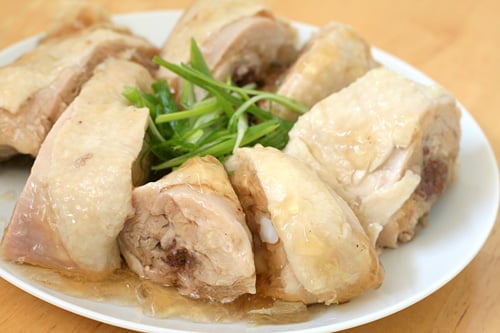
The jello, gelatin, aspic, whatever you want to call it, is the best part! It’s nothing like the strangely colored, rubbery concoction ubiquitous to American cafeterias. This chicken and wine flavored aspic hugs each piece of chicken and melts instantly in your mouth, serving as a built in self-basting system for the chicken.
But if jello isn’t for you and regardless of which method you choose to cook the chicken, drunken chicken is best served cold. You can serve it alone as an appetizer or with a bowl of noodles in hot chicken broth or fluffy white rice for a juxtaposition of temperatures.
There’s one catch—the Chinese cleaver. After cooking, it’s traditional to use the Chinese cleaver to chop the chicken into bite-size pieces that can be easily picked up with chopsticks.
One decisive twack is designed to cut through skin, meat, and bone. Don’t try to do the same with a chef’s knife, it will never forgive you. A Chinese cleaver is heavy duty because the weight of the knife does most of the work.
The trick is to aim well and make one strong decisive movement. Even a split second of hesitation will translates a botched cut job where the cleaver doesn’t make it all the way through the bone, or bone shards.
If you don’t own a Chinese cleaver or don’t want to deal with butchering chicken, that’s okay! You can cook drumsticks, which are smaller, score larger pieces of meat down to the bone before marinating so the wine has a chance to penetrate.
Frequently Asked Questions
This recipe is only 487 calories per serving.
What To Serve With Drunken Chicken
For a wholesome meal and easy weeknight dinner, I recommend the following recipes.
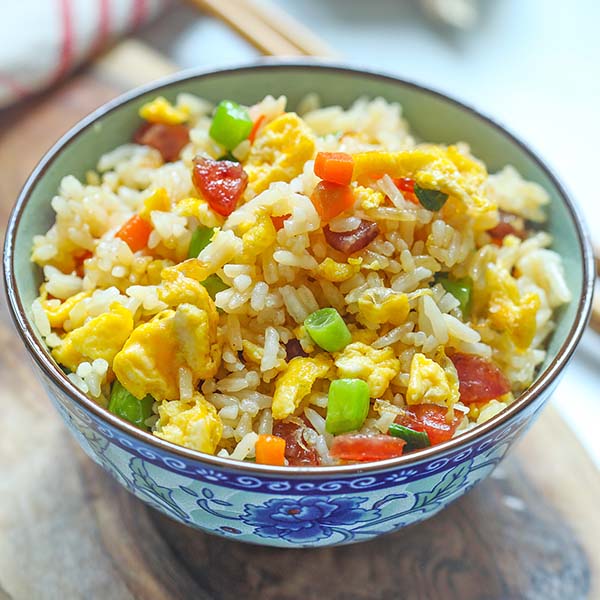
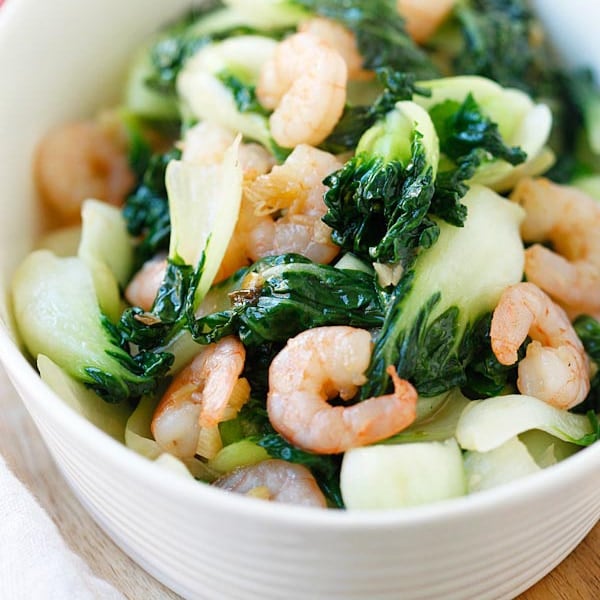
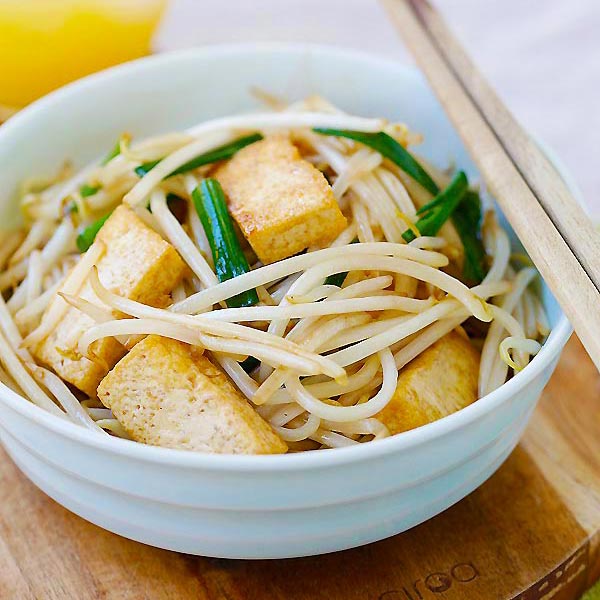
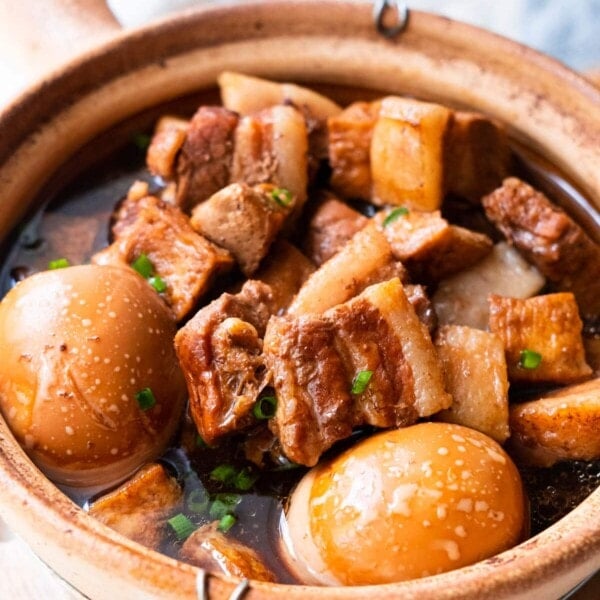
I hope you enjoy this post as much as I do. If you try my recipe, please leave a comment and consider giving it a 5-star rating. For more easy and delicious recipes, explore my Recipe Index, and stay updated by subscribing to my newsletter and following me on Facebook, Pinterest, and Instagram for new updates.
Drunken Chicken
Ingredients
- 3 lbs chicken, dark meat preferably
- 2 tablespoons salt
- ¼ teaspoon ground black pepper
- ¼ teaspoon ground white pepper
- ½ oz ginger, thinly sliced
- 4-6 green onion, white parts only, sliced lengthwise
- 1½ cup Shaoxing rice wine
- 2 teaspoon white sugar
- Ice cubes and water
Instructions
- Mix the salt with the two types of pepper. Rub the mixture all over the chicken and let it sit for an hour.
Poaching Method:
- Bring 6 cups of water to a boil in a Dutch oven or large pot. Add the green onion bottoms and ginger. Add the chicken, ensuring it is fully submerged in the water, and return to a boil. Lower the heat to a gentle simmer and cook for 10 minutes. If using a whole chicken, after 10 minutes of simmering, lift the chicken out of the water and allow any stock in the cavity to drain back into the pot.
- For a whole chicken, repeat this process three times. For chicken pieces or leg quarters, gently stir the pot or redistribute the leg quarters to ensure even cooking. After 10 minutes, cover the pot, turn off the heat, and allow the chicken to poach undisturbed until the water cools to nearly room temperature.
Steaming Method:
- Bring water to a boil in the steamer. Place the chicken in an even layer and scatter the green onion and ginger on top. Steam over medium heat for 30–40 minutes, or until the internal temperature near the bone reaches 165°F–170°F (73°C–76°C). If the chicken pieces are larger, they may take longer to steam. If any pieces are touching, be sure to redistribute them midway through cooking to ensure even cooking.
- Mix the ice cubes and water to create an ice bath, then shock the chicken in the cold water for 2 minutes. If you poached the chicken, shock it after it has cooled to room temperature. If you steamed the chicken, shock it immediately after steaming.
- After cooking, cut the chicken into bite-sized pieces or score the meat with a knife. Place the chicken pieces in a large container. Mix 3/4 cup to 1 cup of the chicken stock (the liquid from poaching or the liquid released from steaming) with the sugar and rice wine. Taste the marinade and add salt if needed. Pour it over the chicken pieces and let it marinate in the fridge for at least overnight before serving. Serve cold.
Nutrition
Nutrition information is automatically calculated, so should only be used as an approximation.






I serve mine with Ginger and scallions in wine (must be fresh)
Those are yours alright! . We at least need to get these people stealing images to start blogging! They probably just did a image search and grabbed them. They look good though!
Hi, I check your blog like every week. Your writing style is witty, keep it up!
Thx for sharing.Great
I planned to go China, but suspended by the coronavirus, so can only learn Chinese at home and took the live online lesson by communicating with native-Chinese teachers from eChineseLearning
It seems good currently. Do you think this method of learning is realistic?
Sure whatever works for you!
Hi, can I subtitute shaoxing wine with ang ciu?
Ang ciu has sweet taste. Thanks.
I don’t know what is ang ciu so I am not sure.
I’ve done it with sweet wine, also amazing. My family usually made it with whiskey
Would I be able to use Sake instead of shao xing wine?
Yes you can. But it won’t have the iconic Shaoxing wine taste.
Using the poaching method, with a whole chicken, how long is the cooking time? It seems to be 10 minutes plus time to cool… is that right?
Hi would it taste as good If I buy chicken that is already chop up?
Yes you can use that.