
This post may contain affiliate links. Please read my privacy policy.
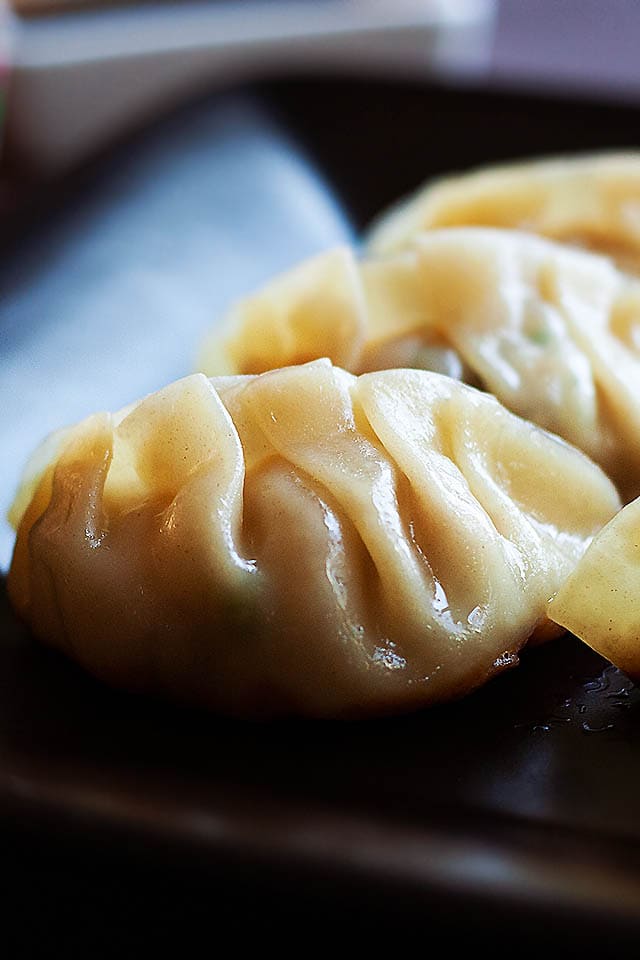
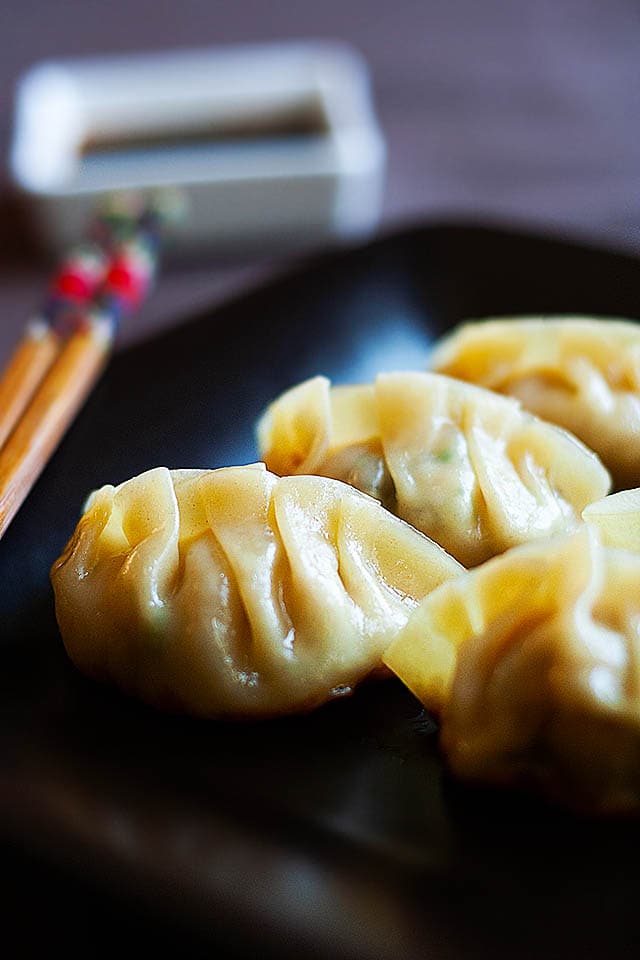
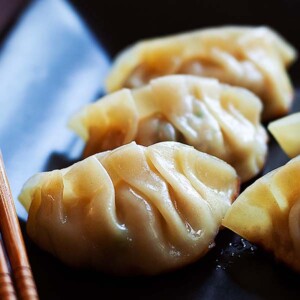
Gyoza are Japanese dumplings filled with moist and juicy ground pork and vegetables, steamed and pan-fried to crispy golden brown on the bottom.
What Is Gyoza
Gyoza is a type of Japanese dumplings, with juicy meat filling inside of dumpling wrappers.
Originating from Chinese jiaozi dumplings, they have become a mainstay of Japanese recipes. It’s very popular in and outside of Japan.
In the United States, you can find them at Japanese restaurants and Asian-themed restaurants.
They are often served as an appetizer, or part of a combo meal or in a bento box. For an extra burst of umami, consider adding a shoyu egg alongside your gyoza.
For an air fryer version, check out my Air Fryer Gyoza recipe!
How To Cook Gyoza Dumplings
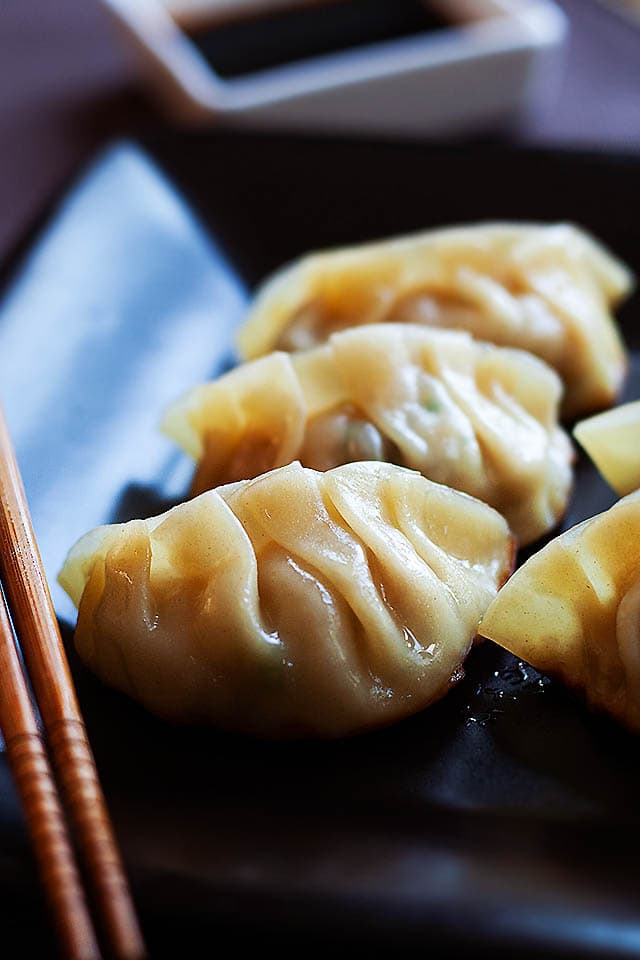
There are four ways of preparing the bite-sized dumplings: steamed, boiled, pan-fried and deep-fried.
I love them pan-fried, or yaki-gyoza in Japanese.
They are pan-fried to crispy golden brown at the bottom and then steamed. Every bite is soft yet crispy in texture.
Gyoza Sauce
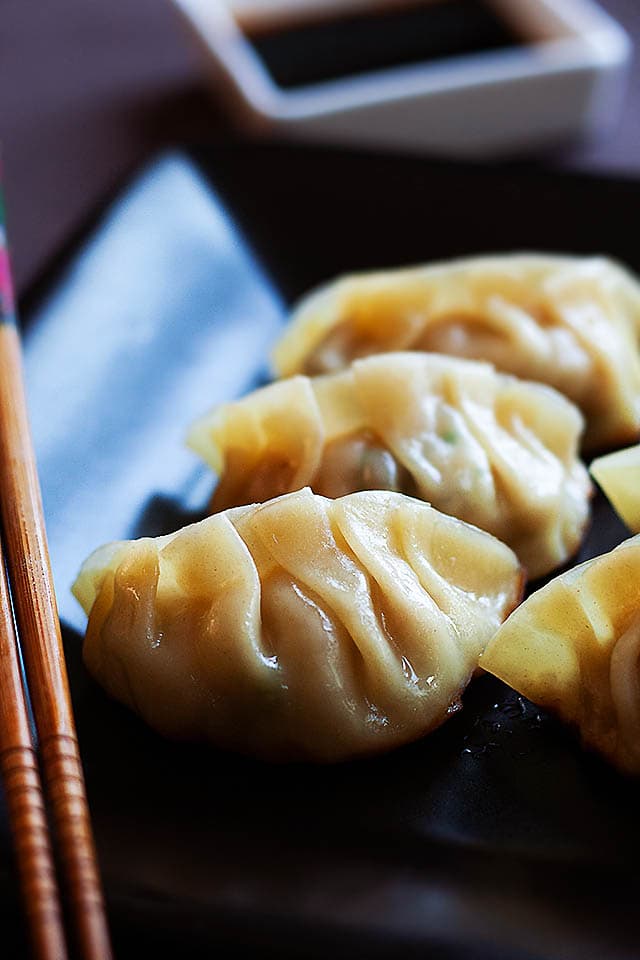
You can serve gyoza without any dipping sauce, but for the best flavors, serve with a Ponzu-based (citrus soy sauce) dipping sauce.
The sauce completes the taste of these dumplings.
You can add toasted sesame oil to the sauce, making it aromatic and fragrant.
Additionally, you can add some sliced ginger strips to the sauce for an extra kick.
How To Wrap Gyoza
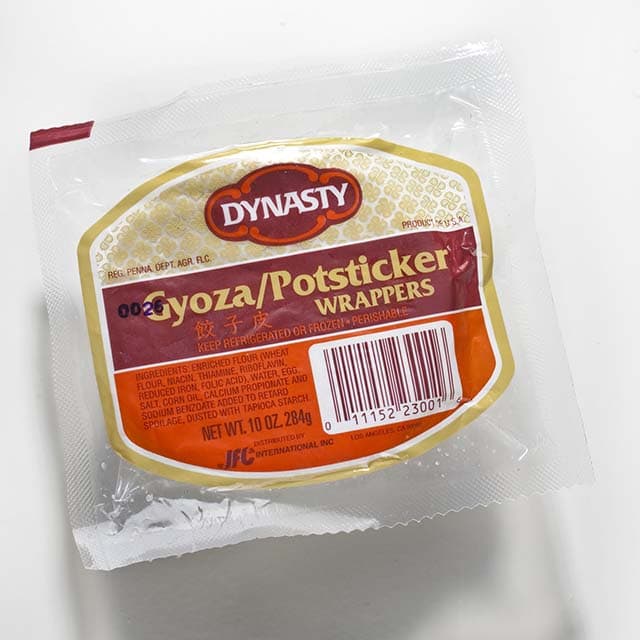
- First, place the filling (you can use pork, chicken or vegetables) in the middle of a wrapper. You can buy the wrappers from regular food stores or Asian food stores. They come in plastic packages like the picture below.
- Next, add water around the outer edges of the wrapper and fold it up into a half moon shape.
- Using your fingers, fold the wrapper opening into pleats and seal tight.
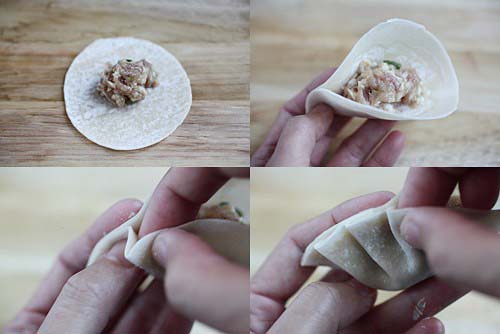
Practice makes perfect when it comes to the wrapping skill. If you are new to this, you may skip the pleats.
Frequently Asked Questions
Technically, there is no difference between the two as a lot of Japanese foods originated from Chinese food.
The former is usually made from thinner, smaller, and more delicate wrappers. The filling is more finely textured.
Potstickers are also usually bigger in size.
Yes, you can make and freeze them up to 3 months in advance.
Place them in a plastic bag and freeze in the freezer. Thaw to room temperature before cooking.
This recipe is only 186 calories per serving.
What To Serve With Gyoza
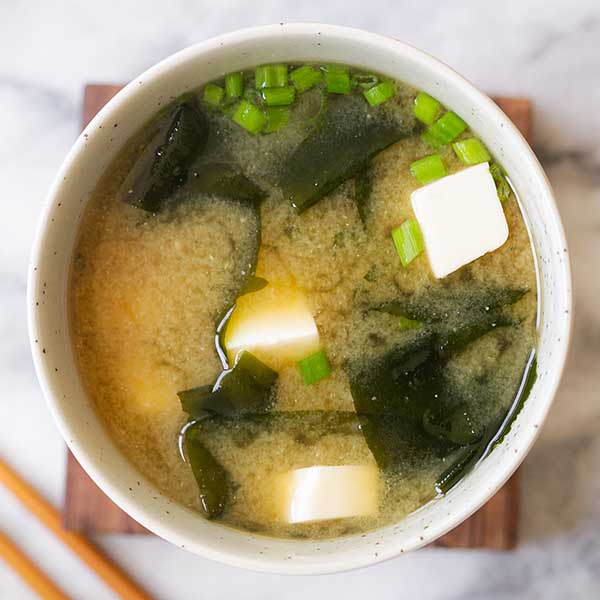
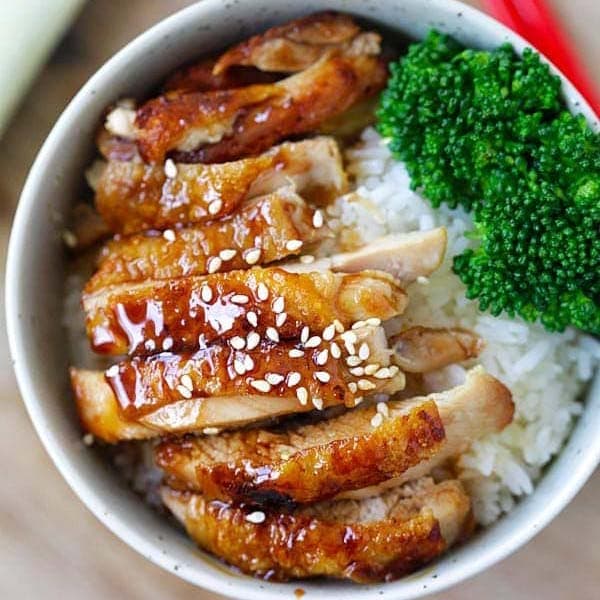
This meal is best served as an appetizer along side my Japanese Cucumber Salad. For a wholesome Japanese meal and easy weeknight dinner, I recommend the following recipes.
I hope you enjoy this post as much as I do. If you try my recipe, please leave a comment and consider giving it a 5-star rating. For more easy and delicious recipes, explore my Recipe Index, and stay updated by subscribing to my newsletter and following me on Facebook, Pinterest, and Instagram for new updates.
Other Recipes You Might Like
Gyoza (The Best Recipe!)
Ingredients
- 1 packet gyoza wrapper, store-bought
- oil, for pan-frying
- water, for steaming
Filling:
- 8 oz. ground pork
- 2 oz. cabbage, shredded and cut into small pieces
- 1 thumb-sized ginger, peeled and grated
- 1 clove garlic, peeled and grated
- 1/2 tablespoon cornstarch
- 1 tablespoon soy sauce
- 1/2 tablespoon sake
- 3 dashes white pepper
- 1/2 teaspoon sesame oil
- 1 tablespoon chopped scallion, green part only
- 1 pinch salt
Gyoza Sauce:
- 4 tablespoons Japanese Ponzu
- 1/2 teaspoon sesame oil
Instructions
- In a bowl, combine all the ingredients in the Filling and blend well. The Filling should be sticky and cohesive.
- To make Gyoza Sauce, combine the Ponzu with the sesame oil in a small dipping bowl. Stir to blend well.
- To assemble the gyoza, place a piece of the gyoza wrapper on your palm or a flat surface. Spoon about 1 teaspoon of the filling onto the center of the wrapper. Dip your index finger into some water and moisten the outer edges of the dumpling wrapper.
- Fold the gyoza over, press, and seal the left end. Use your thumb and index finger to create pleats and pinch to secure tightly. Repeat the process to form more pleats (start with 3-4 pleats if you're a beginner). A nicely wrapped gyoza should have a crescent shape.
- Heat the oil in a skillet or stir-fry pan over medium heat. Arrange the gyoza in the pan and cover with a lid. Pan-fry the gyoza until the bottoms turn golden brown and crispy.
- Add about 1/4 inch of water to the skillet or stir-fry pan and cover with the lid immediately. The water should evaporate after a few minutes. Continue to cook the gyoza for a couple more minutes to crisp up the bottoms. Remove the gyoza from the skillet or stir-fry pan and serve immediately with the gyoza sauce.
Video
Notes
- To grate the ginger and garlic, you can use a Japanese grater (oroshigane) or Microplane.
- Get a good brand of gyoza wrappers. Gyoza wrappers are generally thicker compared to other dumpling wrapper. Most of them are round in shape, but some are oval-shaped.
- For easier assembling, I suggest the round-shaped gyoza wrappers. If you can’t find gyoza wrappes, you can always use pot sticker wrappers, or Chinese jiaozi wrappers.
- Traditionally, Japanese home cooks use their hands to mix the gyoza filling for the best texture. You can adapt this recipe and make vegetarian gyoza.
Nutrition
Nutrition information is automatically calculated, so should only be used as an approximation.






Hello Bee,
Many thanks for your recipes, I am an avid follower of your blogs and have been for a number of years, great recipes and simple to follow.
Would you suggest Napa cabbage or just regular cabbage for the gyoza filling?
Kind regards
Graeme
Hi Graeme. You can use either kind of cabbage. Napa cabbage will be more tender. If using green cabbage, you may need to chop it more finely so that it cooks quickly.