Spicy Fish Custard

My favorite Nyonya sweetcake

Torch Ginger Bud

Posts tagged as:

Vegetables

Tempura (Shrimp and Vegetables)
Tempura (Shrimp and Vegetables) pictures (1 of 3)
Click the image to see next picture

A few weeks ago, I tweeted about guest bloggers on Rasa Malaysia and Mable Tan—a fellow Malaysian who resides in Australia—responded and came to my rescue. Mable is a fantastic baker and a great cook; her blog “Happy Monkee” is beautiful and delicious. In her past life, Mable was a writer and stylist working with Seventeen, Marie Claire, Female (leading magazine in Malaysia and Singapore) and Going Places (inflight magazine of Malaysia Airlines). Please check out Mable’s guest post below and learn the secrets of making light and crispy tempura, a popular Japanese recipe. Please also pay a visit to her blog. Thank you!

Unlike Japanese breadcrumb (panko), tempura is a lighter, fluffier version. The idea is to keep the batter as cold as possible and also not over-mixing the batter. I’m so used to clump-free mixes that it takes ginormous willpower not to beat it till it’s smooth. Apparently, an over-mixed batter will result in activating the wheat gluten and causing the batter to be more chewy and dough-like when fried (great if you’re making doughnuts).

Now, what you might not know about tempura is that it was actually introduced to the Japanese by Portuguese missionaries and traders. The first shogun of Japan, Tokugawa Ieyasu, loved it so much it became widespread and adopted into the culture. If you go to Portugal today, there is a very similar dish called peixinhos da horta or “garden fishies…”

Click for more

{ 14 comments }

Nabe (Yose Nabe/Japanese Hot Pot)
Nabe (Yose Nabe/Japanese Hot Pot) pictures (1 of 7)
Click the image to see next picture


(Attend hands-on hot pot workshop in Los Angeles by Harris Salat, the author of Japanese Hot Pots. Classes are available on November 14-15, 2009. Click here to learn more.)

Fall is in the air, even here in Southern California. Days are getting shorter and cooler. These past few days, the sky has been dull and wintry and this morning, it rained.

I start craving foods that keep me warm—soups, hearty stews, and hot pots. To me, nothing tastes quite as invigorating and uplifting than a meal of simmering hot soup or stew. I made nabe, or Japanese hot pot, a delicious medley of ingredients steeped in dashi broth and cooked inside a clay donabe, or nabe pot…(get nabe or Japanese hot pot recipe after the jump)

Click for more

{ 22 comments }

(Gallery updated with sambal asparagus with prawns/shrimps.)
Sambal is core to many signature Malaysian recipes. In its most basic composition, sambal is a condiment or chili paste made with chilies and belacan (Malaysian shrimp paste), although other ingredients such as garlic, shallots, lemongrass, galangal, etc. might be added to suit each individual recipe. Traditionally pounded with a mortar [...]

{ 22 comments }

I made this string beans (french beans) recipe a few months ago but haven’t gotten to posting it. Called 干煸四季豆, this is a popular Chinese recipe that is mostly served in Chinese restaurants here in the US.
I love the texture of the deep-fried string beans; the great flavors came from stir-frying the string beans (french [...]

{ 35 comments }

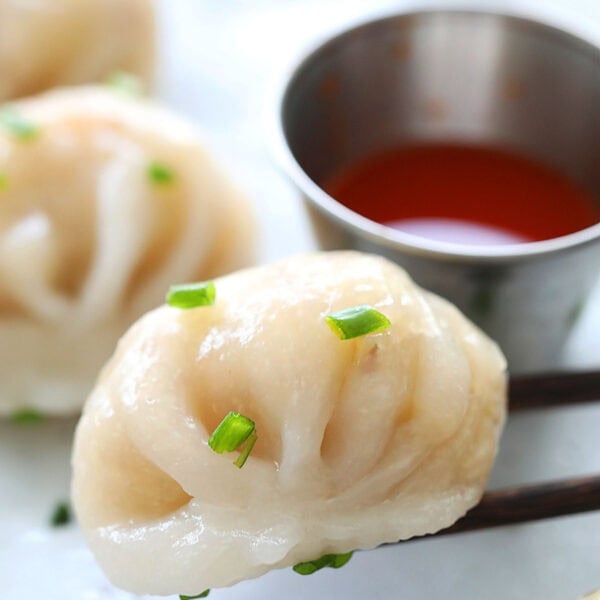
This is an example of perfectly cooked pan-fried dumplings (煎饺)–probably one of the best dumplings I have ever tasted (even my Chinese friends were raving about them).
I love it that these dumplings are so pretty with delicate pleats and light brown marks of pan-fried glory. I don’t think they used water to pan-fried these dumplings…they [...]

{ 19 comments }

When it comes to traditional Chinese recipes, I always turn to Use Real Butter as my ultimate online resource. (I learned how to make Chinese dumplings and potstickers from her.) Use Real Butter is a seriously good blog–very down-to-earth, real, and choked full of delicious recipes plus breathtaking landscape photography and some of the cleanest [...]

{ 23 comments }

(Chinese recipes, prepare authentic Chinese food now!)
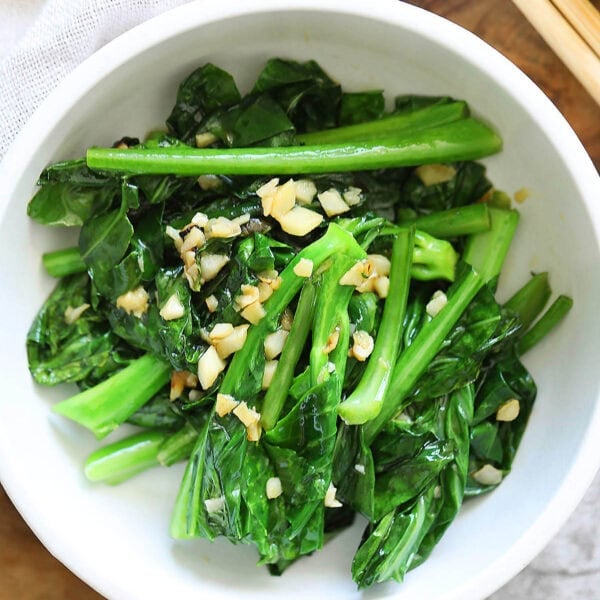
Vegetables are healthy and great, but they are boring and hard to cook. Unlike protein (such as meat or fish), vegetables don’t have much flavor. In Chinese cooking, the key to cooking vegetable dishes lies in the creative use of  side ingredients and sauces to bring out the taste [...]

{ 23 comments }

(Chinese recipes, prepare authentic Chinese food now!)
Chinese dim sum is my favorite. Other than the regular har gao (steamed shrimp dumplings) and sui mai, I also love steamed buns . (Previously, I made some red bean steamed buns.) I simply love the soft and pillowy texture of chinese steamed buns–known as bao (包)–filled with meat, [...]

{ 33 comments }

Page 1 of 212»