
This post may contain affiliate links. Please read my privacy policy.
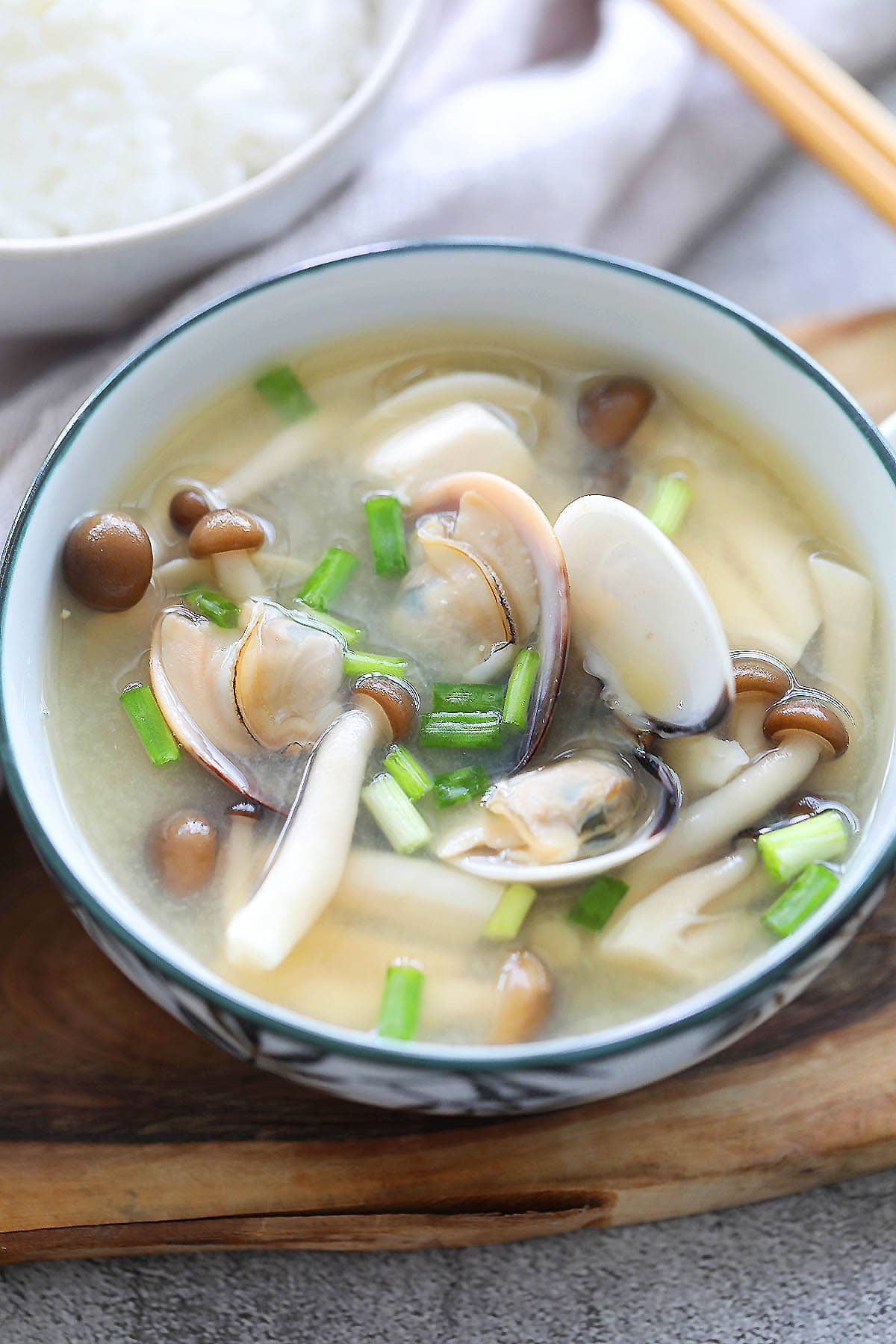
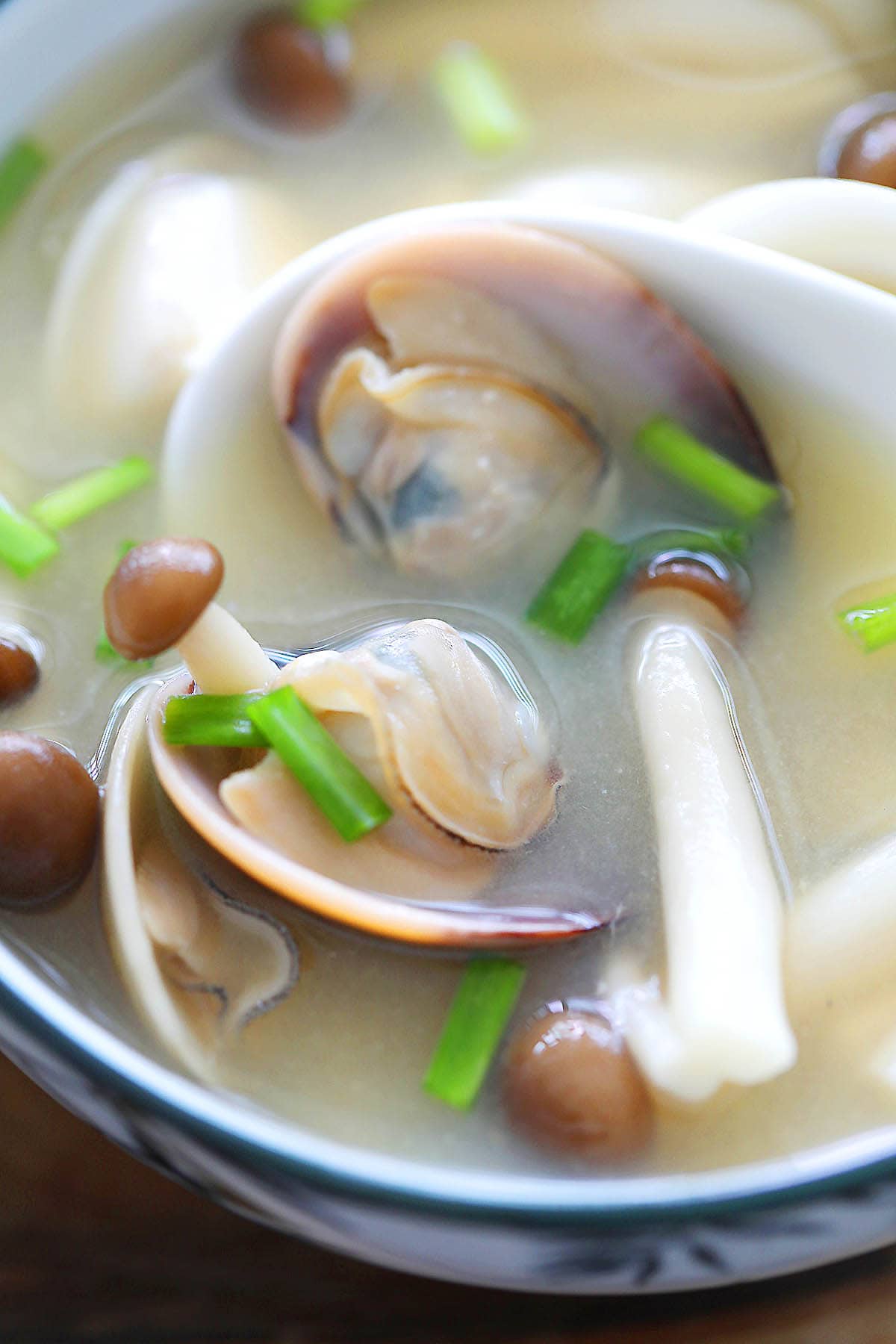
This miso soup with clams is my favorite way to turn a basic dashi broth into a deluxe seafood bowl with fresh, briny clams. It takes less than 15 minutes to make and is far superior to any instant packet.
Recipe Summary
- 🔪 Prep Time: 10 minutes
- 👨🍳 Cook Time: 5 minutes
- ⏱️ Total Time: 15 minutes
- 🍽️ Servings: 3 people
- 🏷️ Calories: ~94 calories
- 🍳 Cook Method: Simmer
- ✨ Flavor Profile: Rich, umami, and briny with savory miso and delicate seafood flavor
- 🧩 Difficulty: Very easy (A quick 1-pot soup)
SUMMARIZE AND SAVE THIS CONTENT ON
Miso Clam Soup
I can’t seem to find anyone who doesn’t like Miso Soup. It is the ubiquitous Japanese soup that is commonly served with Japanese lunch combos (bento boxes) in the United States. I am a big fan of miso soup because it is light and invigorating with the simplest of ingredients. For this seafood version, I always reach for my homemade Dashi because it provides a clear, toasted canvas that lets the natural brine of the shellfish take center stage. If you have not tried making your own stock yet, you should definitely check out my Dashi Recipe to see how easy it is to achieve that perfect, golden clarity without any fishy smell.
I love slurping this miso clam soup (asari miso soup) when it turns cold in the western hemisphere. It is such a comfort food. This is my deluxe version of plain miso soup. The addition of clams infuses the traditional serving with a tint of brininess. I love clams, so the more clams in the miso soup, the better the taste. It took me less than 15 minutes to make this asari miso soup; it is perfect for a quick lunch or a light dinner paired with Chicken Teriyaki. Just don’t forget the steamed rice!
Want to try another staple Japanese comfort food? Check out my Green Tea Rice recipe!
How To Clean Clams
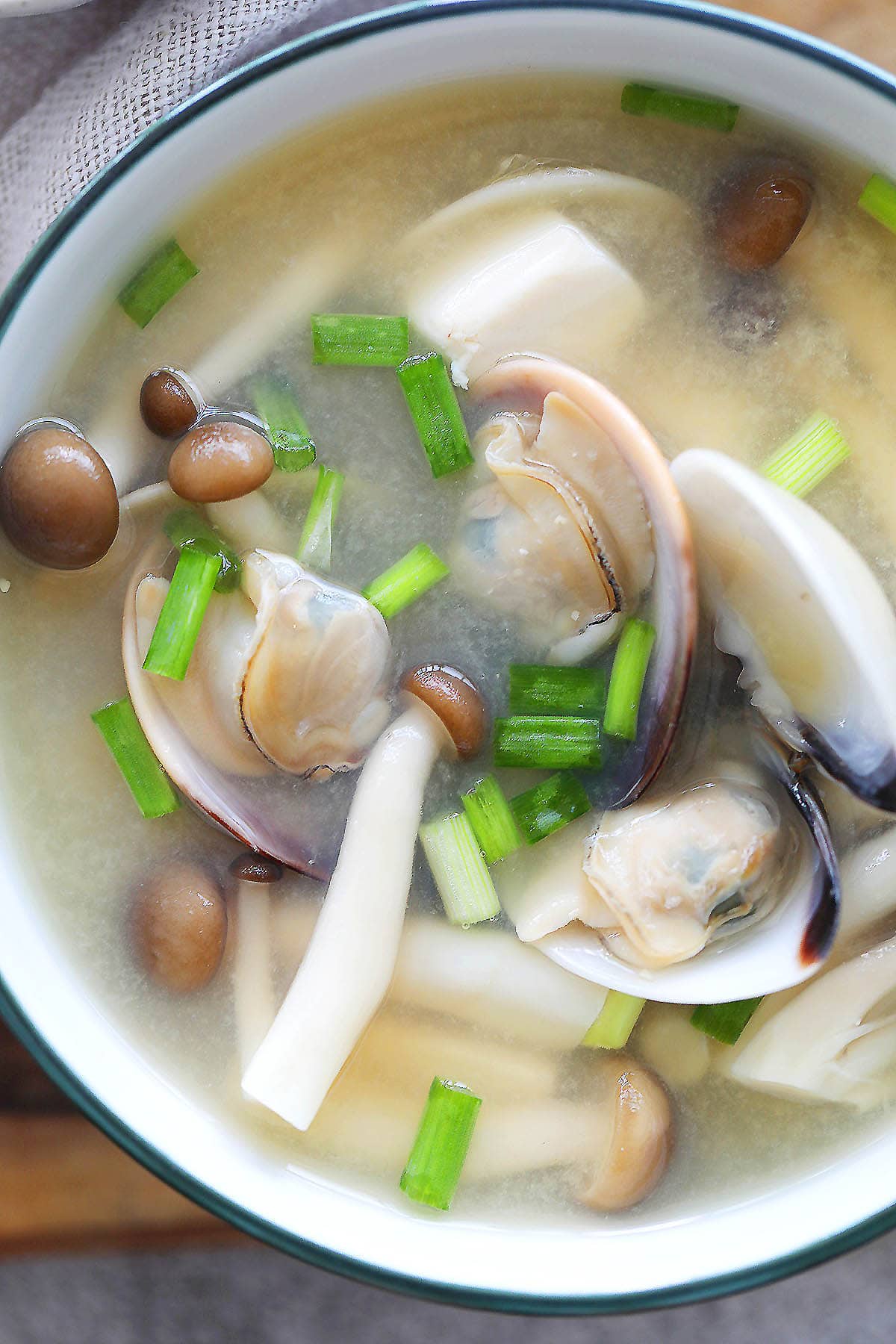
Before you start cooking, you must make sure your asari (clams) are completely free of sand and grit. Even a tiny amount of debris can ruin the silky texture of your asari miso soup. Follow these steps to get them ready for the pot:
- The Saltwater Soak: Place your clams in a bowl of cool water. Add a generous pinch of sea salt to mimic their natural ocean environment.
- The 20-Minute Purge: Let them sit undisturbed for at least 20 minutes. This encourages the clams to “spit out” any hidden sand or silt.
- The Final Scrub: After the soak, drain the saltwater and give the shells a quick scrub under cold running water to remove any external grit.
- The Colander: Let them sit in a colander until you are ready to slide them into your hot dashi.
How To Choose The Freshest Clams
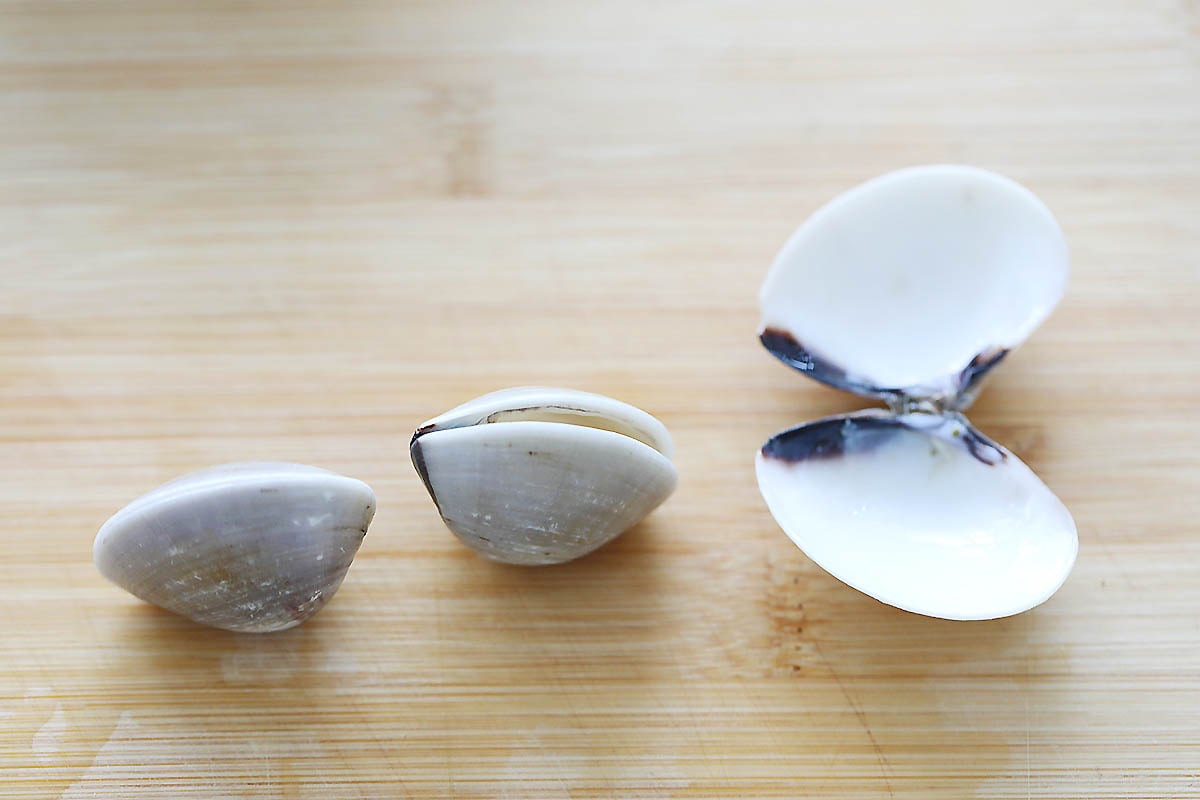
It is easy to miss a few bad ones at the market. Doing your own quality control while cleaning at home is the best way to keep your soup fresh. Look for these three signs:
- The Pry Test: If a clam is tightly closed like the one on the left, it is healthy and alive. Its muscle is strong enough to keep the shell clamped shut. If it stays shut when you try to pry it open, it is good to go.
- The Smell Test: If a clam is slightly open like the one in the middle, give it a quick tap. A live one will snap shut. If it stays open, give it a sniff. It should smell like the clean ocean; if it smells foul, toss it out so it doesn’t ruin your broth.
- Watch For Empty Shells: If a shell is gaping wide open like the one on the right or feels unusually light, it is likely dead or empty. Discard these before they hit the dashi.
Ingredients You’ll Need
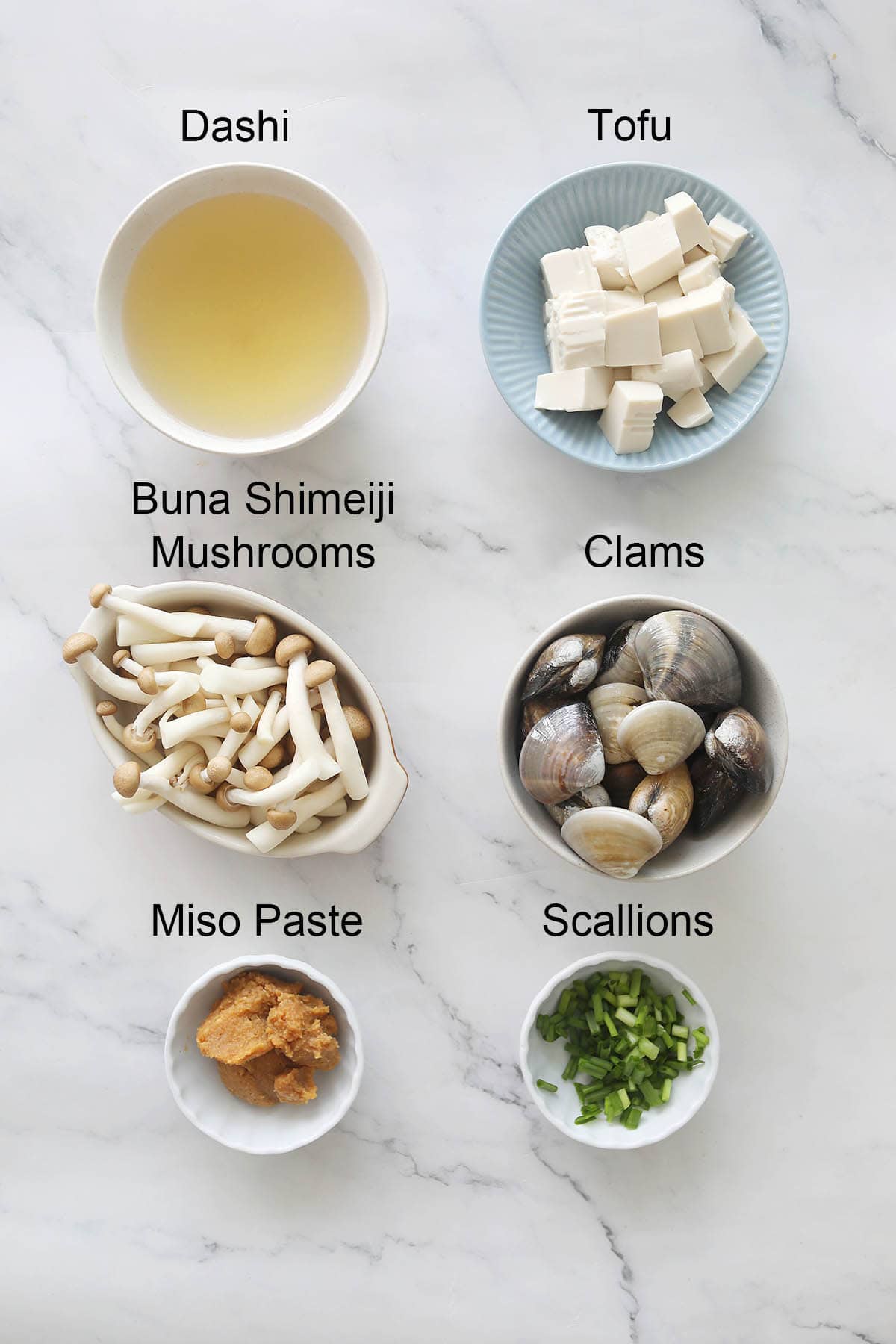
- Dashi
- Tofu
- Buna shimeji mushrooms
- Clams
- Miso paste
Check the recipe card at the bottom of this post for all the ingredient details.
Pro Tip #1: Why Homemade Dashi Is Best
I always use my homemade Dashi because it creates a clean, toasted base that let the natural brine of the clams shine. It keeps the soup from tasting too salty or processed, so the delicate seafood stays the star of the show.
Pro Tip #2: Why Silken Tofu Is Better For Seafood
I always go for silken tofu in this recipe because it has a delicate, custard like texture that melts in your mouth. Using firm tofu makes the bowl feel too heavy and rubbery. Silken tofu is much lighter, which balances out the chewy bite of the fresh clams perfectly.
Pro Tip #3: Why I Use Brown Buna Shimeiji Mushrooms
I love brown buna shimeji mushrooms for their mild flavor and satisfying snap. They hold their shape and won’t turn mushy in the broth. I don’t recommend shiitake here because the flavor is too strong and will overpower the delicate clams. If you cannot find these, white buna shimeiji mushrooms and enoki mushrooms are a great substitute for a lighter bite.
Pro Tip #4: Why I Use Manila Clams (Asari)
If you are in the U.S., use Manila clams as they have a sweet, briny flavor and thin shells. If you can’t find them, littleneck or hard-shell clams are great substitutes for a similar seafood kick. I don’t recommend using large clams like Quahogs because they are too tough and take much longer to open.
Shopping Guide: Miso Paste
For this recipe, I used Hikari Enjuku Koji Miso because its natural sweetness and rich koji flavor pair perfectly with the briny clams. If you cannot find this specific variety, you can also use White Miso for a lighter taste or Awase Miso for a balanced, savory blend. I recommend brands like Hikari Miso, Marukome, and Miko Brand because they offer high quality, additive free options that keep your broth tasting authentic and fresh.
How To Make Miso Soup With Clams
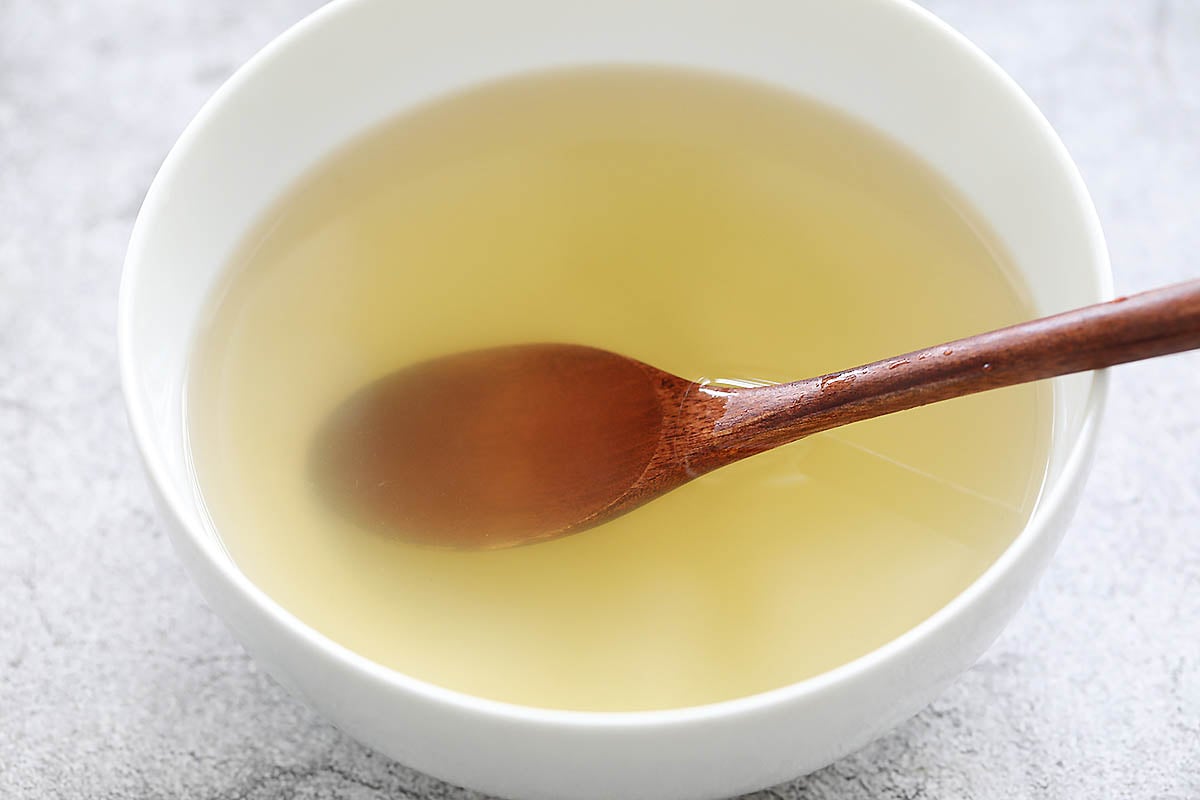
Pour your homemade Dashi into a pot and bring it up to a boil over medium heat.
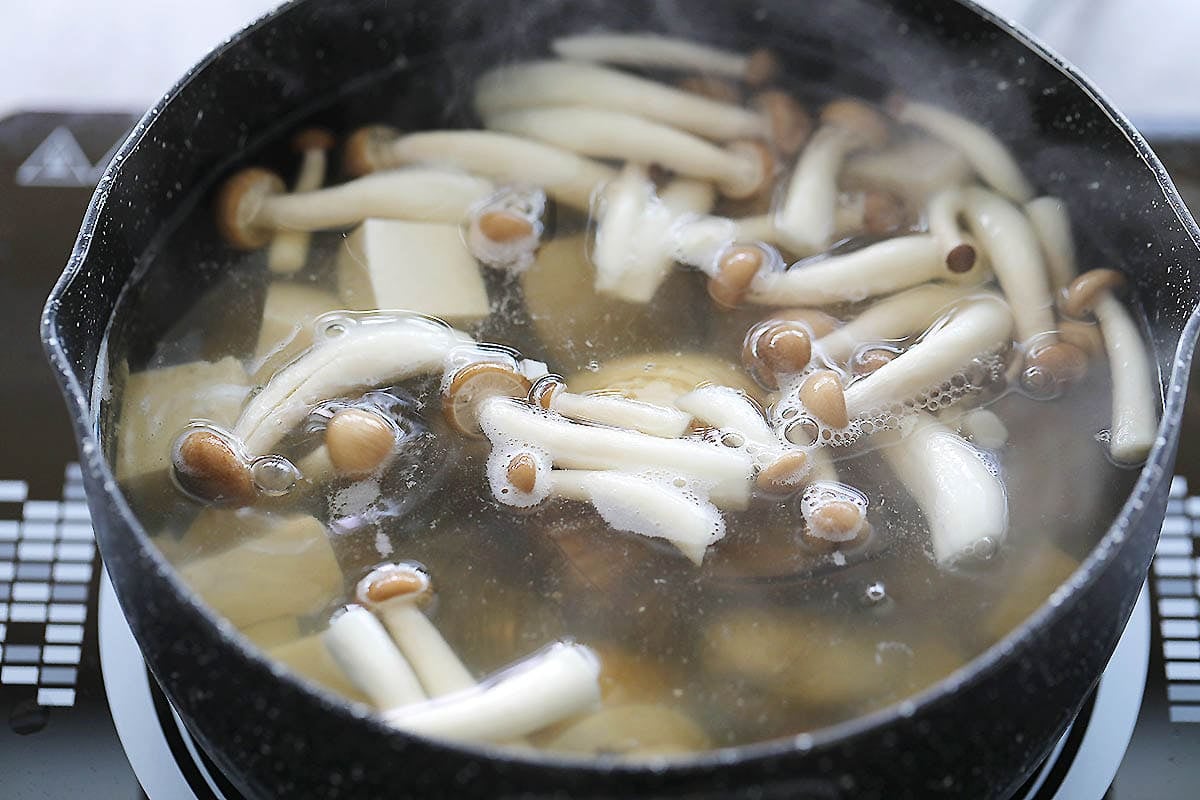
Carefully slide in your silken tofu cubes, the mushrooms, and the cleaned clams. Let everything boil together for about 3 minutes.
Pro Tip: I usually boil the soup for about 3 to 5 minutes until the clams pop wide open. You want to pull the pot off the heat as soon as they open so the clam meat stays tender and doesn’t become rubbery.
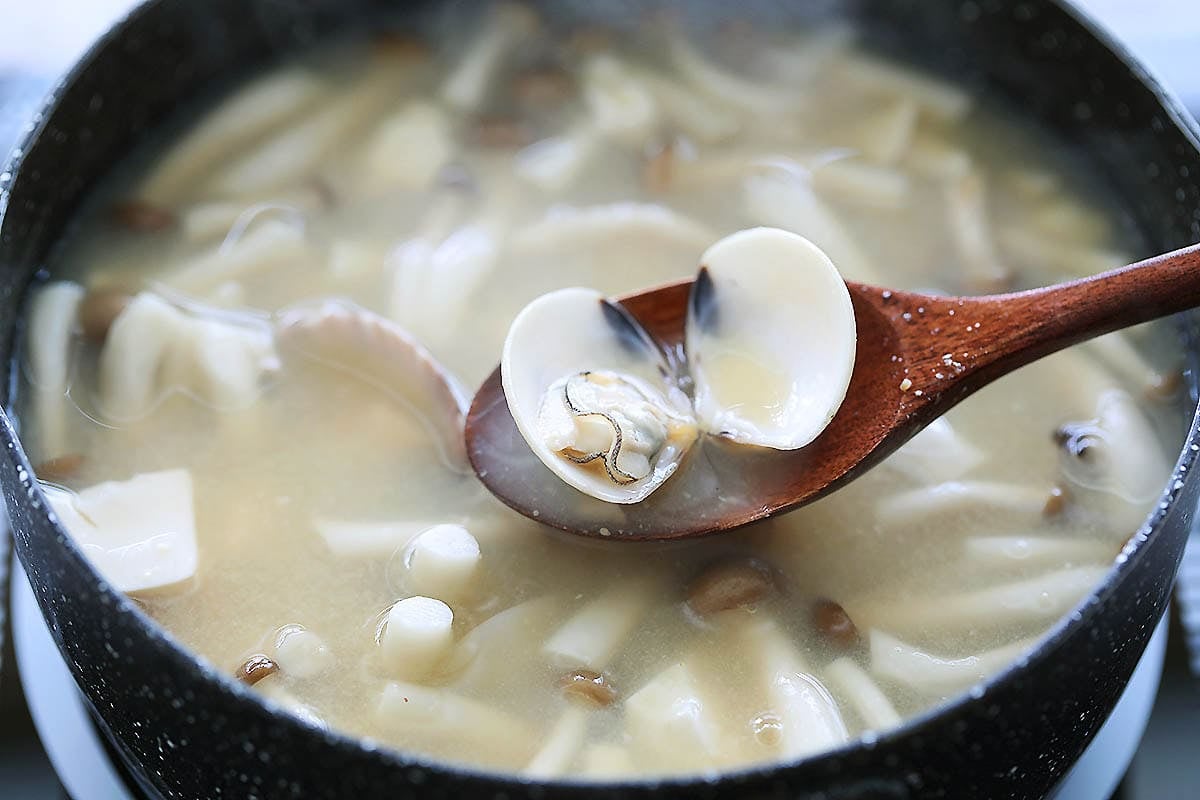
Once the clams have popped wide open, they are perfectly cooked. Turn off the heat completely. Mix in your miso paste until it is fully dissolved and the broth looks cloudy and rich.
Pro Tip: I always turn off the heat before stirring in the miso paste. Boiling the soup after adding the miso kills off the healthy probiotics and ruins the fresh, sweet aroma of the delicate clam broth.
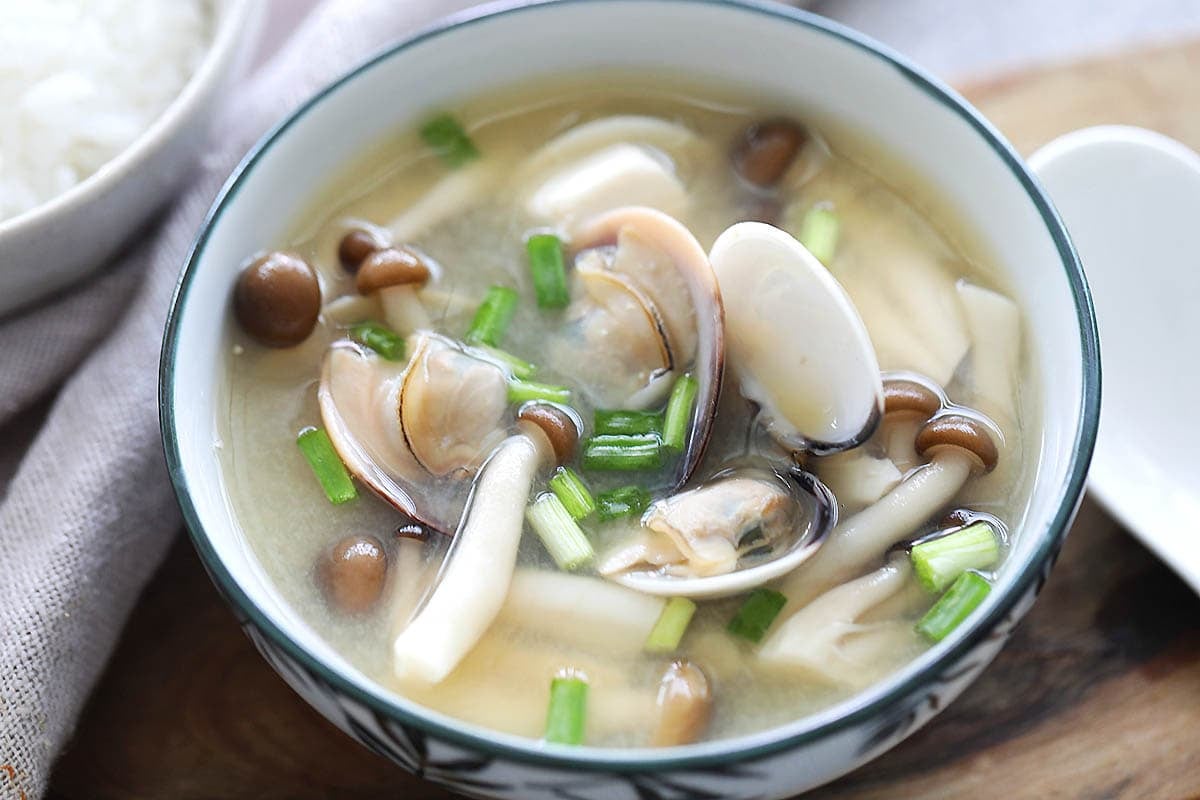
Top with fresh scallions and serve while it is hot.
Frequently Asked Questions
Yes, you can use frozen clams. Thaw them in the refrigerator and rinse well before cooking. They might take an extra minute or two to open, but the flavor will still be great.
If a clam stays tightly shut after 5 minutes of boiling, throw it away. This usually means the clam was dead before it hit the pot and is not safe to eat. Never try to force a closed shell open.
I don’t recommend using miso powder. The paste has a much deeper flavor and contains the healthy probiotics that the powder lacks. It is what gives the soup its iconic cloudy, rich texture.
I recommend keeping it in the refrigerator for no more than 2 days in an airtight container. The clams are delicate and will lose their sweetness quickly, so it is best to enjoy the soup as soon as possible.
I always reheat the soup slowly over low heat on the stove. Stop as soon as it is hot and avoid letting it come to a boil. This prevents the clams from turning rubbery and keeps the miso flavor from becoming flat.
I don’t recommend freezing this soup. The texture of the silken tofu and the clams will change significantly once thawed, usually becoming spongy and tough. It is much better to make a fresh batch for the best taste.
This recipe is 94 calories per serving.
What To Serve With This Recipe
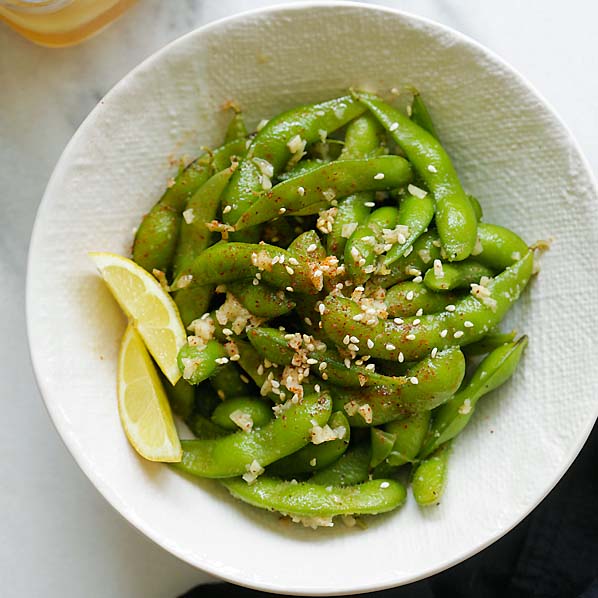
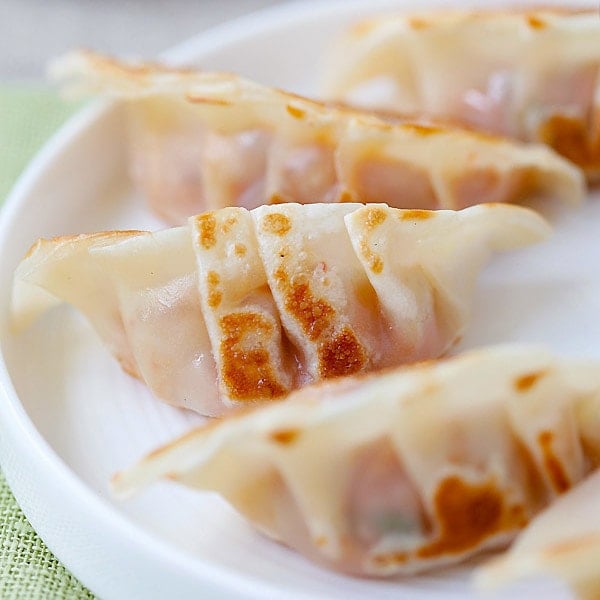
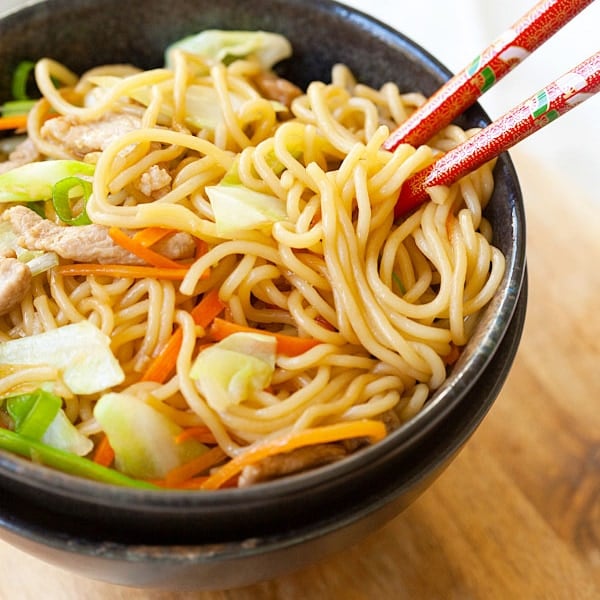
For an easy and wholesome Japanese meal, I recommend the following recipes:

I hope you enjoy this post as much as I do. If you try my recipe, please leave a comment and consider giving it a 5-star rating. For more easy and delicious recipes, explore my Recipe Index, and stay updated by subscribing to my newsletter and following me on Facebook, Pinterest, and Instagram for new updates.
Other Clam Recipes You Might Like
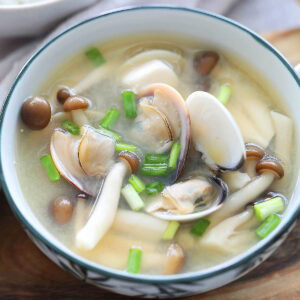
Miso Soup with Clams
Ingredients
- 4 cups Dashi
- ½ block silken tofu, cut into small cubes
- 2 oz buna shimeiji mushroom
- ½ pound clams
- 2½ tablespoons miso paste, or to taste
- scallions, chopped
Instructions
- Bring the dashi to a boil. Add the tofu, mushrooms, and clams, and cook for 3 minutes, or until the clams open.
- Turn off the heat and add the miso paste. Stir with a pair of chopsticks or a ladle until fully dissolved.
- Garnish with scallions and serve with steamed white rice.
Video
Notes
Nutrition
Nutrition information is automatically calculated, so should only be used as an approximation.






I have firm tofu on hand – will this work as well?
That’s fine.
Hi, is it just buy the miso that contained dashi powder, so for this recipe, don’t need to prepare dashi soup stock ? Thanks
Yes.
I only have firm tofu, will it still work with this recipe?
yes.
Beautiful looking recipe! can’t wait to make it at home. Thank you so much for sharing. Miso has such a great flavor!
I noticed that the picture of the soup shows mushrooms in it? If so, they are not mentioned in the recipe….
Thanks for catching it, updated.