
This post may contain affiliate links. Please read my privacy policy.
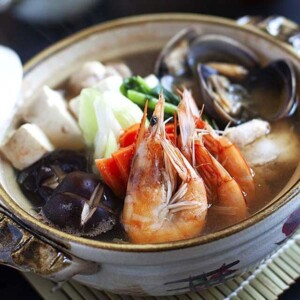
Nabe or nabemono is Japanese hot pot. This is a classic Yosenabe recipe made of chicken, seafood, tofu, vegetables in dashi broth.
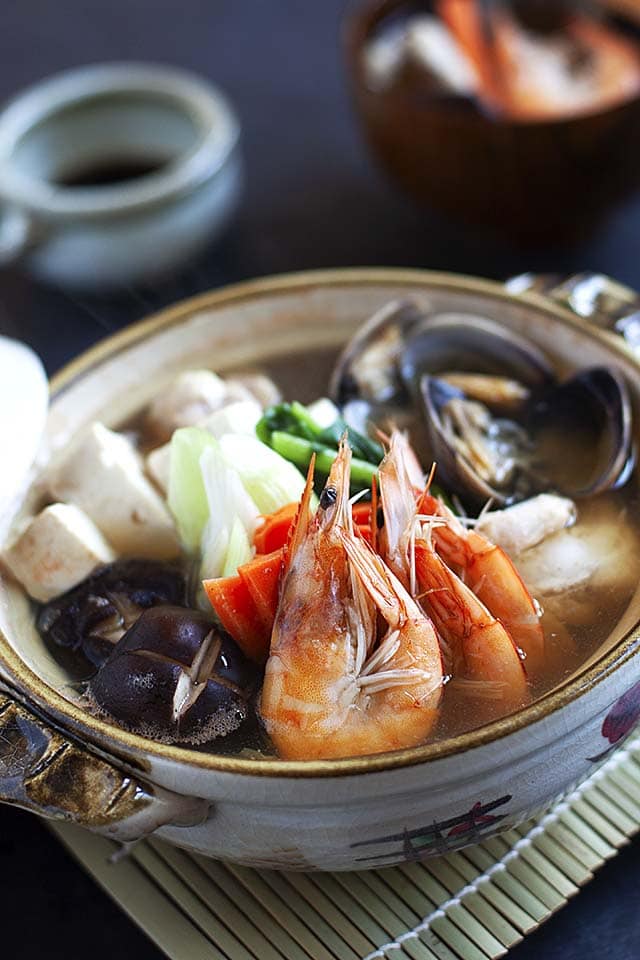
Nabe Hot Pot
There are many types of hot pot in Asia, each with unique flavors and ingredients. In Japan, we have nabe, a mix of meats and vegetables, and shabu shabu, where thin meat slices are quickly cooked in a tasty broth. In China and Southeast Asia, we have Chinese hot pot, known for its different broths and dipping sauces.
Nabe or Nabemono is a type Japanese hot pot. It’s a winter stew with a variety of ingredients with dashi and cooked inside a clay donabe, or nabe pot.
There is another version of Nabe called Chanko Nabe, which is a similar hotpot made famous by Japanese sumo wrestlers.
Yosenabe
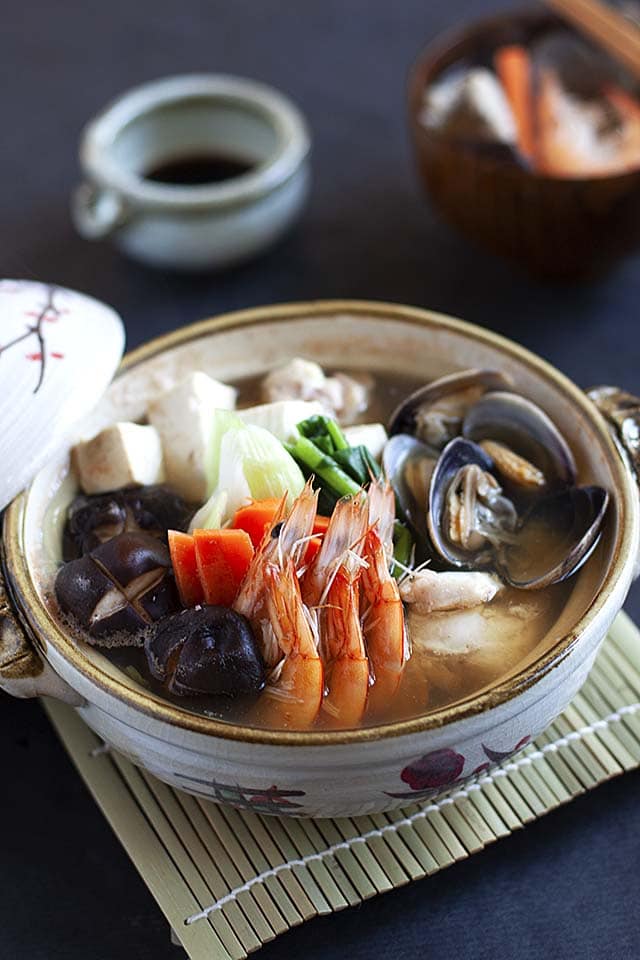
The nabe I made is called Yosenabe or “Anything Goes” Hot Pot according to “Japanese Hot Pots: Comforting One Pot Meals” by Tadashi Ono and Harris Salat.
Yosenabe is one of the most popular hot pots in Japan. Chicken is a must in yosenabe with a variety of other ingredients.
Nabe Recipe Ingredients
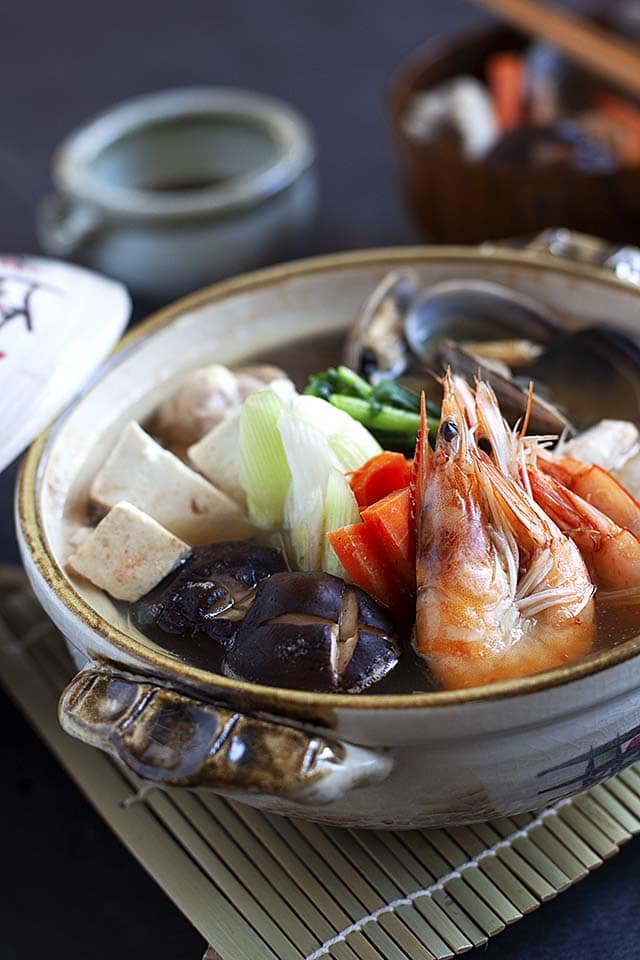
- Kombu and dry bonito flakes for dashi
- Usukushi shoyu (Japanese light soy sauce)
- Chicken
- Shiitake mushroom
- Shrimp
- Scallop
- Fish fillets
- Clams
- Tofu
- Napa cabbage
- Tokyo negi (Japanese long onion)
- Harusame (Japanese cellophane noodles)
You can buy kombu and dry bonito flakes in Japanese or Asian food stores or online.
See the recipe card for full information on ingredients.
How To Make Nabe
Homemade nabe is easy but it does take a bit of time to prepare and assemble the ingredients.
The first step is to make dashi. I have a detailed step-by-step recipe.
Next, you have to cut and slice some of the ingredients, for example: chicken, tofu and vegetables. Finally, assemble all the ingredients in the pot.
Heat up the pot on a single burner and the stew will be ready for the entire family.
Frequently Asked Questions
Yes, you can certainly add miso paste to the dashi broth in Yosenabe.
This recipe is only 345 calories per serving.
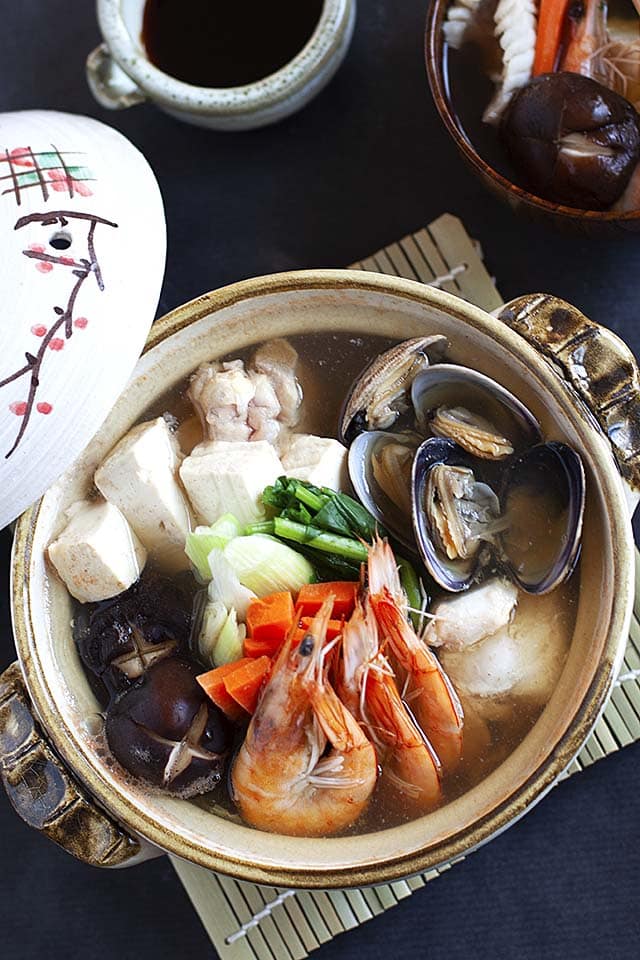
What To Serve With Japanese Hot Pot
For a wholesome meal and easy weeknight dinner, I recommend the following recipes.


I hope you enjoy this post as much as I do. If you try my recipe, please leave a comment and consider giving it a 5-star rating. For more easy and delicious recipes, explore my Recipe Index, and stay updated by subscribing to my newsletter and following me on Facebook, Pinterest, and Instagram for new updates.
Other Recipes You Might Like
Nabe (Yosenabe/Japanese Hot Pot)
Ingredients
Dashi:
- 8 cups water
- 2 pieces kombu, 6 x 6-inch (15cm x 15cm)
- 1 1/2 oz (45g) dried shaved bonito
Yosenabe
- 4 cups dashi
- 1/4 cup mirin
- 2 tablespoons soy sauce
- 1 chicken leg and thigh, boned, skinned, and cut into bite-size pieces
- 1/2 lb (250g) napa cabbage, sliced
- 1 oz (30g) harusame , or cellophane noodles, soaked in water for 15 minutes
- 1/2 package firm tofu, cut into 4 pieces
- 4 clams
- 4 head-on shrimp
- 4 large scallops
- 1/2 lb (250g) red snapper , or sea bass fillet, cut into 1-inch (2.5cm) slices
- 1 negi, sliced on an angle into 2-inch (5cm) pieces
- 1 bunch spinach, rinsed and cut into 2-inch (5cm) bundle
- 3 oz (90g) fresh shiitake mushrooms , or enoki mushrooms or oyster mushrooms
- 1/2 medium carrot, peeled and cut into 2-inch (5cm) pieces, then thinly sliced lengthwise
Instructions
Dashi:
- Add the water and kombu to a stockpot and let it steep for 30 minutes.
- Place the stockpot over medium heat and bring it to a boil. Remove the kombu and add the bonito, stirring once to mix it in. As soon as the liquid boils again, decrease the heat to low and simmer for 5 minutes. Remove any scum that appears on the surface.
- Turn off the heat and let the liquid steep for 15 minutes. Strain it through a fine sieve or cheesecloth. Don't squeeze the bonito flakes, as this will make the dashi cloudy. Discard the bonito flakes after use.
Yosenabe:
- Prepare the broth by combining the dashi, mirin, and soy sauce. Set aside.
- Place the cabbage on the bottom of the nabe pot. On top of the cabbage, add the harusame, tofu, clams, shrimp, scallops, red snapper, chicken, negi, spinach, mushrooms, and carrot, arranging each ingredient in a neat order. Pour the broth over the ingredients, cover the hot pot, and bring it to a boil over high heat until cooked.
- Transfer the hot pot to the dining table and serve immediately.
Nutrition
Nutrition information is automatically calculated, so should only be used as an approximation.






very easy and delicious
I actually have a Donabe pot, but have never used it. How do I cure it, or get it ready before I cook in it? This Yosenabe recipe looks wonderful, I would like to try and make it in my Donabe pot.
Thanks for your help.
Hi Fran there is nothing you need to do. Just use it as indicted in the recipe. :)
I seasoned my pot by cooking a few batches of rice porridge in it before using it for nabe. I make rice porridge in it every now and then to keep it in good shape. Make sure you don’t scorch the bottom with too high of heat.
I love Nabe. This Yosenabe is loaded with so many ingredients, I bet it’s very yummy! Going to try one of the winter night!
Thanks July, yes please try the nabe recipe soon!
If I can’t get bonito, dashi stock (csn get mirin & miso paste only) do you have other options for making the hot pot broth/stock ?
You can get instant dashi stock. Just add water to dilute.
Are you aware there is an ad for an extreme right wing politician running for for office in Ohio on your site? Gibbons for Ohio. I would complain.
Hi Joan, so sorry I have no idea. I will tell my ad network.
I made Nabe tonight for dinner, absolutely delicious, lovely flavours. I will be definitely making this again. A super easy dish to make and healthy ?
Thanks for trying my nabe recipe!
Omg…I can finally have one of my favorites recipe make at home! thanks to this recipe…Omg I can wait to introduce it to the family and to my daughters am a lover of Asian food. Thank you for the recipe.
I often purchase Asian ingredients at vitacost.com. They have Eden Foods products including kombu and bonito flakes. I always buy enough to receive free shipping.