December 21, 2008
Lobster Yee Mein (Lobster Noodles) Recipe
Recently, my neighborhood Asian grocery store had a lobster sale. At $6.99/lb, it was a steal that I couldn't pass up, so I got myself a 3-lb Boston lobster.
When it comes to lobsters, there aren't that many recipes that I know of. (Previously, I had stir-fried and baked lobster with cheese and butter and also a mango and lobster salad.) In my opinion, lobster is one of those ingredients that is very delicious but not very versatile...
In the Chinese restaurants in the United States, lobsters are often served with Yee Mein (or "E-Fu" noodles). First, the lobster is stir-fried with ginger and scallion, and then poured over a bed of boiled Yee Mein. Lobster with Yee Mein is a celebrated dish that graces wedding dinners, birthday banquets or casual dining. And that was exactly what I made.
The lobster yee mein was very yummy and the taste was close to restaurant quality, but it lacked wok hei (the "breath of wok"). Cooking a big lobster at home was challenging--the wok could hardly contain the giant claws, but I managed.
This coming holidays, why don't you try out my lobster noodles recipe?
Enjoy!
Recipe: Lobster Yee Mein (Lobster Noodles with Ginger and Scallions)
Ingredients:
1 lobster (about 2.5 - 3 lbs) 4 oz. Yee Mein or E-Fu Noodles 1 1/2 cup water + 1 tablespoon corn starch (use more corn starch if you like thicker sauce) 2 stalks scallions (cut into 2-inch length) 10-12 slices peeled ginger 3 tablespoons cooking oil Extra cooking oil for frying
Sauce:
2 tablespoons oyster sauce 1 tablespoon soy sauce 1/8 teaspoon white pepper powder 1 1/2 teaspoons sugar 1/2 teaspoon sesame oil 1 tablespoon Shaoxing wine Salt to taste
Method:
Clean the lobster and chop into pieces. (I always ask the store to chop it up for me). Lightly crack the lobster claws in advance. Blot the lobster dry with paper towels.
Heat up a pot of boiling water and boil the Yee Mein according to the packing instructions. Make sure not to over boil the Yee Mein. Drain and set aside on a big plate/bowl.
In a big wok or deep skillet, heat up 3 tablespoons of cooking oil. Stir-fry the ginger until aromatic and drop in the lobster. Stir continuously until they start turning red, then add in the sauce, follow by the water. Continue to stir and coat the sauce nicely, then cover the wok/skillet with its lid and wait for a couple minutes or until the lobster pieces are cooked through. (Do not over cook the lobter as it will turn rubbery in texture!)
Remove the lid and add the chopped scallions into the lobster. Add salt to taste if needed. Transfer the lobster out and pour onto the bed of yee mein. Serve immediately. Labels: Chinese Food, Chinese Recipes
 Continue Reading "Lobster Yee Mein (Lobster Noodles) Recipe"
|
November 18, 2008
Shrimp with Snow Peas Recipe
(Click the image above to view the complete photoset of 5 pictures) I love shrimp, so much so that I eat shrimp almost every day--in my stir-fry's, noodles, take-outs, fried rice, curries, etc. Shrimp is the easiest seafood to find and widely available. Plus, unlike common beliefs, they are not too expensive, if you know where to buy them. For me, the frozen 5 lb. version at Asian supermarkets are always economical and affordable, sold for an average of US$3.99 per pound.
One of the shrimp recipes that I always make at home is stir-fried shrimp with snow peas. The simple combination of shrimp plus fresh snow peas are always delicious yet very easy to make. I love them with steamed white rice and nothing else.
While shrimp with snow peas recipe is easy to prepare, it takes some techniques (and chef's secrets) to make the shrimp crunchy. In many Chinese/Cantonese restaurants, chefs spend hours treating their shrimps under cold running water to make the texture springy and crunchy. Others use a combination of potato flour, salt, and baking soda to get similar results. For me, I used a combination of both to get that perfect crunch...(learn Chinese chefs' secret techniques of making shrimp crunchy after the jump)
How to make shrimp crunchy?
- Defrost the shrimp
- Peel the shell
- Devein the shrimp
- Use a little salt and "massage" the shrimp for 1 minute
- Rinse thoroughly with cold running water for about 5 minutes
- Pat dry the shrimp with paper towels
- Add a little egg white, potato starch (or corn starch), and a wee bit of baking soda and marinate the shrimp for 30 minutes. For best results, marinate the shrimp for a few hours to get the perfect crunch
Note: the above techniques will only work if you have fresh shrimp to begin with. If your shrimps aren't fresh, there is nothing you can do to make them crunchy. *wink*
So, if you love shrimp as much as I do, this snow peas shrimp recipe is a keeper.
Recipe: Shrimp with Snow Peas
Ingredients:
1/2 pound shrimp 3 oz snow peas Some canned straw/button mushrooms (optional) 2 teaspoons cooking oil 5 slices peeled ginger
Sauce:
1/4 teaspoon salt 1/8 teaspoon sesame oil 4 tablespoons water 1/2 teaspoon corn starch 1 tablespoon Chinese cooking wine (shaoxing or rice wine) 2 dashes white pepper powder
Method:
Prepare the shrimp using the 7-step techniques above. Mix the sauce ingredients and set aside
Heat up a wok to high heat and add the cooking oil. Add the sliced ginger into the wok and stir-fry until aromatic and then follow by the shrimp. Toss the wok a few times or quickly stir-fry the shrimp a few times before adding the snow peas.
Add the sauce into the wok and quick stir to coat the sauce well with the shrimps and snow peas.
As soon as the shrimps are cooked, dish out and serve immediately.
Labels: Chinese Food, Chinese Recipes
 Continue Reading "Shrimp with Snow Peas Recipe"
|
November 11, 2008
Orange Chicken Recipe
(Click the image above to view the complete photoset of 7 pictures) To much of my disbelief, orange chicken is actually a real Chinese dish. Called 陈皮鸡 in Chinese language, orange chicken is of Hunan origin. As with most Chinese dishes served in the United States, the likes of Panda Express have pretty much butchered it to a goopy, sticky, and unappetizing mess. So, when a few of my readers emailed me and requested for the recipe of orange chicken, I was skeptical, very skeptical.
Anyway, after some research on Chinese websites, I confirmed the origin--and recipe--of this dish. Orange chicken (also known as orange peel chicken or tangerine chicken) derives its name from the use of dried orange peel (陈皮) in the recipe. As dried orange peel is not commonly available for most people, I used fresh orange zest as a replacement, which works equally well. As orange chicken is originally a Hunan dish, you can't do without some dried red chilies...
So here you have it, my take on this very popular dish. As with other favorite Chinese recipes such as Kung Pao chicken, sweet and sour pork, mongolian beef, and cashew chicken, they are much better prepared at home than take-outs from your neighborhood Chinese joints.
If you like Chinese food, do check out all my Chinese food recipes.
Recipe: Orange Chicken/Orange Peel Chicken
Ingredients:
1/2 pound chicken breast (cut into bite-size cubes) 5 dried red chilies (cut into 1.5 inch length, seeded and soaked in warm water) 1 teaspoon minced orange zest 2 cloves garlic (minced) 1 inch ginger (minced) 1 stalk scallion (use the white part only, cut into thin threads for garnishing) 2 teaspoons oil Oil for deep frying
Orange Sauce:
1/4 cup freshly-squeezed orange juice 3 tablespoons canned chicken broth 1 tablespoon soy sauce 2 teaspoons Chinese rice wine or dry sherry 1/2 teaspoon sesame oil 1 teaspoon rice vinegar 5 teaspoons sugar 1/8 teaspoon white pepper powder 1 teaspoon corn starch Salt to taste
Frying Batter:
1/2 cup water 2 oz. all-purpose flour 1 oz. corn starch 1/2 teaspoon baking soda 1/2 egg 1 teaspoon cooking oil 1 small pinch of salt
Method:
Mix the orange sauce ingredients and set aside.
Mix the frying batter and dip the chicken meat into the batter. Heat up a pot/wok of cooking oil. When the cooking oil is hot enough for frying, drop the chicken pieces into the oil and deep fry them until they turn golden brown or crispy. Transfer them out onto a plate lined with paper towels to soak up the excess oil.
In a wok, add 2 teaspoons of cooking oil and quickly stir-fry the minced garlic and ginger until aromatic. Add in the dried red chilies and toss around until you smell the spicy aroma. Follow by the minced orange zest and then chicken. Quickly stir the chicken around before adding the orange sauce mixture. Continue to stir-fry until the sauce thicken. Dish out, garnish with the scallion threads and serve immediately with steamed white rice. Labels: Chinese Food, Chinese Recipes
 Continue Reading "Orange Chicken Recipe"
|
October 26, 2008
Singapore Fried Rice Noodles Recipe (星洲炒米粉)
Nate and Annie are the loving couple behind the up-and-coming food blog House of Annie. Annie grew up in Kuala Lumpur, Malaysia, but her father came from Penang, so we love similar foods. Please welcome House of Annie to Rasa Malaysia with their serving of a very popular Chinese recipe: Singapore fried rice noodles or "Sing Chow Mai Fun/星洲炒米粉."
Singapore Fried Rice Noodles (Sing Chow Mai Fun) Guest Writer: House of Annie
Annie loves noodles. Besides her favorite KL-style Hokkien Mee and her Penang-style Char Koay Teow, she also grew up eating "Sing Chow Mai Fun" or Singapore fried rice noodles/vermicelli. So when she came to study here in America, she was excited to find out that the Chinese restaurants here served Singapore fried rice noodles. But what she got was not what she expected....(more picture and recipe after the jump)
The Singapore fried rice noodles we get here in America most often comes flavored with curry! The Sing Chow Mai Fun that Annie is used to in Malaysia do not come with curry! The sauce is completely different there. At first, she was not able to get past it. But as time passed, she came to accept the difference. (Note from Rasa Malaysia: The Singapore fried rice noodles served in Penang is flavored with ketchup and a little chili sauce.)
Here is a recipe for Sing Chow Mai Fun or Singapore fried rice noodles; while it may not be the version that Annie is used to in Malaysia, it's one of the best Singapore fried rice noodle dishes I've tasted. There is quite a bit of prep work involved, but once you have everything in place, the cooking should go quite smoothly.
Aloha, Nate
******************************
If you like noodles, you might also want to check out the following noodle recipes on Rasa Malaysia:
1) Chow Mein (Chinese Noodles) 2) Fried Rice Vermicelli/Rice Sticks/Rice Noodles with Chicken 3) Garlic Noodles 4) Indian Mee Goreng/Indian Fried Noodles
******************************
Recipe: Sing Chow Mai Fun (Singapore Fried Rice Noodles/星洲炒米粉) adapted from Fine Cooking Magazine, Nov 2005, pages 64-65
Ingredients:
2 cloves garlic, minced 1 tablespoon minced ginger 8 dried or fresh shiitake mushrooms 12 ounces of fine dry rice vermicelli (Wai Wai brand recommended) 2 stalks celery, sliced thin 1 medium yellow onion, sliced thin 4 jalapeno peppers, seeded and sliced thin 1 cup bean sprouts, rinsed and drained 8 green onions, root end trimmed, cut into 2-inch pieces 1 pound shrimp, peeled and deveined 1 pound char siu (Chinese barbecued pork), cut into matchsticks 4 tablespoons vegetable oil 3 tablespoons oyster sauce
For sauce:
3 tablespoons Madras (hot) curry powder 2 cloves garlic, minced 1 tablespoon minced ginger 1 cup chicken broth 4 tablespoons soy sauce 4 teaspoons granlulated sugar 2 teaspoons hot chili paste 2 tablespoons vegetable oil
Method:
1) If using dried shiitake mushrooms, soak them in hot water for half an hour. Drain, then cut off the stems. Slice the mushrooms thinly. 2) Put the rice vermicelli in a large bowl and soak in enough hot water to cover, until the noodles are soft (about 8 to 10 minutes). Drain noodles and set aside. 3) Start by heating up 2 tablespoons of oil in a small pan over medium heat. Add the curry powder, the ginger, and the minced garlic, and saute until fragrant. Add the chicken broth, soy sauce, sugar, and chili paste. Stir to combine and then cover and cook for 5 minutes. Remove pan from heat and set aside. 4) Heat 2 tablespoons of oil in a large wok over high heat. Add in the remaining garlic and ginger, and stir-fry until the garlic starts to become golden. Add in the celery, onion, pepper, sprouts, green onions, and mushrooms. Stir-fry for 3 minutes, until the vegetables start to soften. Set the vegetables aside in a bowl. 5) Heat the last 2 tablespoons of oil in the wok over high heat. Add in the shrimp and stir-fry until they start to turn pink on both sides. Add the char siu and toss to combine. 6) Add in the noodles and the vegetables. Pour on the sauce and also add the oyster sauce. Mix the ingredients thoroughly to coat all the noodles and incorporate all the vegetables. 7) Serve hot. Labels: Chinese Food, Chinese Recipes
 Continue Reading "Singapore Fried Rice Noodles Recipe (星洲炒米粉)"
|
October 04, 2008
Ginger and Scallion Crab Recipe (姜葱蟹)
Remember that scene in Pretty Woman when Julia Roberts was trying to devour her escargot and it flew across the table?
I had that exact "Pretty Woman" moment--a disgraceful and embarrassing one I must say--at a Chinese restaurant recently. It was a plate of mouth-watering ginger and scallion crab, and the character in play was a succulent crab claw, the last one remaining. The culprit was a crab cracker. Being my clumsy self, coupled with the sin of gluttony, my crab claw flew across the table and landed on the carpet at a sad and dark corner of the restaurant. And there was no waiter to catch it for me!
Throughout the dinner, I kept looking down at the poor crab claw that I almost had in my mouth. It was a huge and beautiful crab claw. The shell was perfectly cracked and revealed the juicy meat inside. Drool...mmmm....I was this close to eating that crab claw. Darn it.
So when I was grocery shopping today and saw that Dungeness crab was on sale for $3.99 per pound, I knew exactly what I was going to make--ginger and scallion crab.
If you've been to a real Chinese restaurants in the United States, I am sure you are familiar with ginger and scallion crab (姜葱蟹). Crabs are mostly prepared two ways in these Chinese restaurants: ginger and scallion or salt and pepper crab. Personally, I love the wok-hei infused ginger and scallion crab. In my opinion, ginger and scallion are perfect matches made for Chinese stir-fry dishes--be it seafood or meat. (Previously on Rasa Malaysia, I had dished up ginger and scallion chicken.)
Eating out, ginger and scallion crab is rather pricey but I spent less than $6 making it at home. If you think that ginger and scallion crab is one of those dishes that is better served at Chinese restaurants, think twice. The recipe is very easy and takes only a few basic ingredients.
As for me, not only did I have my fix of ginger and scallion crab, I had two crab claws all to myself. And no, they didn't fly across the table this time. ;)
**********************
The Dungeness crab season is starting soon. Get ready for a fabulous crab season with these crab recipes on Rasa Malaysia: - Roasted crab with butter and black pepper
- My mom's famous chili crab
- Black Pepper Crab - A Malaysian and Singaporean favorite
**********************
Recipe: Ginger and Scallion Crab (姜葱蟹)
Ingredients:
1 crab (about 1 1/2 - 2 pounds) 2 inches ginger (peeled and sliced into 10-12 pieces) 3 stalks scallion (cut into 2-inch length) 3 tablespoons corn starch (for frying) 1 tablespoon cooking oil Oil for deep frying
Sauce:
1 tablespoon oyster sauce 2 dashes white pepper powder 1/8 teaspoon sesame oil 1/2 teaspoon sugar 6 tablespoons water 3/4 teaspoon corn starch 1/8 teaspoon fish sauce
Method:
Mix the sauce and set aside.
Clean the crab and cut into pieces. Pat dry with paper towels and put into a big bowl. Add the corn flour to the bowl and lightly coat the crab pieces with it. Heat up a wok and add cooking oil. When the oil is heated, drop the crab pieces and deep fry. As soon as they turn red, dish out, strain the excess oil and set aside.
Heat up a wok and add 1 tablespoon of cooking oil. Add the ginger and stir-fry until aromatic. Put the crab pieces into the wok and quickly stir a few times before adding the sauce. Add the chopped scallions, toss the crab in the wok a few times until well coated with the sauce, dish out and serve immediately.
Labels: Chinese Food, Chinese Recipes
 Continue Reading "Ginger and Scallion Crab Recipe (姜葱蟹)"
|
September 23, 2008
Mongolian Beef Recipe
Last month during the Beijing Olympics, I shared many popular American Chinese food recipes and the responses were overwhelming. I got numerous emails from my readers trying out my recipes with great success. They thanked me profusely with some of the sweetest emails I've ever received and requested more popular Chinese recipes such as Mongolian beef and orange chicken.
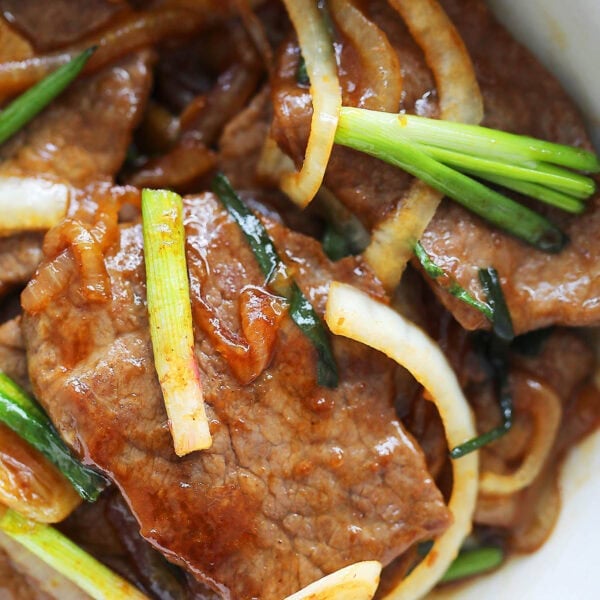
Mongolian beef is probably one of the most popular beef dishes in the United States, perhaps right after beef and broccoli. Mongolian beef--as the cover shot above suggested--is not a traditional Mongolian dish. I am personally not sure about the origins of this recipe but according to Wikipedia, Mongolian beef is a Chinese-American creation. However, I have a Shang Palace Cookbook (Shang Palace is the signature Chinese restaurant at Shangri-La Hotels) and Mongolian beef is featured. I believe Mongolian beef is a legitimate Chinese dish that has been adapted by overseas Chinese restaurants...
Near my office at Beverly Hills--where Chinese restaurants are almost non-existent--I have to go to PF Chang when I need my Chinese lunch fix. While I am not a fan of PF Chang and chain restaurants, I have to say that PF Chang does a decent job with its Mongolian beef. In fact, Mongolian beef is probably one of the few redeeming items on their menu.
My Mongolian beef recipe is very close to the taste of PF Chang's, except that I used leeks instead of scallions. If you are not a fan of leeks, or can't get them where you live, scallions work, too.
Now, tell me if your local Chinese restaurants (in the UK, Australia, Canada) serve Mongolian beef? I am really curious to know.
:::::::::::::::::::::::::::::::::
If you like Mongolian beef, you might also like the following recipes:
Sweet and Sour Pork
Cashew Chicken
Honey Walnut Shrimp
Kung Pao Chicken
Chow Mein
:::::::::::::::::::::::::::::::::
Mongolian Beef Adapted from The Essence of Shangri-La
Ingredients:
8 oz beef tenderloin (thinly sliced) 2 tablespoons cooking oil 2 stalks leeks (sliced diagonally) 1 inch ginger (finely chopped) 3 cloves garlic (thinly sliced) 1 stalk shredded scallion (white part only for garnishing)
Marinate:
1 teaspoon corn starch 1 teaspoon soy sauce t tablespoon water 1 teaspoon Chinese cooking wine (rice wine or Shaoxing wine)
Sauce:
2 teaspoons oyster sauce 2 tablespoons sweet soy sauce (ABC Kecap Manis) 1/2 teaspoon dark soy sauce 3 dashes white pepper powder 1/8 teaspoon sesame oil 1/4 teaspoon Maggi seasoning Salt & sugar to taste
Method:
Marinate the beef slices with the seasonings for 30 minutes.
Heat up a wok with 1 tablespoon of oil and stir-fry the marinated beef until they are half-done. Dish out and set aside.
Heat up another 1 tablespoon of oil and saute the garlic and ginger until aromatic. Add the beef back into the wok and then the sauce. Continue to stir-fry until the beef slices are almost done, then add the leeks into the wok. Do a few quick stirs, add salt and sugar to taste, dish out and garnish with the shredded scallions. Serve hot. Labels: Chinese Food, Chinese Recipes, Cookbook Recipes
 Continue Reading "Mongolian Beef Recipe"
|
September 15, 2008
Wonton Soup Recipe
Last week, when I was at Appetite for China, Diana's post about her trip to Hong Kong and her bowl of divine wontop soup had me gawked at my computer and then drooled all over my keyboard. A bowl of sinfully plump shimp wontons swimming in supreme stock, whispering "eat me eat me" in my ears.
I love wonton soup, but there is a problem. For years, I've been searching high and low for a good bowl of wonton soup, but haven't yet found a satisfactory one in southern CA.
I love regular wontons with ground pork and a wee bit of shrimp served at Cantonese noodle joints, but the pure prawny kinds are impossible to find. (The closest thing is the leeks and shrimp jiaozi/dumpling at Dumpling 10053 at El Monte.) To satiate my craving--not to mention virtual hunger--I knew I had to make my own...
So, here is my delicious Cantonese wonton soup. It will never compare to the real wonton soup found in Hong Kong, but at least I got my fix for now. If you live in CA and know where to find a good bowl of wonton soup, please drop me a comment!
Please also note that I used yellow chives in my wonton soup, which is typical Cantonese/Hong Kong style. My recipe also includes a Chinese prime stock (上汤) recipe, which is the core of all Chinese soup dishes.
********************************
Related Posts:
- Fried Wontons (with wonton wrapping video!)
- Shrimp Wontons
If you like Chinese food, you might want to check out my Chinese recipes.
********************************
Recipe: Wonton SoupServing: 15 wontons or 3 servings of wonton soup Ingredients:8 oz. peeled and deveined medium size shrimp 1/8 teaspoon sesame oil 1/2 teaspoon chicken bouillon powder 1/8 teaspoon fish sauce 1 small pinch of salt 3 dashes white pepper powder 1 oz yellow chives (chopped finely) 1/2 teaspoon corn starch 15 wonton wrappers 3 cups stock Salt to taste White pepper powder to taste Sesame oil to taste Stock Ingredients:1 1/2 pound leg quarters (chicken thighs and legs) 1 1/2 pound lean pork 1 1/2 pound ham 10 cups water Method:Prepare the stock first by boiling all the ingredients in a deep stockpot. Bring it to boil and skim off the scum that surfaces until the stock is clear. Simmer on low heat for a couple of hours. Pour the stock through a sieve and set aside. Save the extra in a container and keep it in the fridge for future use. Put the shrimp in a small bowl and rinse them under cold running water for about 5-10 minutes. (This step makes the shrimp crunchy.) Drain the water and pat the shrimp dry with paper towels and then cut each shrimp into 3-4 pieces. Add half of the chopped yellow chives into the shrimp and marinate with the seasonings for 1 hour. Blend the shrimp well with the seasoning. Place a wonton wrapper on your palm and put about 1 teaspoon (about 3-4 pieces) of the shrimp filling in the center of the wonton wrapper. Gather the corners of the wrapper with the other hand and give it a twist in the middle to "close" the wonton. Repeat until the filling is used up. To see the video of wrapping wonton, please click here. Add 3 cups of stock into a medium saucepan and bring it to boil. Add the remaining chopped yellow chives into the stock, add salt, white pepper powder, and sesame oil to taste and set aside. Heat up another big saucepan with water. As soon as it boils, drop the wontons into the water. Stirring gently so the wontons don't stick together. Continue to boil until the wontons are cooked and float to the surface. Transfer the wontons out with a hand strainer and divide them into 3 equal servings. Pour a ladleful of stock over each serving and serve immediately. Labels: Chinese Food, Chinese Recipes
 Continue Reading "Wonton Soup Recipe"
|
August 22, 2008
Baby Bok Choy with Garlic and Shrimp Recipe
When it comes to Chinese vegetables, simple is best. There is really no need for a complicated recipe for vegetables. The key to success with Chinese greens is freshness--you want to just barely cook them, and with the most basic ingredients.
That was exactly what I did with these bok choy mui (菜苗) or baby boy choy. Some chopped garlic, some baby shrimps, and a pinch of salt are what you need. Humble in its presentation, this baby bok choy recipe pairs well with any Chinese dishes. With the Olympics closing in a few days, this is my way to culminate my Beijing Olympics Chinese food series--on a healthy note...
In "Simple Chinese Cooking," Kylie Kwong writes, "I want to spread the word about the sheer intelligence, refinement and beauty of Chinese cuisine, which is a most sophisticated yet simple, healthy, life-giving cooking style to learn." In a similar manner--albeit on a much smaller scale--I hope you have enjoyed reading and learning about Chinese food and recipes on Rasa Malaysia.
Note: Thanks to my Malaysian friend My Cooking Hut who sent me the Kylie Kwong's cookbook.
******************************************
My Beijing Olympics Chinese Food Recipes:
Chow Mein/Chinese Noodles
Sweet and Sour Pork
Cashew Chicken
Honey Walnut Shrimp
******************************************
Recipe: Baby Bok Choy with Garlic and ShrimpIngredients:4 oz. bok choy mui/baby bok choi (cleaned and rinsed) 1/8 teaspoon salt or to taste 1 tablespoon oil 1/4 cup peeled baby shrimps 3 cloves garlic (finely chopped) Method:Heat up a wok with the cooking oil and saute the chopped garlic until light brown or aromatic. Add the baby shrimps and stir-fry until the shrimps are half-cooked. Add in a pinch of salt to the shrimp, and then follow by the baby bok choy. Quickly stir-fry the vegetables, dish out and serve hot. Cook's Notes:1. Do not overcook your vegetables. They should retain the vitality and crunchiness. 2. For Chinese greens with oyster sauce recipe, please click here. Labels: Chinese Food, Chinese Recipes
 Continue Reading "Baby Bok Choy with Garlic and Shrimp Recipe"
|
August 19, 2008
Chow Mein (Chinese Noodles) Recipe
Chinese invented the noodles and changed the way we eat, that's not an overstatement. As a Chinese, noodles and rice are something I can't do without. I use Chinese noodles a lot in everyday cooking and can't even begin to think how my culinary experiences would have been, if noodles were never invented.
Chinese noodles are versatile and there are so many ways to prepare them--stir-fry, pan-fry, boil, blanch, soup, gravy, or dry. I could never get bored of noodles. It's one of the easiest foods to prepare at home, and the end results are always satisfying.
One of the most popular Chinese noodles in the US is chow mein or literally "fried noodles" (炒面) in Cantonese dialect. Chow mein is also a favorite Chinese take-out item. Some shredded vegetables, some protein--either chicken, pork, beef, seafood, or combination--and you will have a perfect chow mein that is cheap, filling, and sinfully gratifying. Yeah, I am talking about that grease at the bottom of the chow mein...
Making chow mein or any Chinese noodles at home doesn't have to be complicated, if you know which noodles to buy (which according to many non-Asians, it's the toughest part of it all). I have to say that the varieties of Chinese noodles available in the market are rather overwhelming; however, if you narrow down your selection, things would get a lot easier--and manageable. So, let's start with chow mein, which is also the name used for fresh noodles.
I did some research over the weekend and found that there are two kinds of chow mein sold at the market: 1) steamed chow mein (pictured below), and 2) pan-fried chow mein. They are practically the same Chinese noodles, but the latter tends to be dryer and hence it's for pan-fried purposes. I prefer steamed chow mein.
Now that you have narrowed down your Chinese noodles selection, the cooking process is really easy. In Asia, chow mein are mostly cooked with bean sprouts, but I noticed that fried noodles served at Chinese restaurants in the US usually come with shredded cabbages and carrot, which are great, too.
For the protein, you can use any meat or seafood or any combinations of your choice. Chicken chow mein is always safe with most people, but combinations are always pleasing and exciting.
Try my chow mein recipe and I bet you will become a Chinese noodles expert in no time. :)
***************************** If you like Chinese food recipes, you might also like the following:
Fried Vermicelli (Rice Sticks)
Chinese Fried Rice
Chicken Shu Mai/Chicken Dumplings
Sweet and Sour Pork
Cashew Chicken
Honey Walnut Shrimp
Kung Pao Chicken
Minced Chicken and Pork Rolls
Fried Wonton
Braised Firm Tofu with with Mushrooms
Restaurant-style Chinese Greens with Oyster Sauce
Chinese Jiaozi/Leeks and Pork Dumplings
Fried Shrimp Balls with Wonton Skin
Ma Po Tofu (麻婆豆腐)
*****************************
Recipe: Chow Mein/Chinese Noodles Recipe
Ingredients:
8 oz. steamed chow mein (Chinese noodles) 2 oz. pork (cut into thin slices) 5 shrimp (shelled and deveined) 3 garlic cloves (finely chopped) 1/2 cup shredded cabbage 1/4 cup shredded carrot 1 tablespoon soy sauce 1 tablespoon oyster sauce 1/2 teaspoon sugar 1/2 teaspoon Chinese dark soy sauce 2 tablespoons water 2 tablespoons cooking oil 2 stalks scallions (cut into 2-inch length) Salt to taste
Method:
Soak the steamed chow mein in cold water for about 5 minutes. Rinse a few times until the water turns clear and the chow mein is soft. Drain the excess water and set aside. (Don't over soak the chow mein or the noodles will get limpy and soggy.)
In a small mixing bowl, mix all the seasoning ingredients. Set aside.
Heat up the wok with the cooking oil. Add in the chopped garlic and stir-fry until light brown or aromatic. Add the pork and shrimp and stir fry until they are half done. Add the shredded cabbage and carrot into the wok and do a few quick stirs. Add the noodles , the seasoning mixture and the water. Continue to stir until the noodles are well blended with the seasonings and completely cooked through. Add the chopped scallions, do a few final stirs, dish out and and serve hot. Labels: Chinese Food, Chinese Recipes
 Continue Reading "Chow Mein (Chinese Noodles) Recipe"
|
August 12, 2008
Honey Walnut Shrimp / Walnut Prawn Recipe (核桃虾)
(Click the above to view 7 pictures. Best viewed with Internet Explorer 7.) My Beijing Olympics Chinese food series continue today with everyone's favorite shrimp/prawn dish in the United States--Honey Walnut Shrimp or Walnut Prawn (核桃虾).
This Honey Walnut Shrimp is loaded with all the right stuff: crunchy candy-glazed walnuts, big shrimp (which is referred to as "prawn" elsewhere), mayonnaise, condensed milk, and honey. With such mouthwatering ingredient lists, no wonder this is one of the most popular dishes in many Chinese restaurants.
Ordering Walnut Prawn at restaurants could be expensive but with my recipe, you can make Honey Walnut Shrimp anytime you want, for as little as $10.00!
1 pound of 31/40 count big shrimp/prawn - US$7.00 1 small pack of walnut halves - US$2.00 A little honey, a little condensed milk, a little mayonnaise - US$1.00 Total: US$10.00....
This is one succulent, juicy, crunchy, milky and sinfully good way to spend your $10. To check out my previous post about Cashew Chicken, please click here. For more Chinese recipes inspiration--a total of more than 40 recipes--check them out here. Some featured recipes are:
Cashew Chicken
Kung Pao Chicken
Fried Wonton
Ginger and Black Fungus Chicken
Restaurant-style Chinese Greens with Oyster Sauce
Chinese Jiaozi/Leeks and Pork Dumplings
Dragon Well Tea Shrimp (龙井虾仁)
Ma Po Tofu (麻婆豆腐)
Fried Vermicelli (Rice Sticks)
Rasa Malaysia's Beijing Olympics Chinese Food Series will continue with--drumroll please--Sweet and Sour Pork, Chow Mein, and a special request from you. If you have a Chinese recipe that you're dying to learn, please leave me a comment and I will make it especially for you.
Now, go back and catch the games on TV!
 Recipe: Honey Walnut Shrimp/Walnut Prawn (核桃虾) Ingredients:
1 lb. 31/40 count shrimp/prawn 1/2 cup Walnut halves (make sure you get the walnut halves) 3 tablespoons mayonnaise 1/2 tablespoon honey 1/2 tablespoon condensed milk 1 teaspoon lemon juice 1 egg white 1/2 cup corn starch (for coating the prawn) Oil for frying For the Walnuts:1/2 cup sugar 1/2 cup water Method:- Peel and deveined the shrimp/prawn. Pat dry with paper towels, add the egg white, mix well with the shrimp and set aside.
- Rinse the walnut halves with water, drain and set aside.
- Heat up the water until it boils and add in the sugar.
- Keep stirring until it turns thick and golden color and then add the walnut.
- Boil for 2 minutes, then drain and place walnuts on a cookie sheet/parchment paper to dry. (Regular paper will not work as the walnut will stick to it).
- Heat the oil in a wok over high heat.
- Coat the shrimp with a thick layer of corn flour and then and then fry in the hot oil until golden brown. Remove the shrimps from the wok and drain on paper towels.
- In a bowl, stir together the mayonnaise, honey, condensed milk and lemon juice.
- Add shrimp and toss with the mayonnaise sauce.
- Transfer to a serving plate and garnish the candied walnuts on top of the shrimp and serve immediately.
Cook's Note:To get more bang for your buck, you can buy frozen shrimp in a pre-packed box. The frozen shrimp usually comes in a frozen block. During sales, a box of 31/40 count shrimp can be as low as US$15/box. Labels: Chinese Food, Chinese Recipes
 Continue Reading "Honey Walnut Shrimp / Walnut Prawn Recipe (核桃虾)"
|
August 09, 2008
Cashew Chicken Recipe (腰果鸡丁)
(Click the image above to view the complete photoset of 4 pictures) To celebrate the Beijing Olympics, I am going to share some of the most popular Chinese food dishes with you in the next two weeks.
While Chinese food recipes are often featured here on Rasa Malaysia, I mostly share my favorite Chinese dishes--meaning those that I enjoy eating--with my readers. A simple Google search of the most popular Chinese food in the United States returns the following results: - Beef and Broccoli
- Sweet and Sour Pork
- Cashew Chicken
- Crab Rangoon
- Egg Drop Soup
- Moo Goo Gai Pan
- Chow Mein
- Fried Rice
- Kung Pao Chicken
- Egg Roll and the list goes on
As a Chinese, I have to say that this is not the most interesting list. In fact, some of the dishes are not even real Chinese, for example: Moo Goo Gai WHAT? (Most of the dishes on the list are American-Chinese food, made popular by the Chinese restaurants in the United States. They are what general Americans know as Chinese food.)
Chinese cuisine--when done right--is pleasing, subtle, delicate, satisfying, and a great treat to the taste buds. However, most Chinese restaurants in the United States have pretty much butchered Chinese food and turned one of the greatest cuisines in the world into something vaguely recognizable--gooey, starchy, sticky, greasy, and downright unappetizing--one that is certain to leave a bad taste in the mouth of many diners...(Learn the SECRET of making Cashew Chicken after the jump)
Since most of my readers are Americans, I thought I would share with you the correct way of making these popular dishes. Today, I teach you the proper way of making Cashew Chicken--a very popular eat-in and take-out dish at Chinese restaurants in the United States.
The key to a great Chinese stir-fried chicken dish is simple: smooth and tender chicken meat lightly coated with a sauce, stir-fried over HIGH heat using a wok to achieve the breath of wok. To get the breath of wok, you can buy the cookbook here and learn the techniques. To make the chicken tender, I am going to share with you a secret--one that is used by many restaurants and Chinese chefs--BAKING SODA.
Baking soda serves two purposes: 1) to rid the chicken of any potential smell (I am sure you have had bad experiences eating chicken with a foul chicken-y odor, 2) to tenderize the meat. Just by looking at my pictures, you can tell that those chicken breast cubes are silky and tender. For the detailed instructions, please follow my Cashew Chicken recipe below.
SECRET TECHNIQUE: BAKING SODA is the secret weapon to make any meat--chicken, beef, pork--tender.
Anyway, once you try out my Cashew Chicken recipe, I am sure you will never go back to the gooey, sticky, starchy Cashew Chicken from your neighborhood Chinese joints again!
*****************************
Other featured and authentic Chinese recipes on Rasa Malaysia:
- Kung Pao Chicken
- Fried Wontons
- Ginger and Black Fungus Chicken
- Restaurant-style Chinese Greens with Oyster Sauce
- Chinese Jiaozi / Leeks and Pork Dumplings
- Dragon Well Tea Shrimp (龙井虾仁)
- Ma Po Tofu (麻婆豆腐)
- Fried Vermicelli (Rice Sticks)
******************************
Recipe: Cashew Chicken (腰果鸡丁)Ingredients:1 boneless & skinless chicken breast, about 10 oz. (cut into small cubes) 1/2 cup cashew nuts 1 small green bell pepper, about 4 oz. (cut into small square pieces) 5 slices ginger 1/4 onion (cut into small square pieces) Marinate:1 teaspoon baking soda 1 teaspoon corn starch 1/2 teaspoon rice wine Sauce:1/2 tablespoon oyster sauce3/4 teaspoon soy sauce3 tablespoons water 3 dashes white pepper powder 1/2 teaspoon sugar 1/2 teaspoon rice wine 1/8 teaspoon sesame oil Salt to taste Method:- Marinate the chicken meat with the baking soda for 15-20 minutes and then rinse the chicken thoroughly. (Please make sure that the chicken is properly rinsed clean of the baking soda.)
- Pat the chicken meat dry with paper towels and then marinate with the rest of the ingredients for 15 minutes.
- Mix the sauce together and set aside.
- Heat up a wok with 1 tablespoon of cooking oil and stir-fry the chicken meat until the color turns white or half-cooked. Dish out and set aside.
- Add another 1 tablespoon of cooking oil into the wok and add in the ginger slices, bell peppers and onions.
- Stir-fry until you smell the peppery aroma from the green peppers and add the chicken meat back in.
- Add in the cashew nuts and do a few quick stirs.
- Add in the sauce and stir continuously until the chicken meat is cooked and well coated with the sauce. Add salt to taste, dish out and serve the Cashew Chicken hot with steamed white rice.
Labels: Chinese Food, Chinese Recipes
 Continue Reading "Cashew Chicken Recipe (腰果鸡丁)"
|
July 04, 2008
Fried Rice Vermicelli/Rice Sticks/Rice Noodles with Chicken (炒米粉)
(Click the above to view 3 pictures. Best viewed with Internet Explorer 7.) As a Chinese, I've never had to think hard when it comes to buying noodles at the market. Noodles are a staple in Chinese cuisine; the varieties of noodles available are just like pastas to the Italians--they come in different sizes, shapes, colors, texture, and forms. There are rice vermicelli, yellow noodles, green (spinach) noodles, egg noodles, steamed chow mein, pan-fried chow mein, lo mein, crispy noodles, Shanghai noodles, fresh noodles, glass noodles, udon-like "laifen," flat rice noodles, Taiwanese noodles, etc. And then, there are dried packaged noodles from all over Asia and the lists and brands go forever on.
Despite the many offerings in the marketplace, picking out the right noodles for that perfect fried noodles dish is our natural ability. However, the experience could be overwhelming for others, a fact that I have just come to realize. For many non-Chinese/Asians and Asian food beginners, buying noodles is a somewhat daunting--not to mention confusing and frustrating--task. There are just too many different noodles to choose from--especially if you shop in Asian supermarkets. For example: how do you tell the difference between "steamed chow mein" and "pan-fried chow mein?" They look almost identical; the only difference is the texture of the noodles. So, how do you select the perfect noodles for a homemade fried noodle dish? I thought I would provide a simple example/recipe that is sure to please most people...
Rice sticks are also called rice vermicelli or rice noodles in the United States. In Chinese, we call them 米粉 or mifen as they are plain noodles made from rice flour and water. In Malaysia and Singapore, they are simply known as beehoon or meehoon. The Vietnamese call them bun. They are very common across all Asian cuisines, be it Chinese, Malaysian/Singaporean, Indonesian, Filipino (called pancit or bihon), Thai, or Cantonese. Rice vermicelli is always a safe bet if you are just starting to learn about Chinese noodles.
For this fried rice sticks with chicken recipe, I used the simplest of ingredients--chicken, rice sticks, and bean sprouts (which lend a "crunchy" texture and a refreshing taste to this dish). Despite the uninteresting and very humble look, fried rice sticks always rank high in the taste department. 炒米粉 or fried rice sticks do make a good and satisfying meal.
If you are a Chinese noodles newbie, do try this recipe. I think you would love it, especially if you top it off with a fiery hot chili paste. :)
Recipe: Fried Rice Vermicelli/Rice Sticks/Rice Noodles with Chicken (炒米粉)
Ingredients:
1/2 pack rice sticks (8 oz) 2-3 cloves garlic (chopped) 1 big handful of fresh bean sprouts 3 stalks scallions (cut into 2-inch length) 1 boneless & skinless chicken breast (cut into small pieces) 1/2 teaspoon corn starch (to marinate the chicken) 4 tablespoons oil
Seasonings:
4 tablespoons soy sauce (Kimlan Light Soy Sauce) 1 tablespoon ABC sweet soy sauce 4 tablespoons water 1 tablespoon sugar 3 dashes of white pepper powder
Method:
Soak the rice sticks in warm water for 30 minutes or until they turn soft. Set aside in a colander to drain the excess water. Rinse the bean sprouts with water and set aside to drain excess water. Lightly coat the chicken meat with the corn starch (to tenderize the chicken).
Mix all the seasonings and water together and set aside. Heat up a wok and add in the cooking oil. Add in the chopped garlic and stir-fry until aromatic or turn light brown. Add in the chicken meat and stir fry until the chicken is half done.
Add in the rice sticks and then follow by the seasonings. Stir the rice sticks continuously to blend well with the seasonings. Continue to stir fry for 2-3 minutes or until noodles turn soft or no longer wet, then add in the bean sprouts and chopped scallions. Stir-fry for another minute or until the bean sprouts are cooked.
Dish out and serve hot. Cook's Notes: - You can substitute chicken with pork, beef, shrimp, or other seafood. You can also do a combination of them.
- Once you master the techniques of stir-frying noodles, you can start experimenting with other noodles. Eventually, you will discover what makes that perfect fried noodles dish for you. :)
Labels: 30-Minute Meals, Chinese Food, Chinese Recipes, Eating Light
 Continue Reading "Fried Rice Vermicelli/Rice Sticks/Rice Noodles with Chicken (炒米粉)"
|
May 16, 2008
Ginger and Black Fungus Chicken Recipe (姜丝云耳鸡)
(Click the above to view 5 pictures. Best viewed with Internet Explorer 7.) This post has been sitting in my "Draft" folder since February 12; it was so long ago that I have almost forgotten about it.
I haven't entered my kitchen for over a month now so this draft comes to my rescue--it gives me a serving of fresh new content on Rasa Malaysia (which has been lacking as of late) and also reminded me of how great a dish this was. Ginger and black fungus chicken is a plain and humble dish that anyone can whip up in their kitchen, and most importantly, it's delicious and goes well with steamed rice.
This dish is inspired by a recipe from "Thai Cooking Made Easy," a must-have Thai cookbook in my opinion. I have no doubt that the recipe is originally Chinese as many Thai recipes are adaptations of Chinese food. I like it that fermented beans are used in the sauce (which is absent from the traditional Chinese version), it adds a lot of depth to the taste of the chicken and black fungus. The addition of red onion is a nice touch, too...
I will get back to my kitchen soon, I promise. Till then, check out my pictures of ginger chicken with black fungus, eat well, stay healthy, and have a wonderful weekend.
:::::::::::::::::::::::::::::::
Other recipes adapted from "Thai Cooking Made Easy:" - Son-In-Law Eggs
- Panang Curry
:::::::::::::::::::::::::::::::
Recipe: Ginger and Black Fungus Chicken (姜丝云耳鸡) Adapted from "Thai Cooking Made Easy"
Ingredients:
1 skinless & boneless chicken breast (cut into strips) 2 inches ginger (peeled and cut into thin strips) 1 teaspoon oyster sauce 1 1/2 teaspoon kecap manis (sweet soy sauce) 1 teaspoon sugar 1 teaspoon fermented soy beans (taucheo) 4 pieces dried black fungus (pre-softened in warm water for 30 minutes, then cut into bite-size pieces) 1 1/2 tablespoons cooking oil 1 small red onion (quartered) 2 tablespoons water 1 stalk scallion (cut into 1 inch length)
Method:
Heat up the cooking oil in a wok and stir fry the ginger strips until aromatic. Add in the onions and black fungus and do a few quick stirs. Add the fermented soy bean before adding the chicken strips into the wok. Stir-fry the chicken meat until the color changes, then add in oyster sauce, kecap manis, and sugar. Stir all ingredients together before adding in the water. Add the scallions, do a few quick stirs, dish out and serve hot with steamed rice.
Cook's Notes: - Black fungus is also called "cloud ear" (云耳) or "wood ear" (木耳).
- You can purchase the cookbook "Thai Cooking Made Easy" from my Amazon store. Click here to buy.
Labels: 30-Minute Meals, Chinese Recipes, Cookbook Recipes, Thai Recipes
 Continue Reading "Ginger and Black Fungus Chicken Recipe (姜丝云耳鸡)"
|
March 26, 2008
Pineapple Jam Recipe
Since my last post on pineapple tarts, I've received a few emails asking me about the pineapple jam/pineapple tarts filling--how it looks, the texture, the inside of the pineapple tarts--and I thought I would share this picture of pineapple jam/pineapple jam with you.
A perfect pineapple jam or pineapple tarts filling should be golden brown in color, with a sticky texture. The golden hue comes from the sugar added during the cooking process.
Last night, I made another two trays of pineapple tarts and converted them into pineapple shortcakes by adding 1 tablespoon of vegetable shortening. Oh my, what a phenomenal improvement--the pastry was soooooo crumbly it practically melted in my mouth. Needless to say, I finished all of them, again!
What about the 7 pounds I lost? Well, I've gained back 4...time for more salad and tofu! *wink*
View the inside of the pineapple tart after the jump....
To read the original post and get the complete recipe of pineapple tarts, please click here.Labels: Chinese Dessert, Chinese Food, Chinese Recipes, Malaysian Food
 Continue Reading "Pineapple Jam Recipe"
|
March 23, 2008
Pineapple Tarts / Pineapple Shortcakes Recipe (凤梨酥/菠萝酥)
(Click the above to view 7 pictures. Best viewed with Internet Explorer 7.) |
|