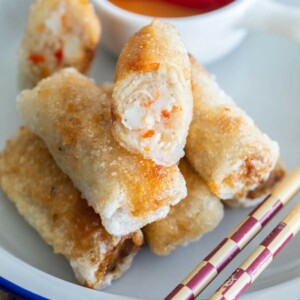
Vietnamese Spring Rolls (Cha Gio)
March 16th, 2010 | Chinese, Chinese Recipes, Vietnamese Recipes | 65 Comments
I am a huge fan of Vietnamese spring rolls, or cha gio, roughly means “minced pork rolls” in Vietnamese language. I don’t like most Chinese spring rolls or egg rolls served in the United States. They are mostly bad, filled with vegetables flavored with MSG. Some of them even taste like they are infused with a dose of antibiotics. I am not kidding. I am sure you have had one of those!
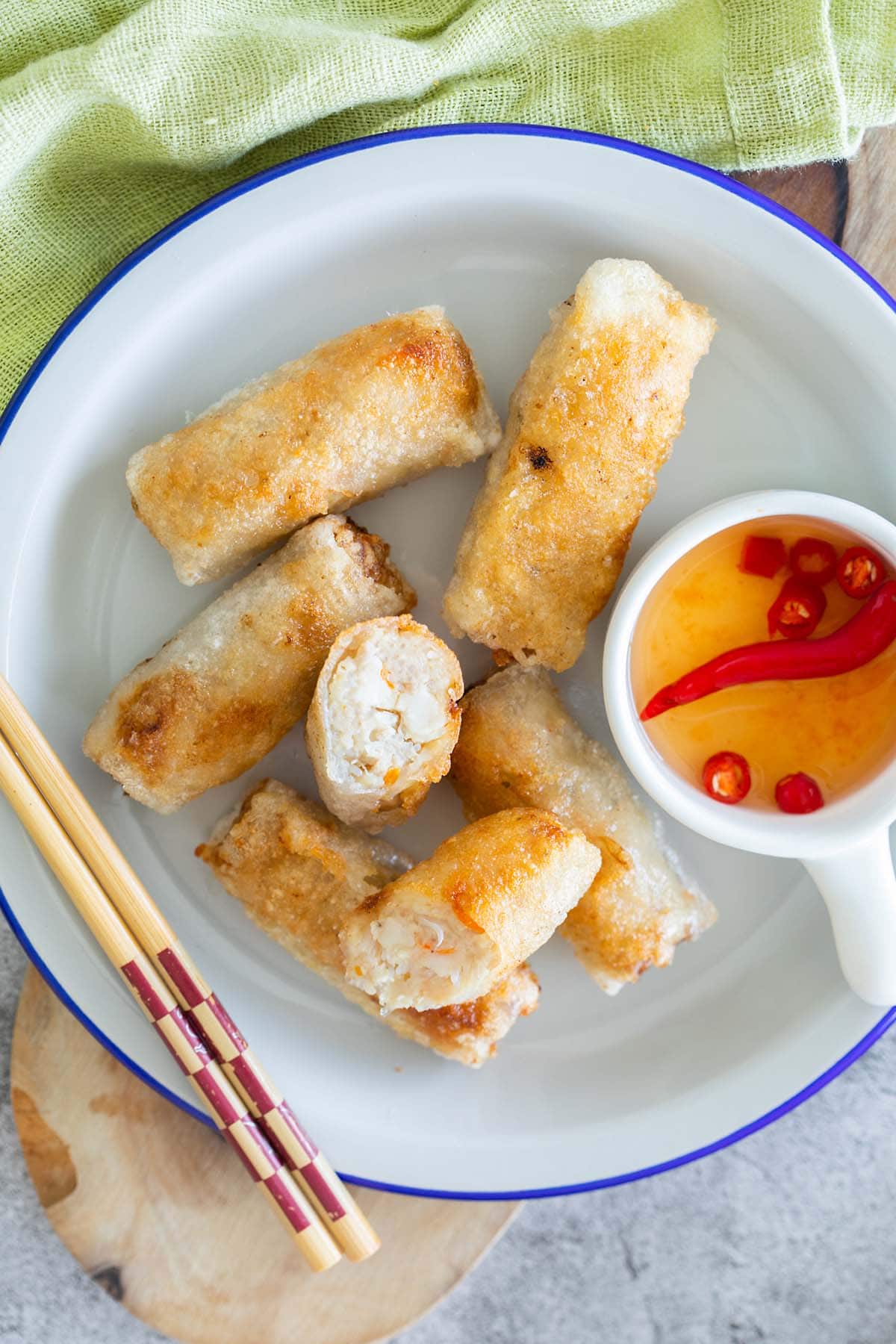
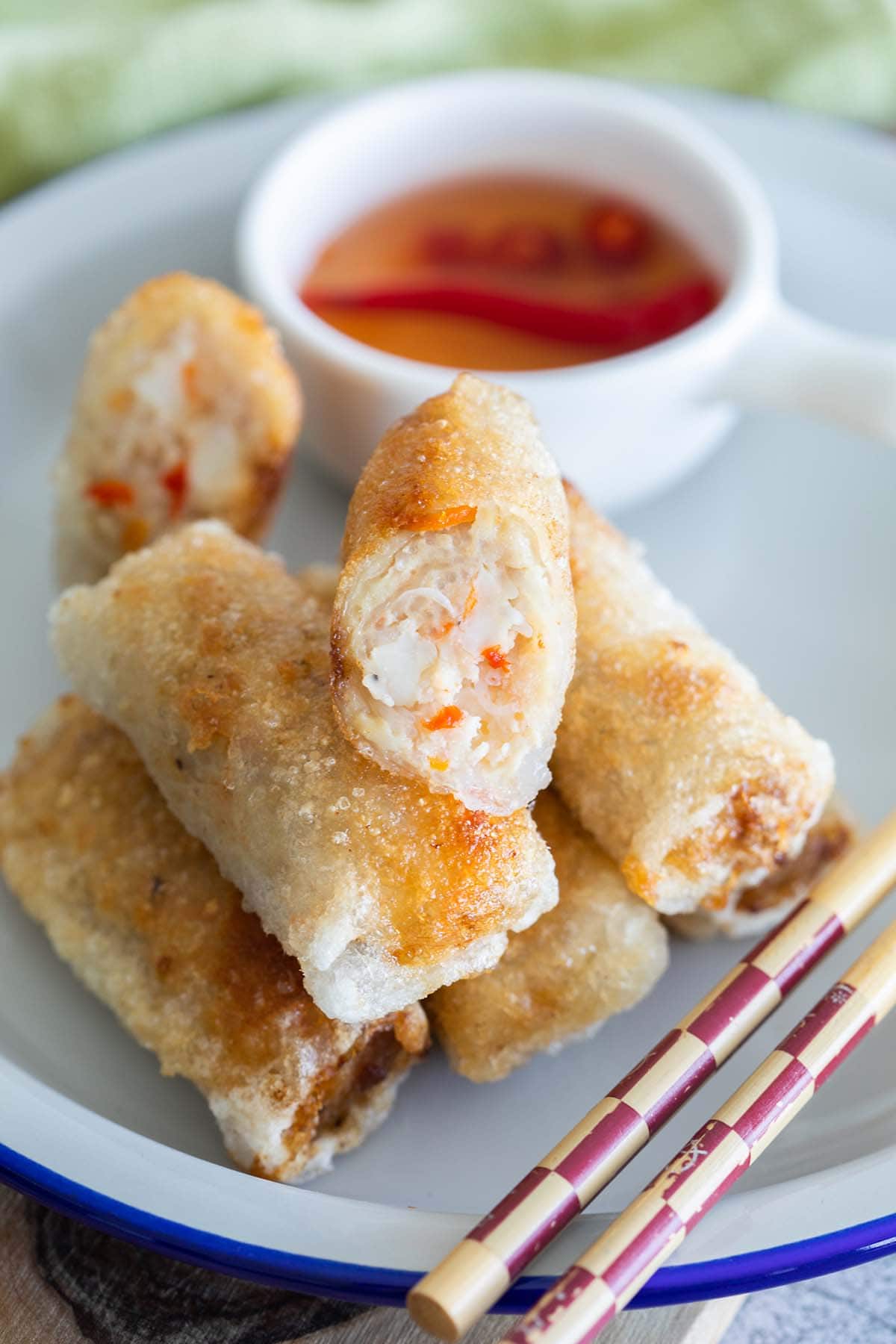
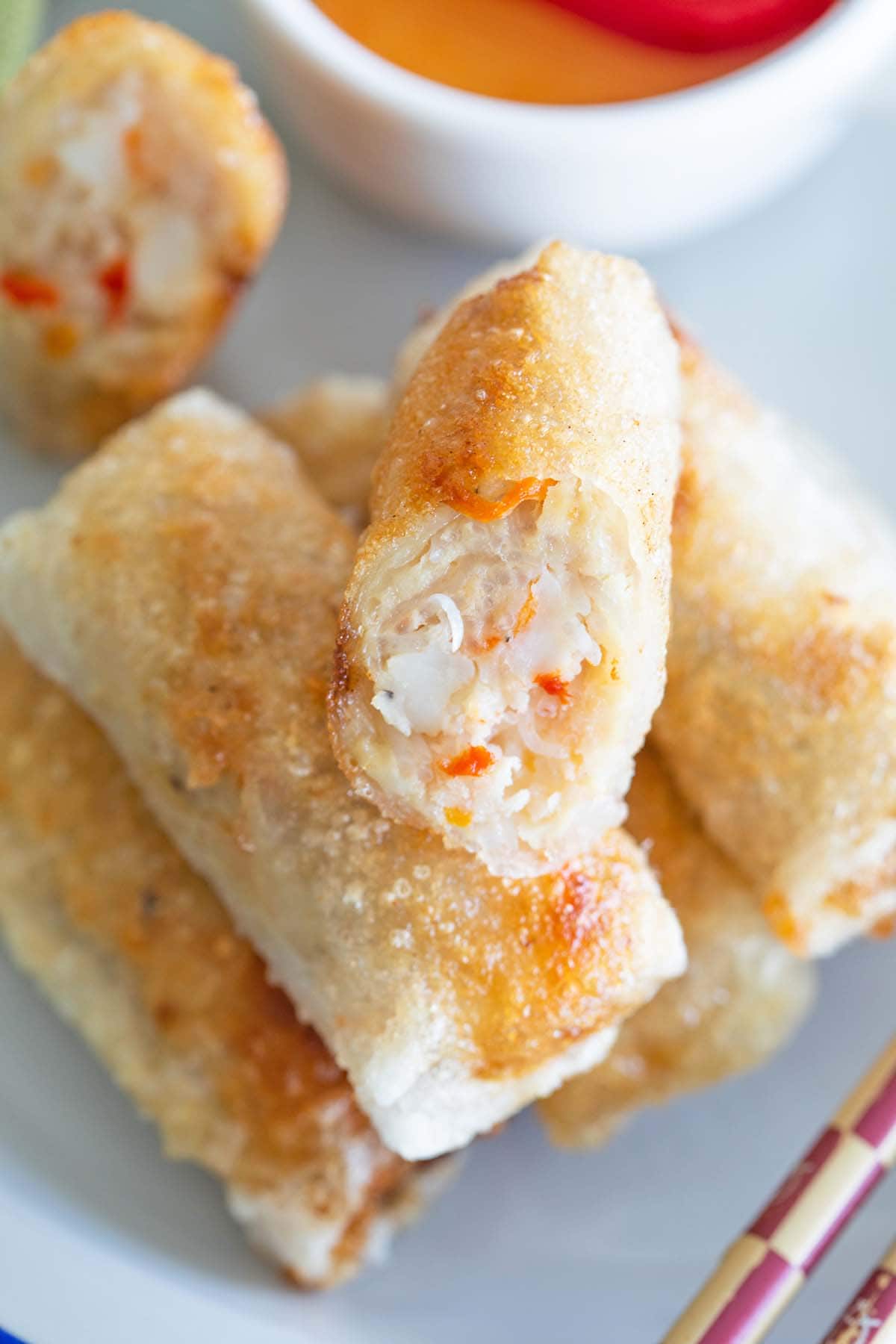
But cha gio, the Vietnamese interpretation of spring roll, is what spring roll should be. The filling is made of group pork, shrimp, crab meat, with shredded carrots, mung bean noodles (cellophane noodles/glass noodles), etc., and the end result is utterly delicious and tantalizing. The deep-fried, crunchy, and golden brown exterior is just another plus..(get Vietnamese spring rolls or cha gio recipe after the jump)

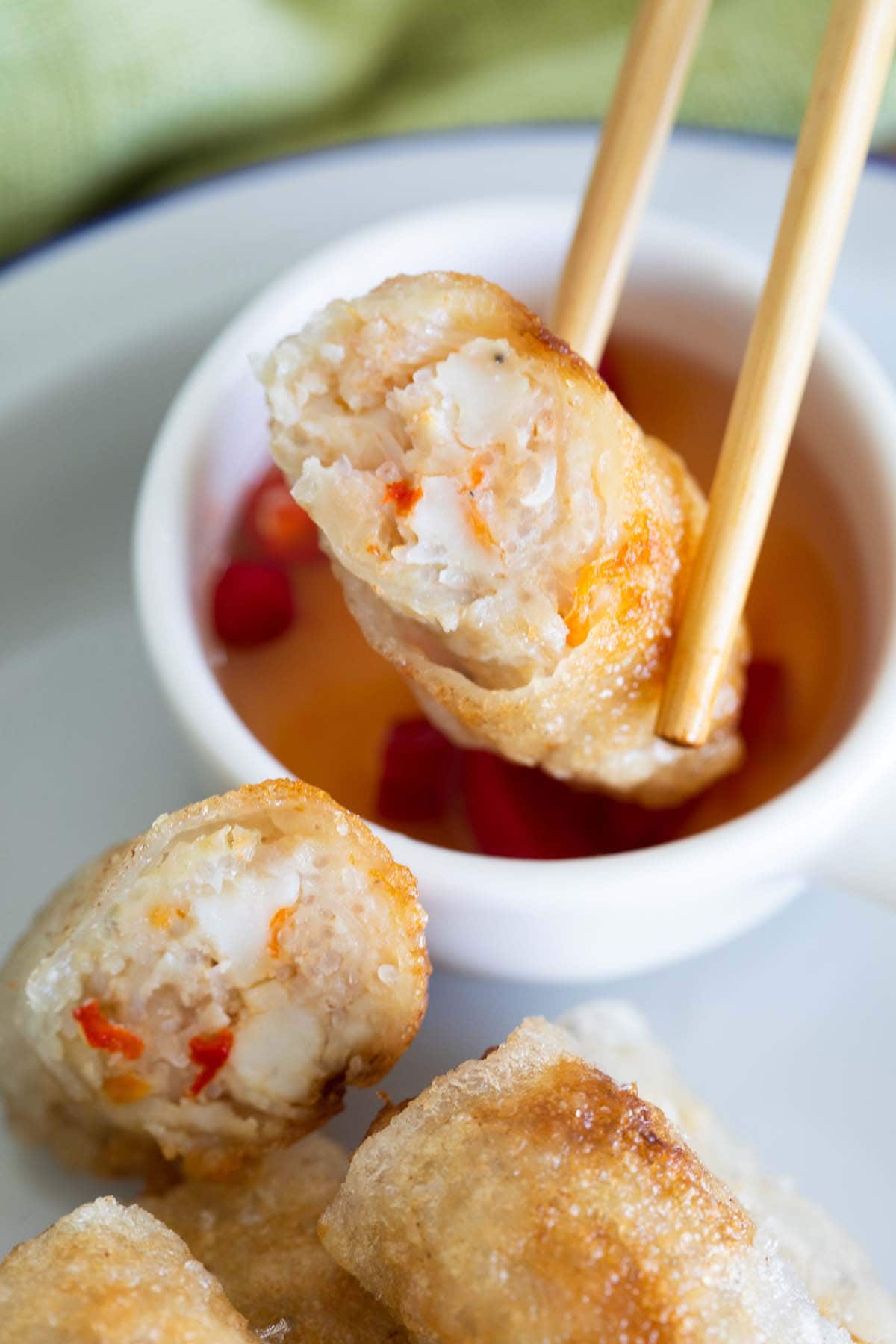
The most refreshing part about Vietnamese spring rolls (cha gio) is that they can be served with fresh herbs and lettuce leaves. Eat them as is, of course, with nuoc cham (Vietnamese dipping sauce), or wrap your cha gio with fresh lettuce leaves and other aromatic herbs such as mint leaves (my favorite). Either way, they are deeply satisfying!
If you like Vietnamese food, you should check out the Vietnamese recipes on Rasa Malaysia.
Adapted from Inside the Southeast Asian Kitchen
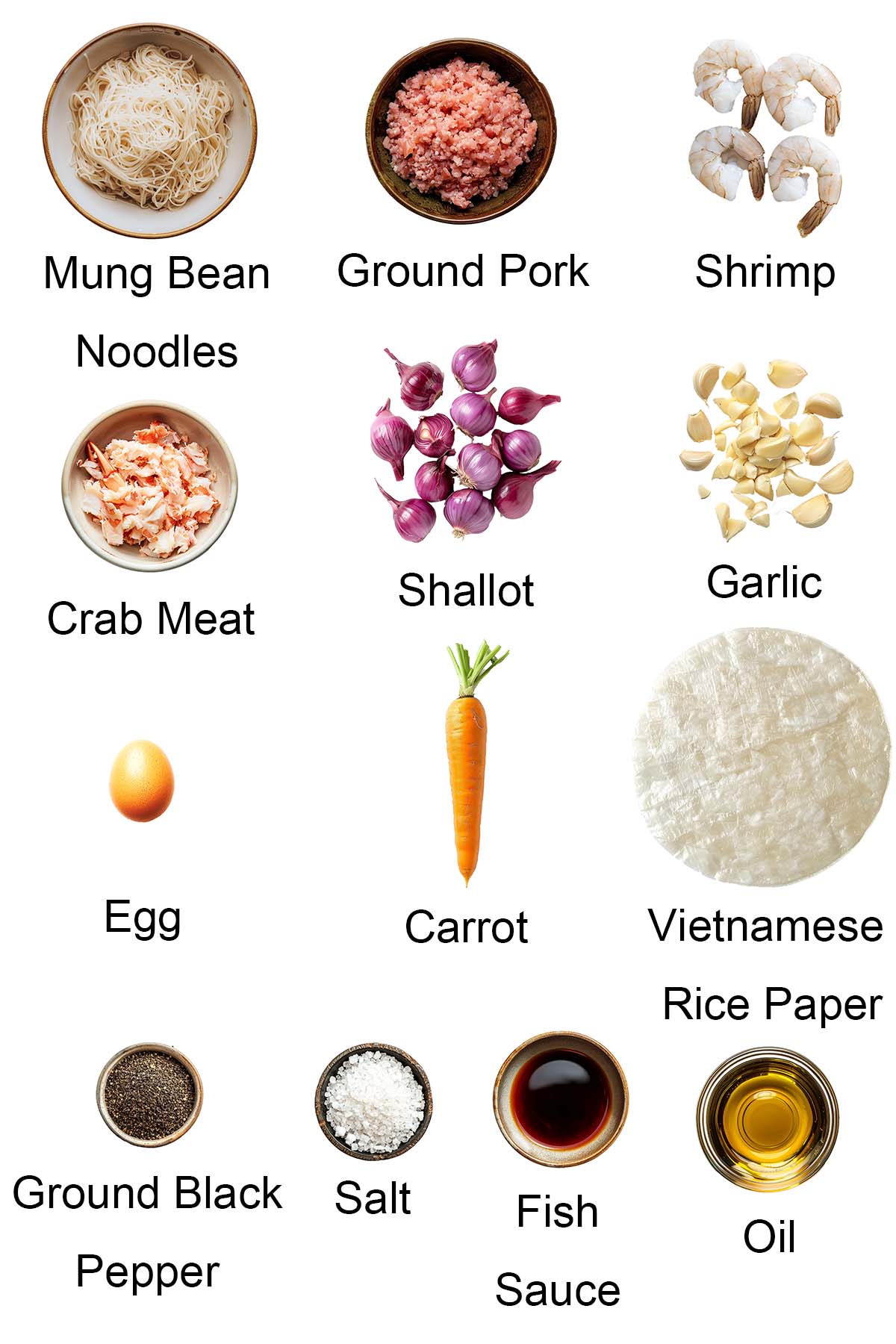
Ingredients:
6 oz. ground pork
2 oz. small shrimp, minced
1 oz. crab meat, coarsely chopped
Some shredded carrots
1 oz. mung bean noodles/cellophane noodles/glass noodles – soaked in hot water for 30 minutes or until they turn very soft
1 clove garlic, minced
1 shallot, minced
3 big dashes ground black pepper
1 teaspoon fish sauce
Salt to taste
1 small egg, lightly beaten (use only half)
Vietnamese rice paper
Method:
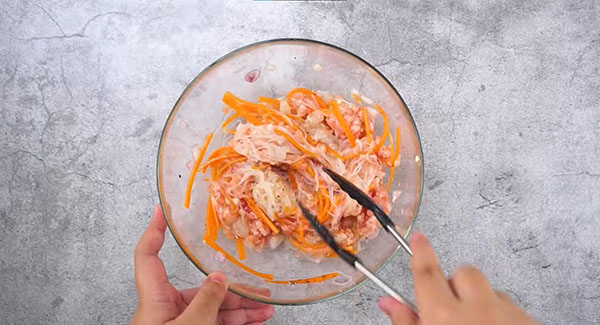
Chop the soaked mung bean noodles into shorter threads. In a bowl, mix the ingredients together to form a sticky filling.
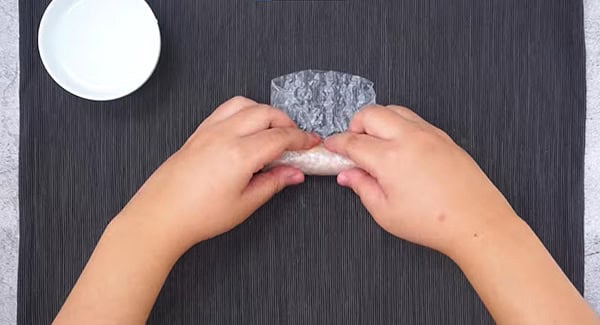
To roll the cha gio, place a piece of rice paper on a clean, wet kitchen towel. Dip your fingers in a bowl of warm water and run them all over the entire rice paper to soften it. Place 1 heaped tablespoon of filling on the moist rice paper, fold the rice paper over the filling, tuck in the sides, then roll to form a cyclinder about 3 inches long.
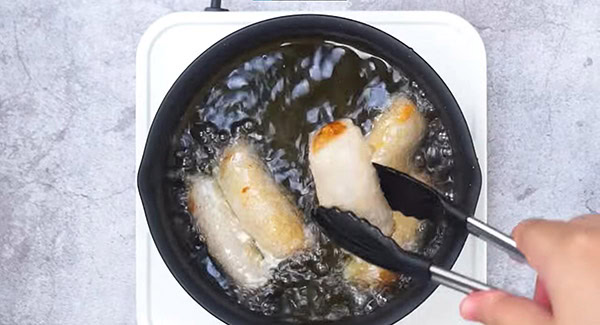
Heat oil over medium heat in a wok or a large frying pan. When the oil is smoking, gently put in a few cha gio in the oil. Fry them slowly until they turn golden brown. Dish out and drain the excess oil by lining them over some paper towels.
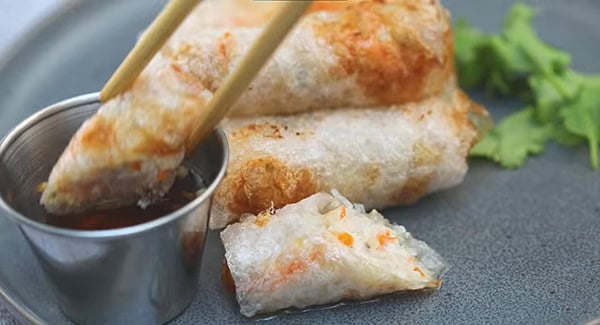
Serve immediately with nuoc cham or roll it up with a fresh lettuce leaf and some aromatic herbs and then dip into the nuco cham.
Cook’s Notes:
- For buying tips about Vietnamese rice paper, please refer to this article by Vietnamese cookbook author Andrea Nguyen. I used the 8 1/2-inch round rice paper.
- Do not deep fry the cha gio on high heat because they splatter and most importantly, high heat causes the skin to bubble, break and burn. So patience is key, use medium to low heat during frying process.
- You can get the nuoc cham (Vietnamese dipping sauce) recipe on my Banh Xeo post (another great Vietnamese recipe).
- Cha Gio is also called Imperial Rolls in the United States, not to be confused with Summer Rolls.


Subscribe to RASA MALAYSIA by RSS
Follow RASA MALAYSIA on Twitter
Join RASA MALAYSIA on Facebook


Great post, I never thought these got enough credit, they’re tasty! I might be weird, but I’m a huge fan of noodles inside spring rolls.
I agree, Dave. I also love the fresh Vietnamese spring rolls filled with noodles, too, they just taste great.
your spring rolls have no beansprouts which is great because I don’t dare to eat them. They look really delectable especially with the dip ^^
Wiffy – I also don’t like spring rolls with bean sprouts, it’s weird tasting and don’t seem to belong inside spring rolls.
another great post and photos. we’ve made these with shredded jicama and even taro as well instead of carrots..perhaps slightly crunchier texture.
Thanks Hong. I can totally imagine the taste with jicama and taro. Yummy. I tried to make what’s commonly served at Vietnamese restaurants here.
Very nice recipe :D Thanks for sharing it. The pictures are very enticing :D
Tahnks Brian.
I am a Vietnamese now living in Hanoi city. I love your food sure, and I visit this website almost every day. I hope you to try once our other traditional sping roll recipe which we cook for Lunar New Year. The ingredients is ground pork, 豆芽、蔥花、香菇末、木耳末、東粉、雞蛋、鹽、胡椒粉。You’ll like it, I think.
Hannie, wow, you are a Vietnamese and you can type in Chinese. I don’t really like bean sprouts in my spring rolls though, but I love jicama. Malaysian version of spring rolls are wrapped with jicama, so sweet and juicy. :)
LOL, you are right about the antibiotic spring rolls, they are often served at American-Chinese restaurants in the US. Big fat like burrito, and with the thick egg rolls skin and filled with antibiotic and cheap MSG cabbages, so bad. I prefer this Vietnamese cha gio, too, although Thai version is also similar but with the regular spring rolls skin.
Kate, I know, they are the worst, those big fat thick skin egg rolls. YUCK.
These look great. I really like all the different textures. Mmmmm
Love these… our version use pork and chicken. For extra crunch texture, I add julienned black ear mushrooms :-)
Great clicks, Bee!
Yes, I would have used black ear mushrooms if I had them. The Vietnamese restaurants here always include them in the filling.
Not only do these photos look gorgeous, the food also looks scrumptious.
Will it become oily if I serve it a few hours later? I’m thinking of making them for a gathering but of course have to prep a while before as I need to get bathed and dressed. Thanks!
Yes, I would suggest you fry them before the guests come.
I am also not a fan of chinese ones, but the vietname ones i love, i tried to make them, but was never so good as the one i eat from places. Will try your recipe. I can never make them so plump looking :-)
They are not easy to make for sure. The frying part is hard.
Oh Bee, I just watched a food show last night on Vietnamese food and the spring rolls really appealed to me. And then I see your spring rolls here. Time to make some. They look so, so delicious! One question, do the rice paper turn soggy after a while?
Yes, they all turn soggy but the rice paper has a different texture compared to the regular spring rolls wrappers. It’s more stretchy and
chewy, so the sogginess is not that obvious I guess.
אחלה מתכון
Looks very delicious. I always love fried spring rolls. I remember once we went to a Vietnamese restaurant looking for authentic Vietnamese food. I asked the waitress, a friend, whether the spring rolls are authentic and she said ‘No’. Imagine my horror! Then I found out later that the chefs were Malaysians….no wonder…hmmm
LOL funny. Malaysian spring rolls are wrapped with jicama, I love it.
My Chinese friend taught me another version (typically Shanghai it seems) with napa cabbage, ground meat, mushrooms and/or black fungus. She made it, I tried it and they were delicious. The filling is definitely “wetter” than Cha-Gio but that’s what makes it moist and juicy inside.
I seldom order spring rolls in the US too. Guess it is due to the cost with the “risk” involved. What if I’m served lousy spring rolls (thanks for confirming the facts) ? Kekeke…getting too analytical here. Woops!
Yes, I know the Shanghainese version. My cookbook has a similar recipe, adapted from my favorite Chinese restaurant, more moist and it tastes very good. I prefer the Malaysian style of spring rolls with jicama. Not sure about Singapore version.
The only “spring roll” I like in Singapore is the (Un-fried) Popiah served as street food. :D
Yes, I also like that the Nyonya fresh popiah. So much better and sweet with the jicama filling. I will have a recipe up on Nyonya Food soon, when the new design launches. :)
your rolls look yummy. i love making these things. can i ask you about your frying technique. i’ve noticed when making cha gio with rice paper that the oil gets rather “used” fairly quick, meaning after frying a dozen or so, even with skimming. also, that it’s a bad idea to wrap and wait a while before frying as the wrapper can get rather frail, and i’m rather careful that the filling is not too moist and the wrapper is not over soften. is this experience yours also?
Yes the rice paper soaks up oil. I fried mine almost immediately after wrapping. They are not easy to fry, that’s why I recommend low to medium heat.
Thanks for the recipe. I love all fried rolls Egg rolls,spring rolls, lumpia etc.)
Cha Gio is great! They can also be eaten with rice noodles and fresh lettuce and herbs and topped off with some nouc cham. Great Post!
Mmmm these look great! Should I cook the pork and shrimp before stuffing the rolls?
Yes, you can but the frying process will cook them so they will be over-cooked after frying.
YUM!!are the summer rolls the rolls that are not fried and stuffed with shrimp and cilantro and glasseine noodles??please post a recipe for these when you can. They are one of my favorite dishes. Lovely post.
These are called summer rolls at some restaurants, but the Vietnamese name is goi cuon.
http://rasamalaysia.com/vietnamese-spring-rolls-goi-cuon-with/
I am SOOOOO very confused about Spring Roll Wrappers. I have made delicious Vietnamese Spring rolls, that are made with the round opaque wrappers that are brittle and then you dip them in water and they become stretchy, and served cold…. but I am looking for the “egg roll type” not thick like that but thinner, is this what you used? I have seen frozen spring roll “pastry” on websites, what is this? I hope you can clear this up for me once and for all. LOVE your photos and your recipes, tried the Walnut shrimp the other day and other than adding a tish more condensed milk, they were amazing!!
Shannon, I used Vietnamese rice paper, the ones you describe as opaque and brittle and dip in water before wrapping. Not sure about spring rolls pastry, never seen them. For Chinese spring rolls, I used the frozen square ones which is thin and crispy after frying.
I LOVE cha gio. It was my first taste of Vietnamese cuisine when I was a teenager. Funny enough, I’ve never made them myself, and I always thought they were wrapped with the same wheat-based eggroll wrappers, like the sad versions of Chinese egg rolls at take-out restaurants. So I’d resigned to not being able to eat them. What joy in finding that you make them with rice paper! I can SO do this in my home. Cha gio making party, here we come!
Are these the same thing as nem? In France these fried spring rolls are on every Vietnamese menu, in the US I get greeted with a blank look when I ask for nem.
I love the veggie spring rolls — they are so delicious!
I want a whole plateful of these!
I am a huge fan and liked this recipe. I much prefer to make Vietnamese rolls with more herbs and eat then fresh – that is rice paper is OK to eat without frying
Greetings from Tokyo! I love spring rolls too, crispy on outside and succulent on inside. Your blog is amazing :)
EVERYBOBY here love spring rolls, called “nem” here in France…. I always have a few in the freezer just in case….should friends drop by impromptu for “aperitif’ popular for an evening get-together “apéro-dinatoire” !!. Naturally the crispy rolls is a must when you are Asian. Your recipe seems much easier to make, I sure will try it this weekend. Just a question; how do you make the nuoc nam sauce, as I have already the pure fish sauce….what else should I add ??
And I love your site and your recipes…TQ
If you look at the Cook’s Note, I link to my nuoc cham recipe.
Love these! I always get them in restaurants, and now I can try making them at home too :)
Nice if eaten with hot spicy chilli!
Hi. Thank you for your awesome recipes. I tried your orange chicken before and it was a hit in my family! Your rolls look absolutely mouth-watering delicious! I was wondering what kind of meat I can substitute in place of pork, since I don’t eat pork. Thanks once again.
They look fantastic. I always order them at our local Vietnamese restaurant, Nam’s Red Door, but I have yet to make them myself. Your printed recipe is the perfect inspiration to give it a try!
LL
Sending you some Link Love!! I have posted you up today on my blog!!! I love your recipes!
i love these. i am blessed to have a vietnamese mother and a mexican father. a by-product of the vietnam war. my mother makes these almost every weekend. we love them. my friends always ask when she makes them if i can bring them some. i tell them i will, if they make it home. lol. she uses pork, and shrimp. the noodles add a texture that the chinese take- out industry cannot touch. i found your blog on accident and now i am addicted. thank you.
Hello, my Mother is Vietnamese and just to add a little extra flavor we fry our eggrolls in peanut oil. I think it adds that last little bit of flavor.
I agree, peanut oil is the most aromatic of all.
Wow! These look absolutely delicious! I am so glad I read your recipe. I have been making eggrolls for years, and I have always had a problem with the rice paper skins. I did not know you had to fry them on low to medium heat. Every time I have tried using rice paper, they would break open, and the filling would spill in to the oil. I have found acceptable substitues, however, they just don’t taste as good as the rice paper! I can’t wait to try these! Your website is AWESOME. Thank you!
Hi, I’ve tried making Cha Gio before and it was delicious. However, I’m awful at estimating how long it takes to throughly cook through the pork. I ended up with some being too dry on the inside as I’ve fried it for too long. Any advice on how to estimate that?
Another thing is, how much oil did you use to fry it? As in, covering the rolls partially or fully immersing the rolls in the hot oil?
Really love your blog! Keep up the good work! =D
Hi Eli – thanks for your comment. For the oil, you need to make sure it’s cover the rolls completely to make sure they are cooked properly and through. Too little oil will mean that the heat might not be enough to cook it through, hence the uncooked pork problem you experienced. Good luck.
I am a fan of your website even though I only read it for the last few days. I love food and cooking and I just want to share a bit knowledge of Viet Namese spring rolls which I collected from my travel in Viet Nam.
There are a few versions of Vietnamese spring roll in Viet Nam. The recipe you described has influence from the Northern Viet Nam style. However, Northern Vietnamese often put beansprouts inside (the real fresh beansprouts do not have strange taste, pity that nowadays most of us can not buy fresh vegetable any more, most of them are kept in freezer for a long time before selling to us). Southern people often use taro instead of beansprout, and shrimp is main ingredient for central of Viet Nam spring roll. The spring rolls with crab and shrimp meat originated from a coastal town in the north. It is the only place where spring rolls have the squared shape.
In the authentic Vietnamese cooking, there is no carrot or garlic in spring rolls. Instead, there is always black fungus (or cloud ear fungus, 云耳) in the spring rolls.
Hi Viet,
Thanks for your information. It’s great to learn so much about cha gio from you. I have yet to go to Vietnam but can’t wait to try out the real version.