
This post may contain affiliate links. Please read my privacy policy.
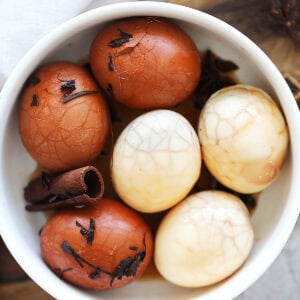
These Chinese tea eggs are savory, aromatic, and beautifully marbled from simmering in soy sauce, pu-erh tea, and warm spices. An easy make-ahead recipe that’s perfect for snacking, meal prep, or serving at parties.
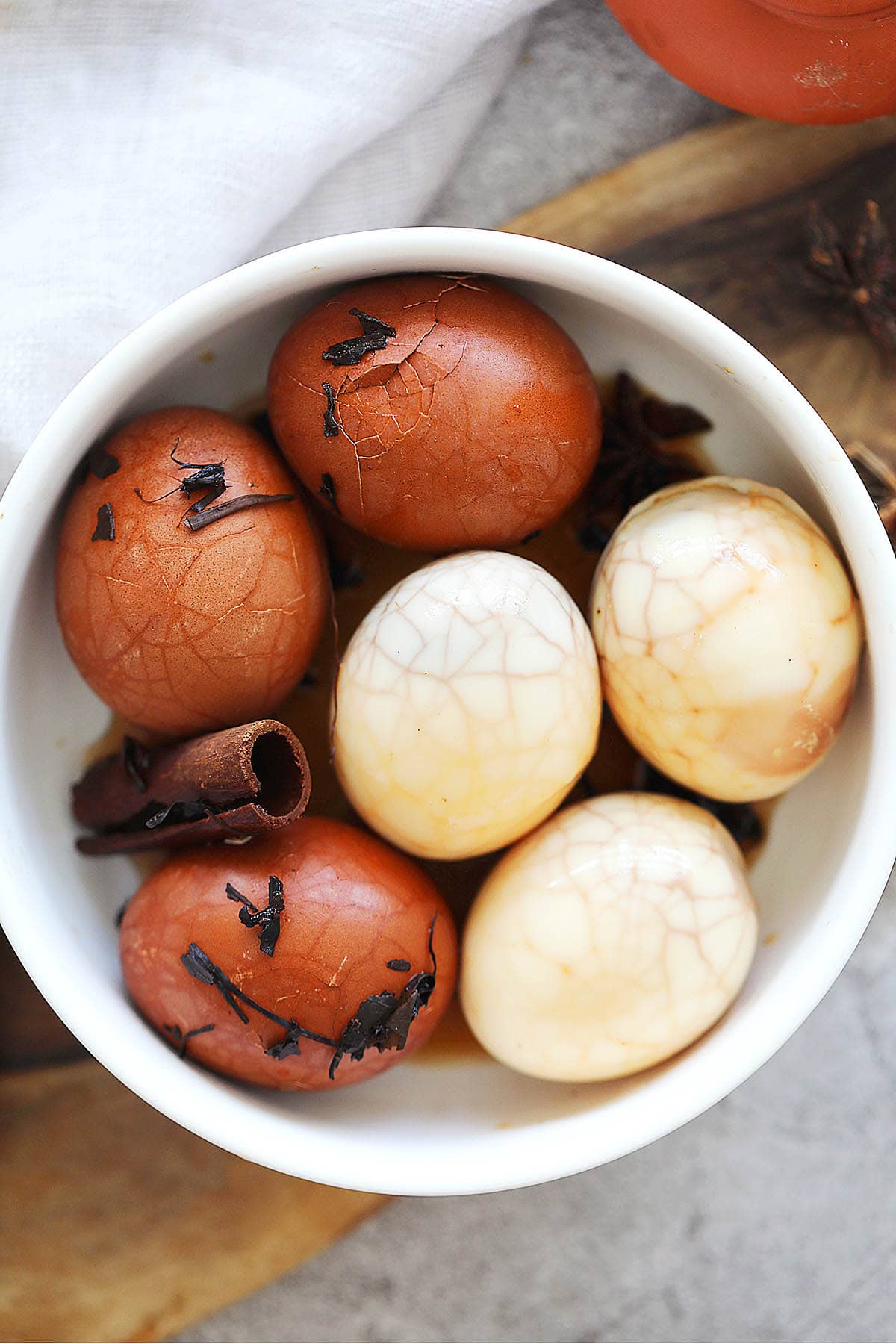
Easy Tea Egg Recipe
My uncle gave me a block of aged Chinese pu-erh tea (普洱茶, pǔ ěr chá), and I immediately thought of Chinese tea eggs (茶叶蛋, chá yè dàn) because pu-erh is perfect for making them. It adds an earthy depth that works beautifully with soy sauce and warm spices.
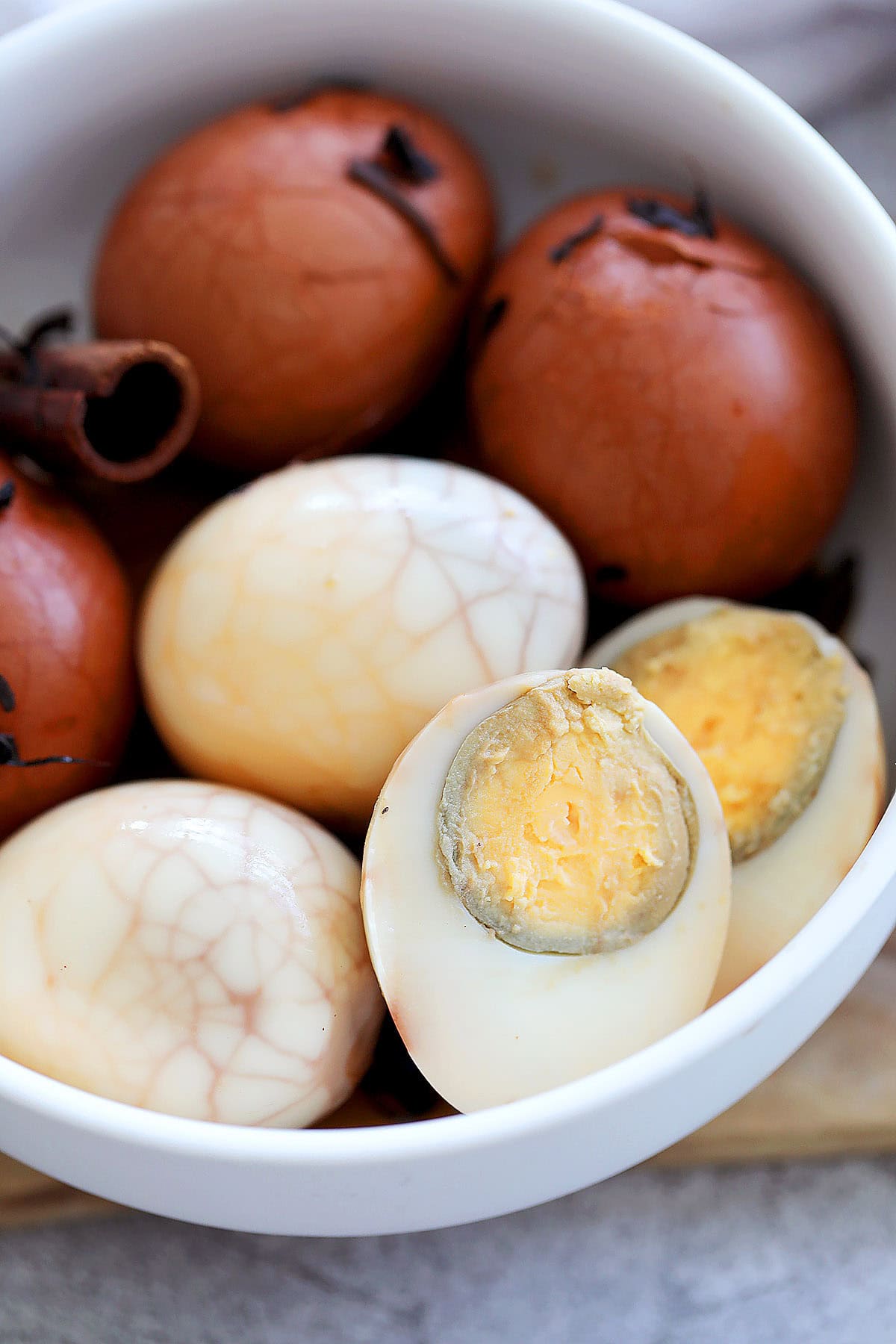
Tea eggs are popular across Asia, right alongside Soy Sauce Eggs from China, Japanese Shoyu Egg, and Korean Soy Sauce Eggs (Mayak Eggs). What makes this version special is the mix of soy sauce, tea, and warm spices that gives the eggs their signature marbled look and deep flavor.
Chinese tea eggs are one of those simple comfort foods that never get old. My mom used to make them often when I was growing up, and every time I simmer a fresh batch, the smell of soy sauce, tea, and spices brings back the coziest memories. They are savory, aromatic, and surprisingly easy to make at home.
This easy tea egg recipe takes only 10 minutes of prep time, and with three simple steps you can make your own savory, beautifully marbled tea eggs that are perfect for snacking, meal prep, or serving at parties.
Sidenote: In Asia, tea eggs are commonly sold at street food stalls, small shops, and convenience stores, usually kept warm in a big pot near the counter. Here in Malaysia, you are more likely to find them in tea shops inside malls or specialty stores, gently simmering in a fragrant tea broth.
Shopping Guide: Choosing Tea For Tea Eggs
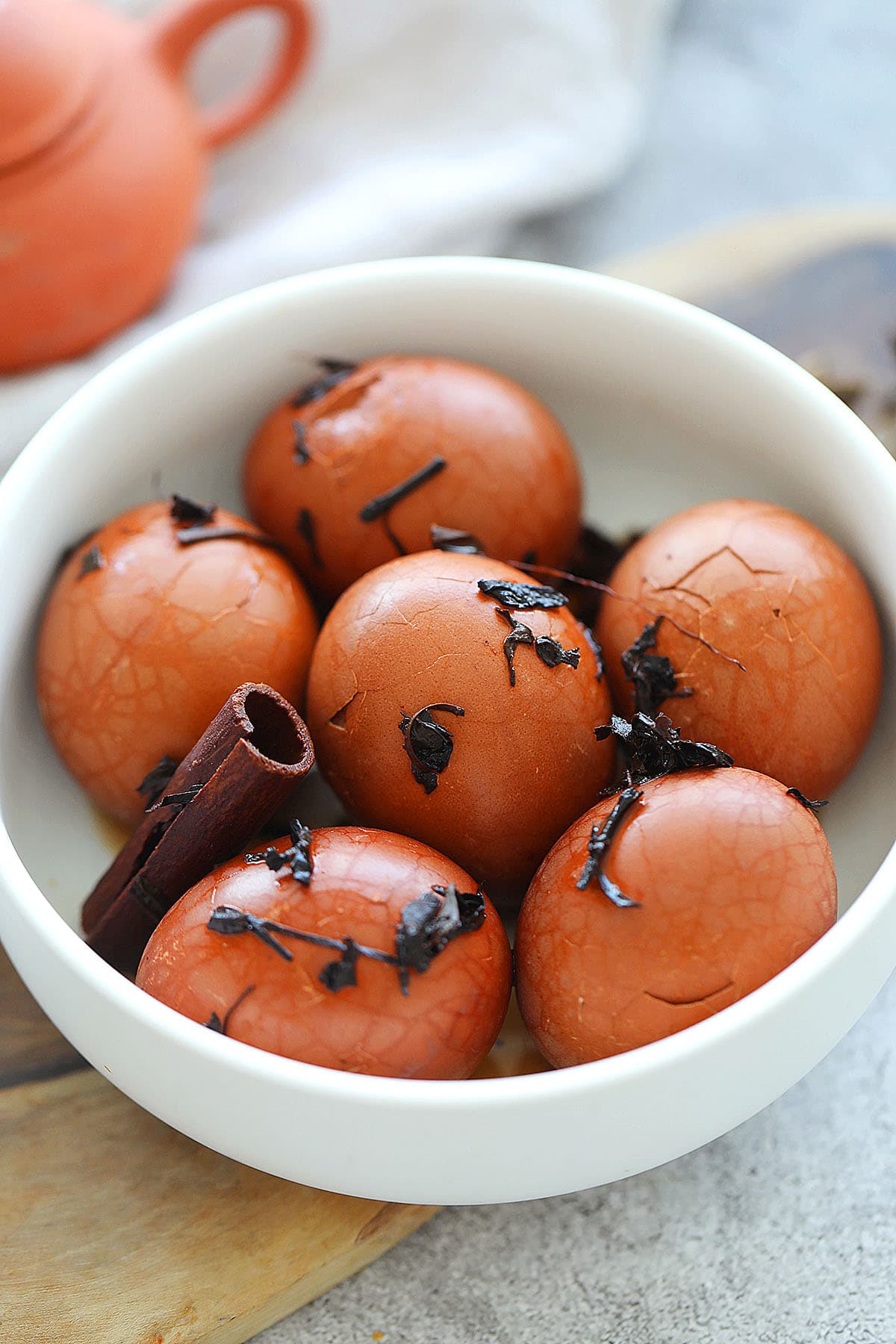
Here’s what I recommend:
- Pu-erh Tea (普洱茶, pǔ ěr chá): This is the traditional choice. I like using aged or brick-style pu-erh because it adds a deep, earthy flavor that complements soy sauce and spices perfectly. Loose leaf gives the best infusion, but tea cakes work well too.
- Black Tea (红茶, hóng chá): A lighter, slightly sweeter option with a pleasant aroma. Both loose leaf and tea bags work, though loose leaf tends to give a fuller, more layered flavor.
Pro Tip: Choose a tea with a strong, bold flavor so your eggs soak up all the richness. Avoid flavored or blended teas because they can compete with the soy sauce and warm spices.
Storage Tip: Keep your tea in an airtight container and store it away from light and heat. This helps maintain its freshness and keeps the aroma intact.
Ingredients You’ll Need
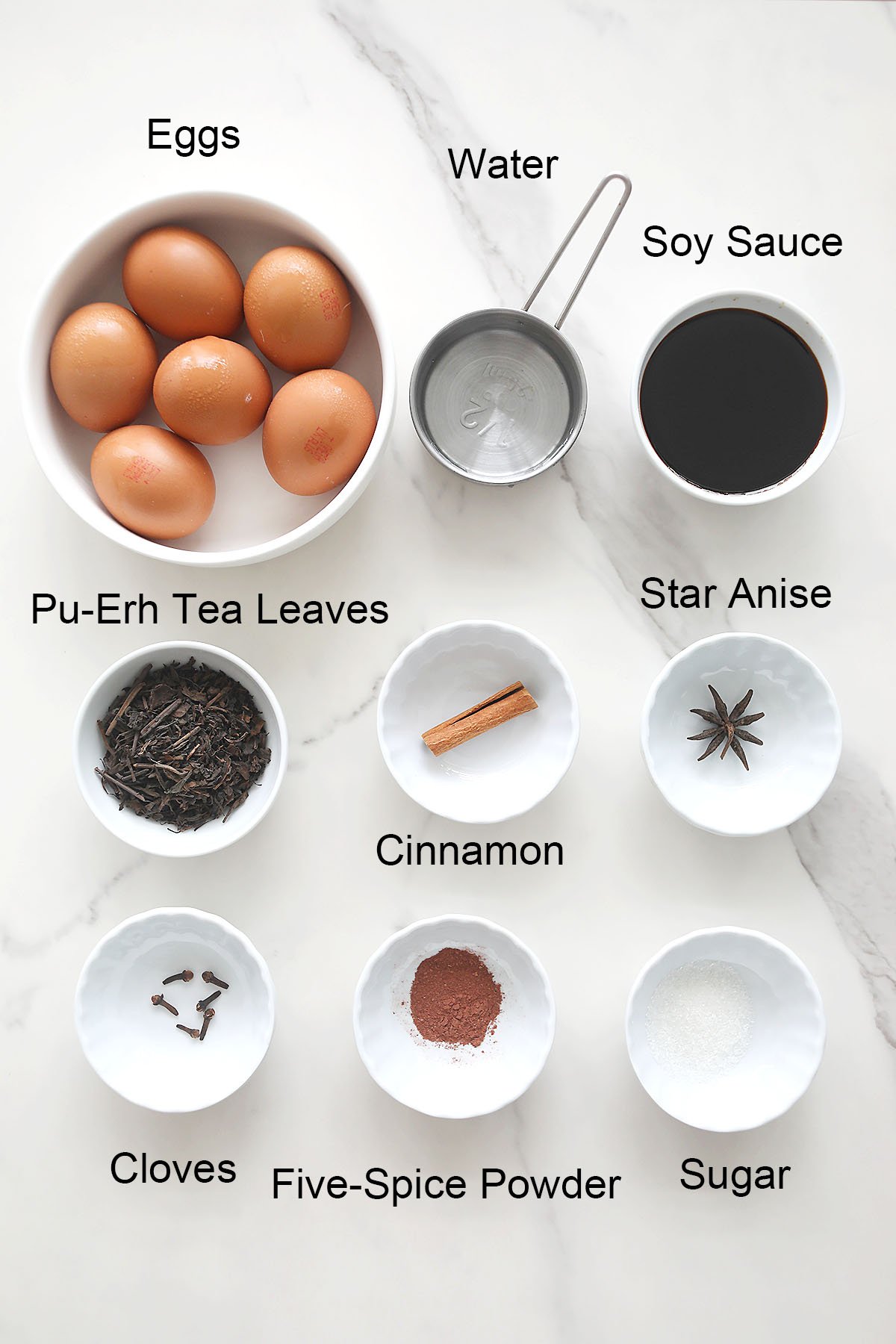
- Eggs
- Soy sauce
- Pu-erh tea leaves
- Cinnamon stick
- Star anise
- Cloves
- Five-spice powder
Check out the recipe card at the bottom for all the ingredient details.
Pro Tip #1: Which Eggs To Use
I stick to regular large chicken eggs for this recipe. They’re perfect for the marbling and hold up well during simmering. You could try quail eggs for a bite-sized version, but they’ll need extra care. Boil them for about 4 to 5 minutes and be gentle when cracking the shells to get that marbled effect.
Pro Tip #2: Soy Sauce Selection
I recommend using low-sodium soy sauce. It gives the eggs a nice umami flavor without being overwhelmingly salty and lets you control the saltiness better.
Pro Tip #3: Whole Spices vs Ground
Use whole cinnamon, star anise, and cloves. Ground spices might seem convenient, but they can turn the broth murky and overpower the delicate egg flavor. Whole spices infuse slowly and give a clean, aromatic taste.
Pro Tip #4: Don’t Skip The Five-Spice Powder And Sugar
These two ingredients are small but essential. The five-spice powder adds that subtle complexity, while the sugar balances the soy and spices with just a hint of sweetness. Skipping them will make your tea eggs less flavorful and less aromatic.
Extra Ingredients To Try
- Dark soy sauce: Use about 1–2 tablespoons in addition to regular soy sauce. It deepens the color and adds a rich, caramel-like flavor without making the eggs overly salty, so it won’t overpower the soy sauce base.
- Dried tangerine peel: Just one small piece adds a bright, citrusy note that lifts the whole flavor. Dried tangerine peel can be found in Asian grocery stores, Chinese herbal shops, or online. Rinse briefly before adding to remove any dust or surface residue.
- Shaoxing wine: Add about 1–2 teaspoons to the tea mixture. It provides savory depth and complexity, boosting umami without leaving a boozy taste.
How To Make Chinese Tea Eggs
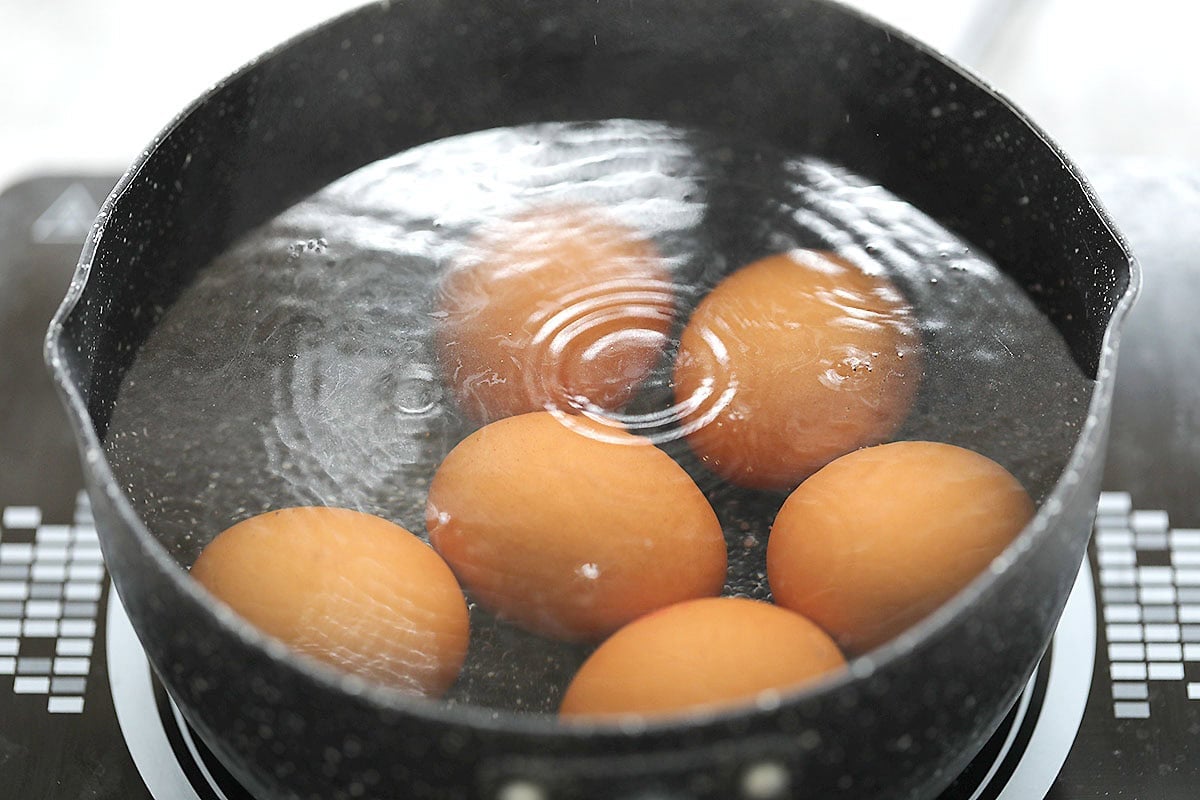
Pour 4 cups of water into a medium pot and gently place the eggs in, making sure they’re fully covered. Bring the water to a boil over high heat, then boil the eggs for about 10 minutes so they’re fully cooked.
Pro Tip: If you prefer your tea eggs with a slightly soft, jammy center, reduce the boiling time to about 6–7 minutes. It still works perfectly for cracking the shells and simmering in the tea mixture.
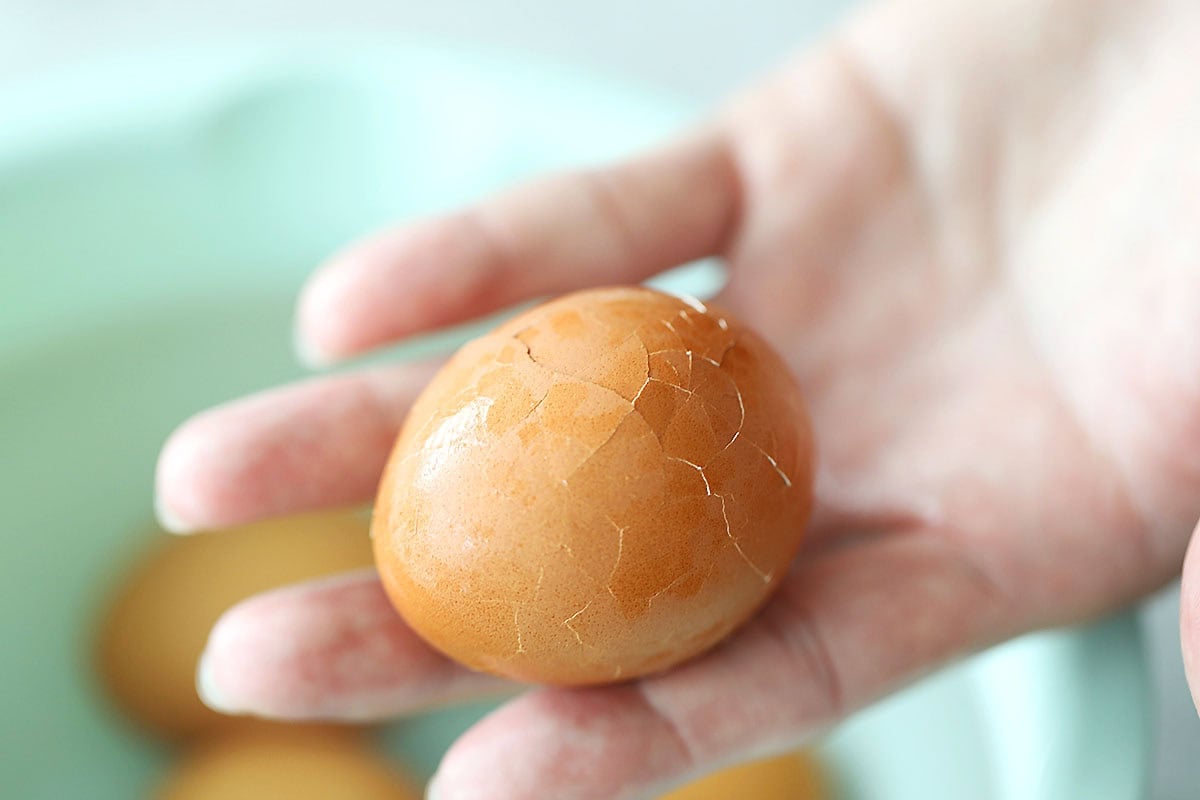
Take the eggs out and rinse them under cold water. Once cool enough to handle, use the back of a teaspoon to gently crack the shells. Put the eggs back in the pot and add the rest of the ingredients.
Pro Tip: You can also gently roll the eggs on a hard surface to create cracks all over the shell, but I prefer using a spoon because it gives me more control and helps prevent the eggs from breaking apart.
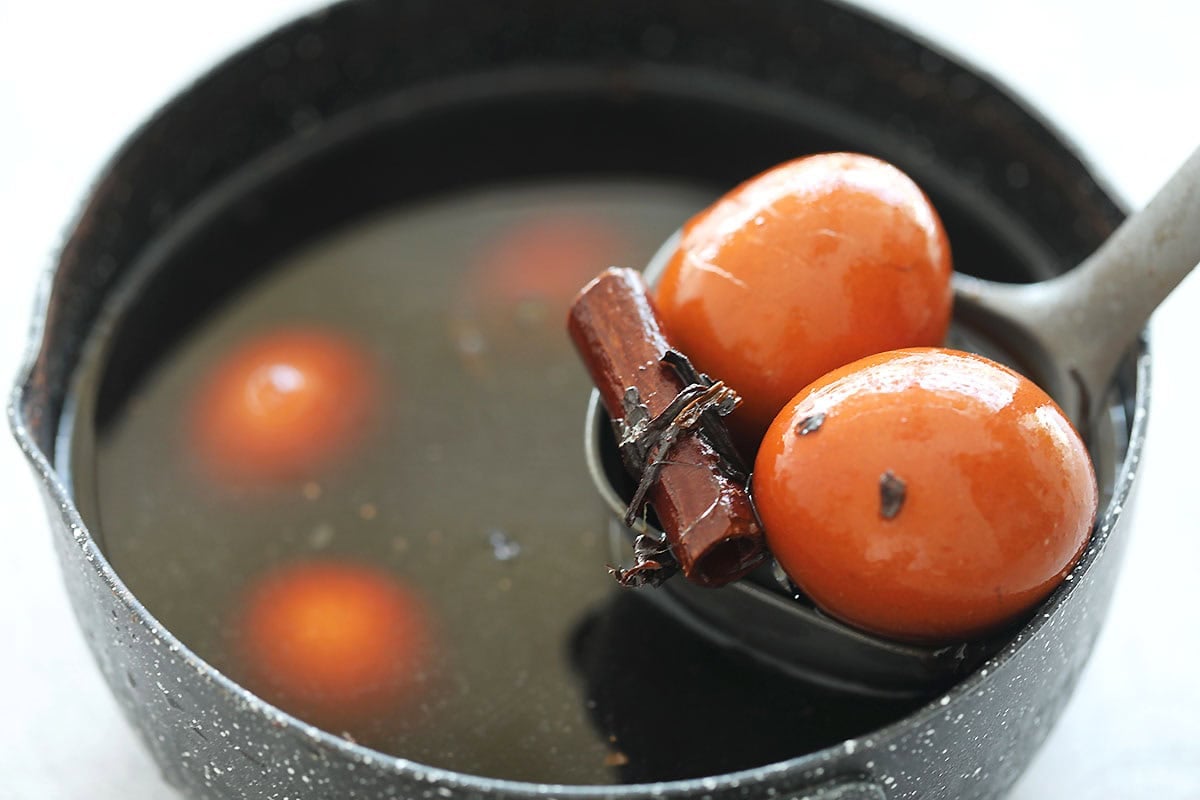
Bring the tea mixture to a boil again, then reduce the heat to low and let it simmer for 1 hour. The longer you simmer, the richer the flavor. Add a splash of water if it starts to get too low.
Pro Tip: Use a container or pot that fits the eggs snugly. Make sure they’re fully covered in the tea; if not, flip them as needed. I usually just keep them in the pot with a lid overnight.

You can enjoy the eggs right away, or leave them in the tea mixture overnight to really deepen the color and flavor.
Frequently Asked Questions
Yes, 2–3 black tea bags work fine, but loose leaf tea usually gives a richer flavor and darker marbling.
Yes. Simmer the eggs on low for 1–2 hours. Make sure the eggs are fully submerged and flip them once if needed to ensure even marbling.
You can enjoy tea eggs both ways. Serve them warm straight from the pot for a comforting snack, or chill them in the refrigerator for a flavorful, portable treat. If serving warm, avoid microwaving the eggs as it can make the yolks dry and rubbery.
Tea eggs can be kept in the refrigerator in their tea mixture for up to 5 days. Keep them covered to prevent the eggs from drying out or absorbing other fridge odors. If the eggs are removed from the tea mixture, try to consume them within 1–2 days for the best flavor and texture.
No, freezing will make the eggs rubbery and affect their texture.
Yes, you can reuse the tea mixture 1–2 more times, but the flavor will gradually weaken. Simply strain out the spices and store the liquid in the refrigerator until ready to use again. You can also top it up with a little soy sauce, spices, or water if needed to boost the flavor.
This recipe is only 71 calories per egg.
What To Serve With This Recipe
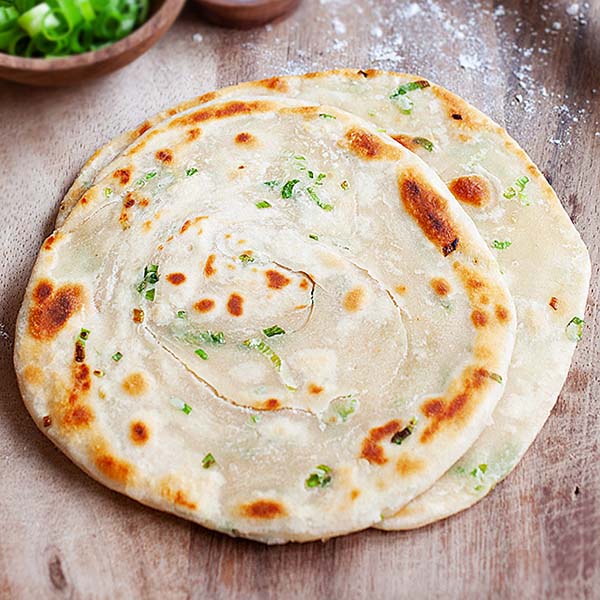
These versatile and aromatic eggs go well with just about any comforting Chinese dishes. For a wholesome home cooked meal and easy weeknight dinner, I recommend the following recipes:
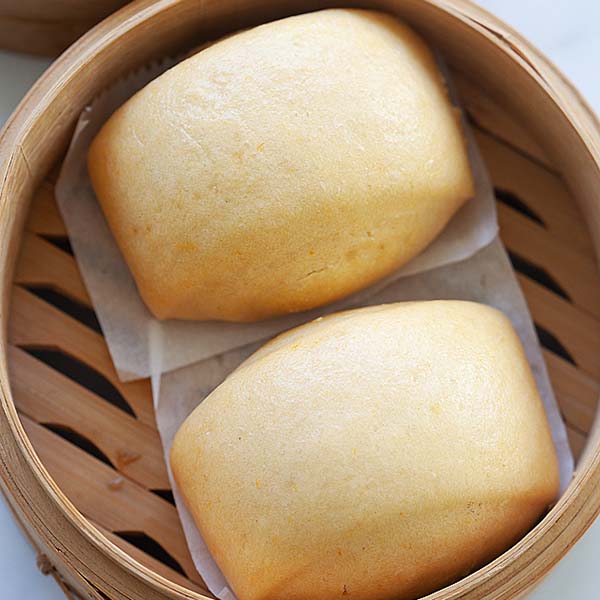
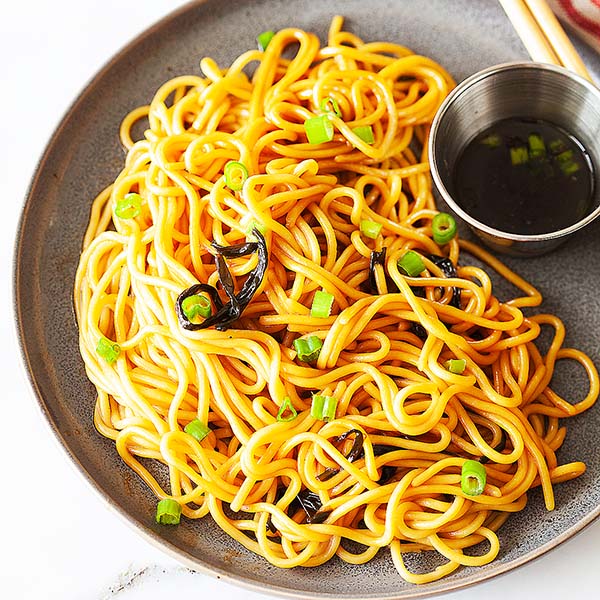
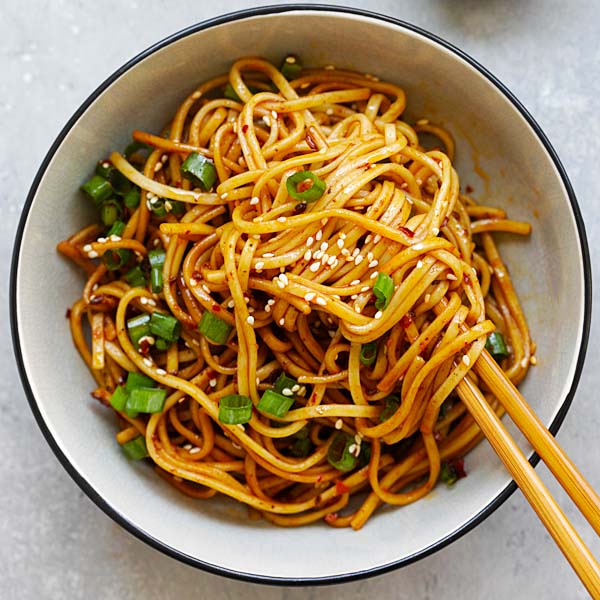
I hope you enjoy this post as much as I do. If you try my recipe, please leave a comment and consider giving it a 5-star rating. For more easy and delicious recipes, explore my Recipe Index, and stay updated by subscribing to my newsletter and following me on Facebook, Pinterest, and Instagram for new updates.
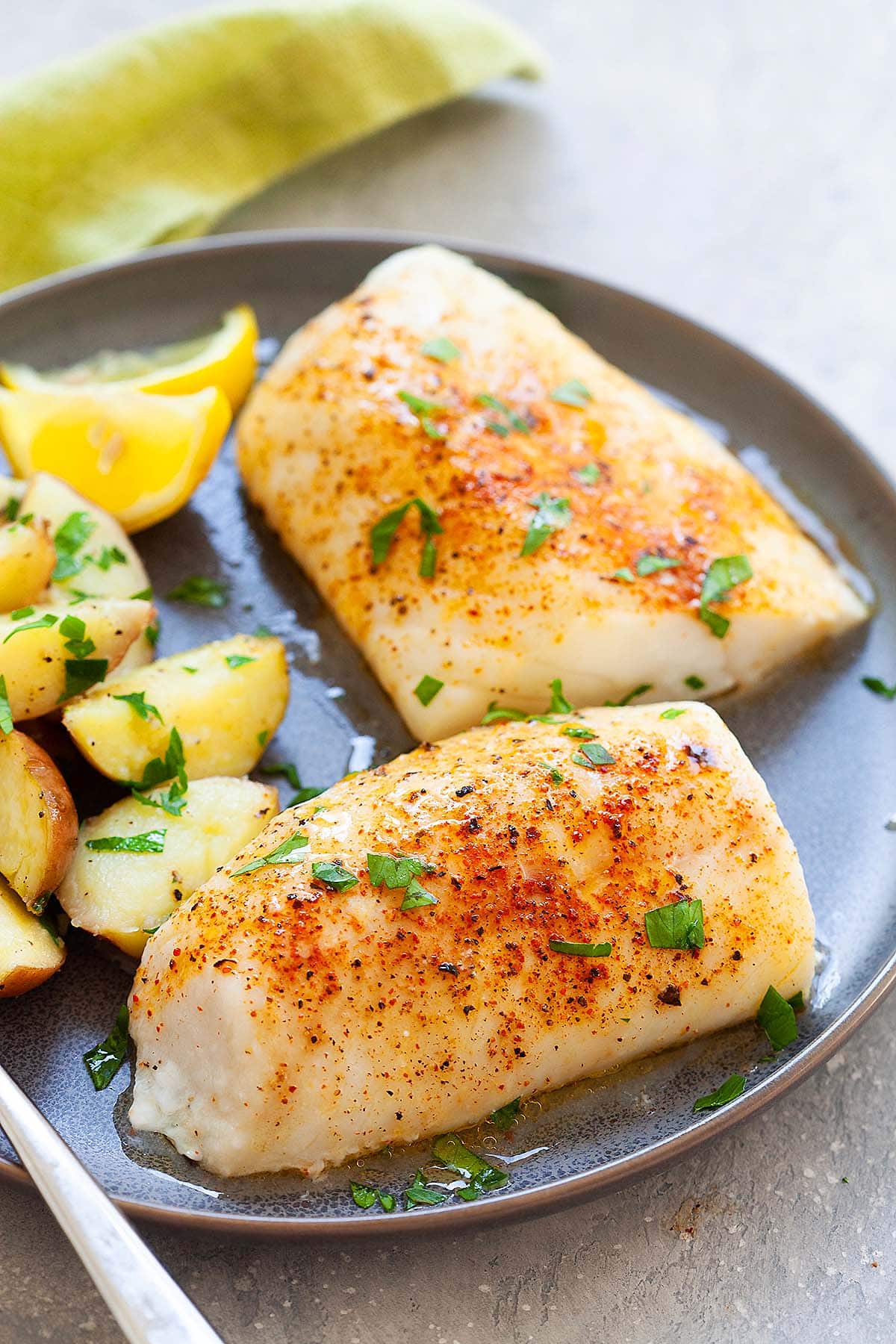
Other Egg Recipes You Might Like
Chinese Tea Eggs
Ingredients
- 12 eggs
- 4 cups water
- 6 tablespoons low-sodium soy sauce
- 3 tablespoons Chinese pu-erh tea leaf
- 1 stick cinnamon
- 1 star anise
- 6 cloves
- ½ teaspoon Chinese five-spice powder
- 1 teaspoon sugar
Instructions
- Add 4 cups of water to a medium pot and gently place the eggs in it, ensuring they are fully submerged. Bring the water to a boil over high heat and boil for approximately 10 minutes to ensure the eggs are fully cooked.
- Transfer the hard-boiled eggs from the boiling water and rinse them under cold water. Using the back of a teaspoon, gently tap the eggshells to crack them. Return the eggs to the water and add the remaining ingredients.
- Bring the tea mixture to a boil, then immediately reduce the heat to low. Simmer for 1 hour (the longer the simmering, the better the taste). Add more water if needed. Serve immediately, or leave the tea eggs in the mixture overnight to further enhance their color and flavor.
Video
Nutrition
Nutrition information is automatically calculated, so should only be used as an approximation.






Thanks for sharing this recipe been making this for my daughter breakfast her favorites
Hi Ludwina, thanks for trying my recipe and for the 5 stars! :)
Do you keep them in the tea solution in the fridge? And can you reheat them and keep hot in a crockpot? If so I’d assume in the tea solution
Yes you can.