
This post may contain affiliate links. Please read my privacy policy.
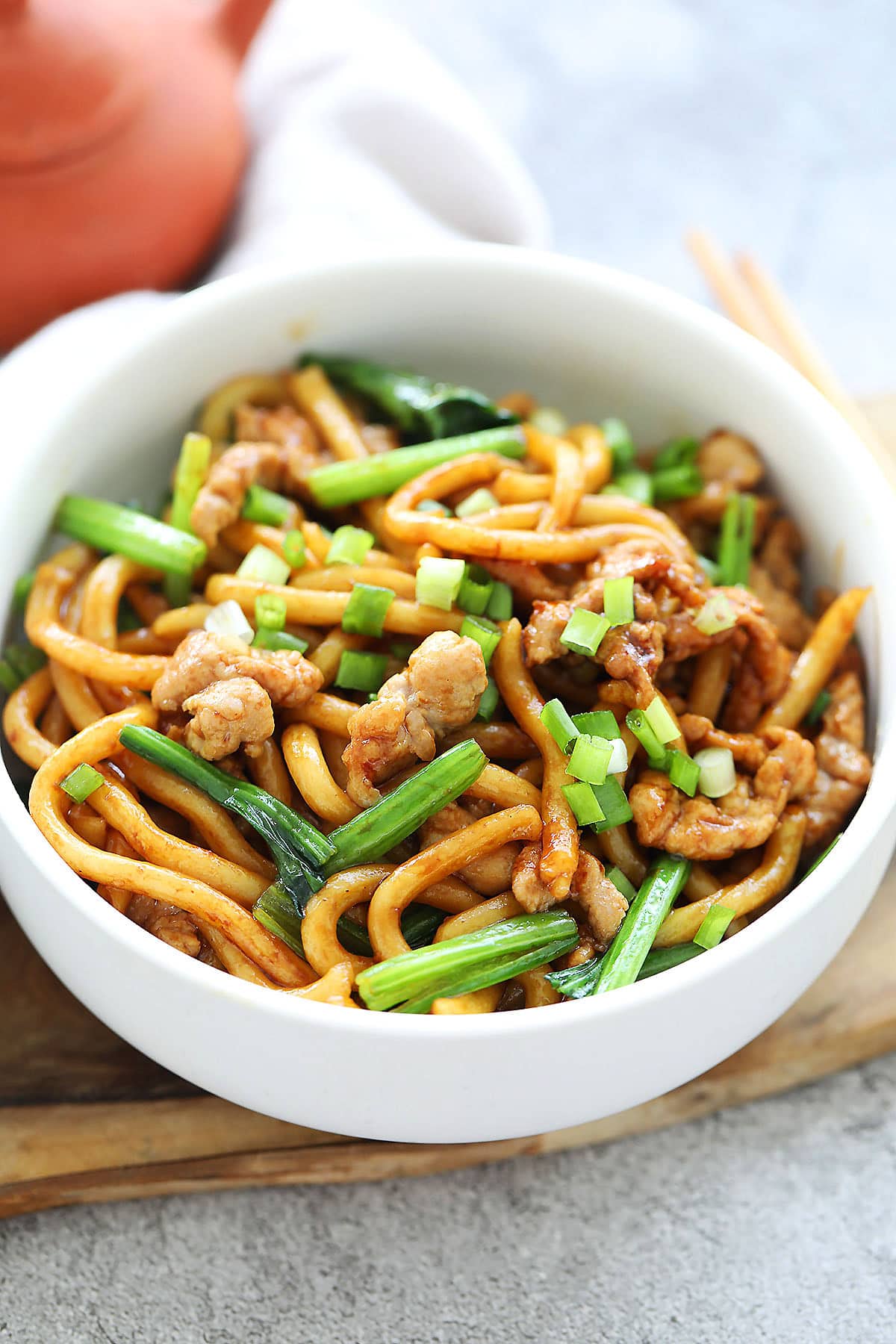
These easy Shanghai fried noodles are thick, chewy, and coated in a glossy dark soy glaze. Made with marinated pork, fresh spinach, and a simple homemade sauce, it is a 15 minute meal that tastes just like the ones from your favorite Chinese noodle shop.
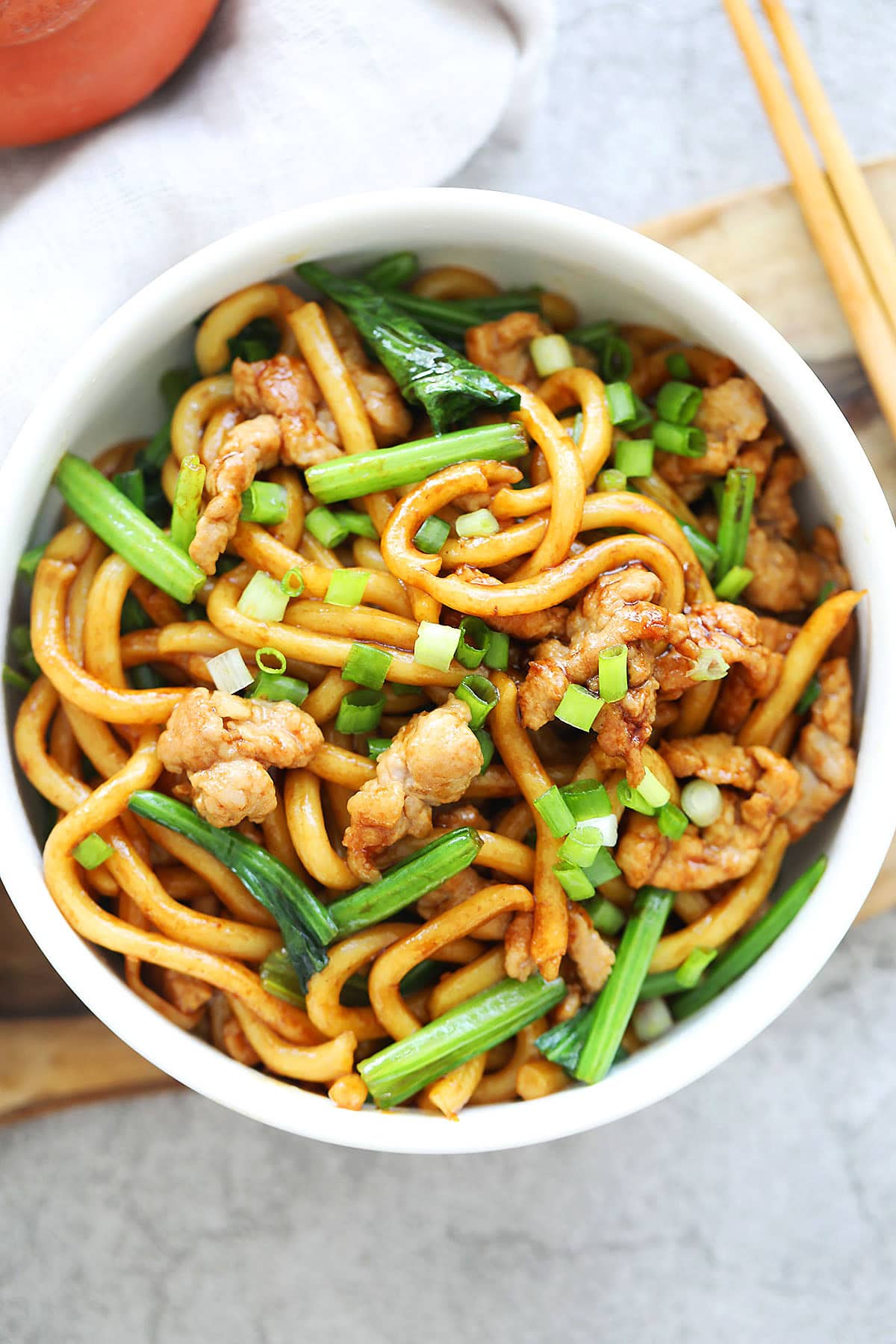
Table of Contents
Shanghai Style Noodles (Shanghai Chao Mian)
When I traveled to Shanghai, I loved wandering through the local neighborhoods and markets where you often see vendors tossing piles of shanghai style noodles on large, flat round griddles. They use long wooden chopsticks to constantly stir and flip the glistening noodles, and watching the steam rise while they caramelize is just as fascinating as the taste itself. These noodles, known as Cu Chao Mian (粗炒面), , or Shanghai Chao Mian (上海炒面) are a beloved local staple. Because the actual stir-fry happens so fast, it is the perfect easy weeknight dinner for when I want something savory and satisfying. My son absolutely loves them, and he often asks for these just as much as my Chow Mein or Beef Chow Fun Noodles.
What makes this version authentic is the specific balance of the sauce. While many Chinese stir-fries rely heavily on minced garlic, a Shanghainese friend of mine who runs a restaurant explained that traditional Shanghai style noodles typically go without it. In Shanghai, the flavor profile is built on being bold, sweet, and salty. Local versions often lean into being a bit “greasy” to keep the noodles slippery and rich, though I have cut back on the oil in my recipe to keep the dish a bit lighter for a home-cooked meal. By focusing on the sauce and the sear, you get a deeply satisfying 15 minute meal that hits that takeout craving every single time.
Shopping Guide: Choosing The Right Noodles
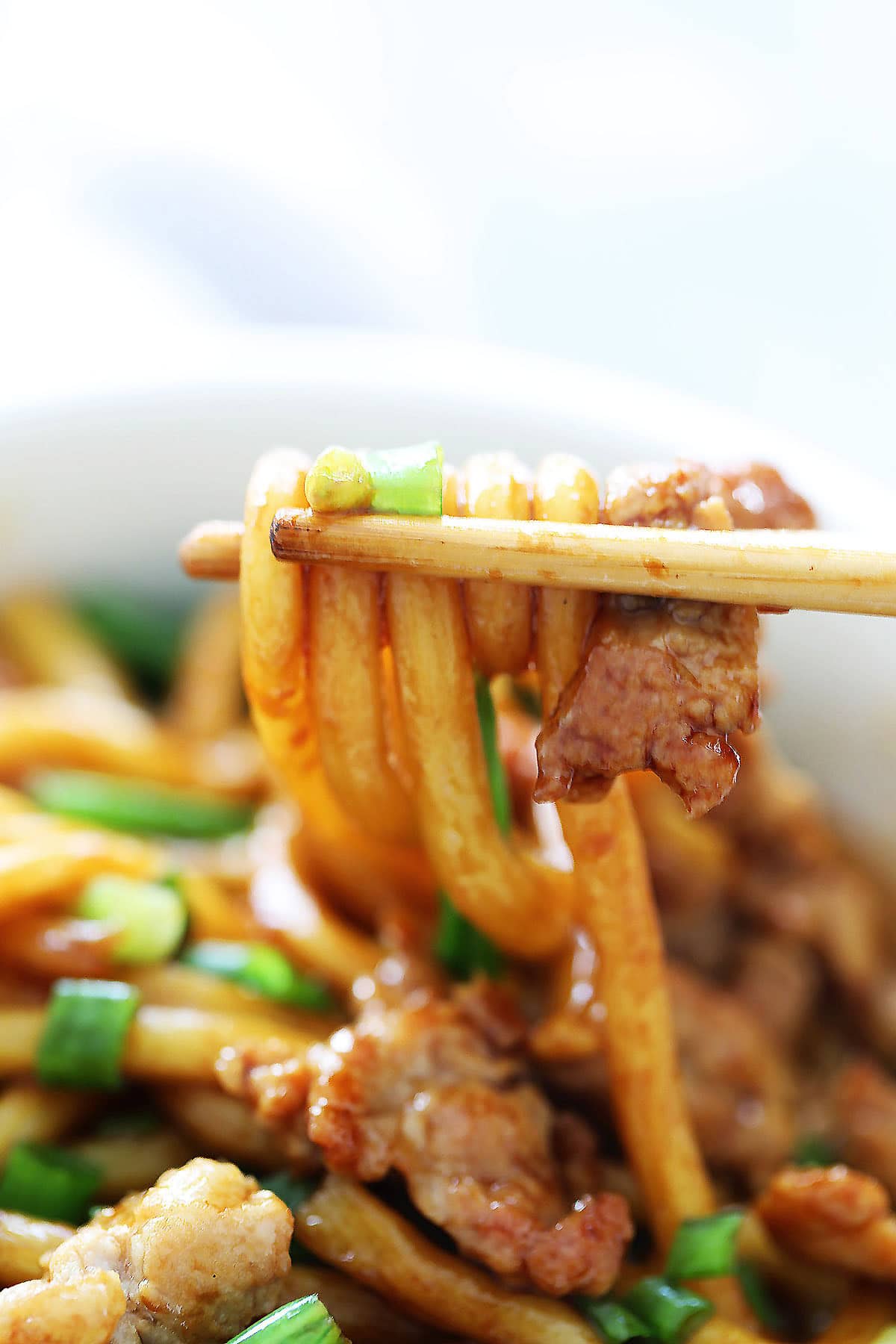
The heart of this dish is the noodle itself. For an authentic Shanghai fried noodle recipe, look for fresh white wheat noodles. You can find these at any large Asian supermarket like H-Mart, 99 Ranch, or your local Chinese grocer. In the store, these are usually labeled as “Shanghai Style Noodles” or “Thick Shanghai Plain Noodles.” In Chinese, they are known as Cu Mian (粗面), which literally means thick noodles.
Unlike the yellow egg noodles I use for Chicken Lo Mein, these are pure wheat noodles that are thick and dense. They share the same wheat base as the noodles in my Dan Dan Noodles, but they are much thicker with a signature bounce. This thickness allows the noodles to hold their shape against the high heat of the wok.
The Best Substitution: Udon
If you do not have an Asian market nearby, udon is a perfect substitute. It has a very similar thickness and mouthfeel to traditional Shanghai noodles.
- Vacuum-Sealed Udon: Cook according to the package but keep it under the recommended time so it stays al dente. It will soften further in the wok.
- Frozen Udon: The package might suggest boiling for several minutes, but you do not need to cook them that long. Simply blanch them in boiling water for about one minute until the strands separate, then drain immediately. Since frozen udon is already pre-cooked, this quick minute is all you need to loosen them up without making them soft. They will finish heating through as they soak up the rich, dark soy glaze in the pan.
Ingredients You’ll Need
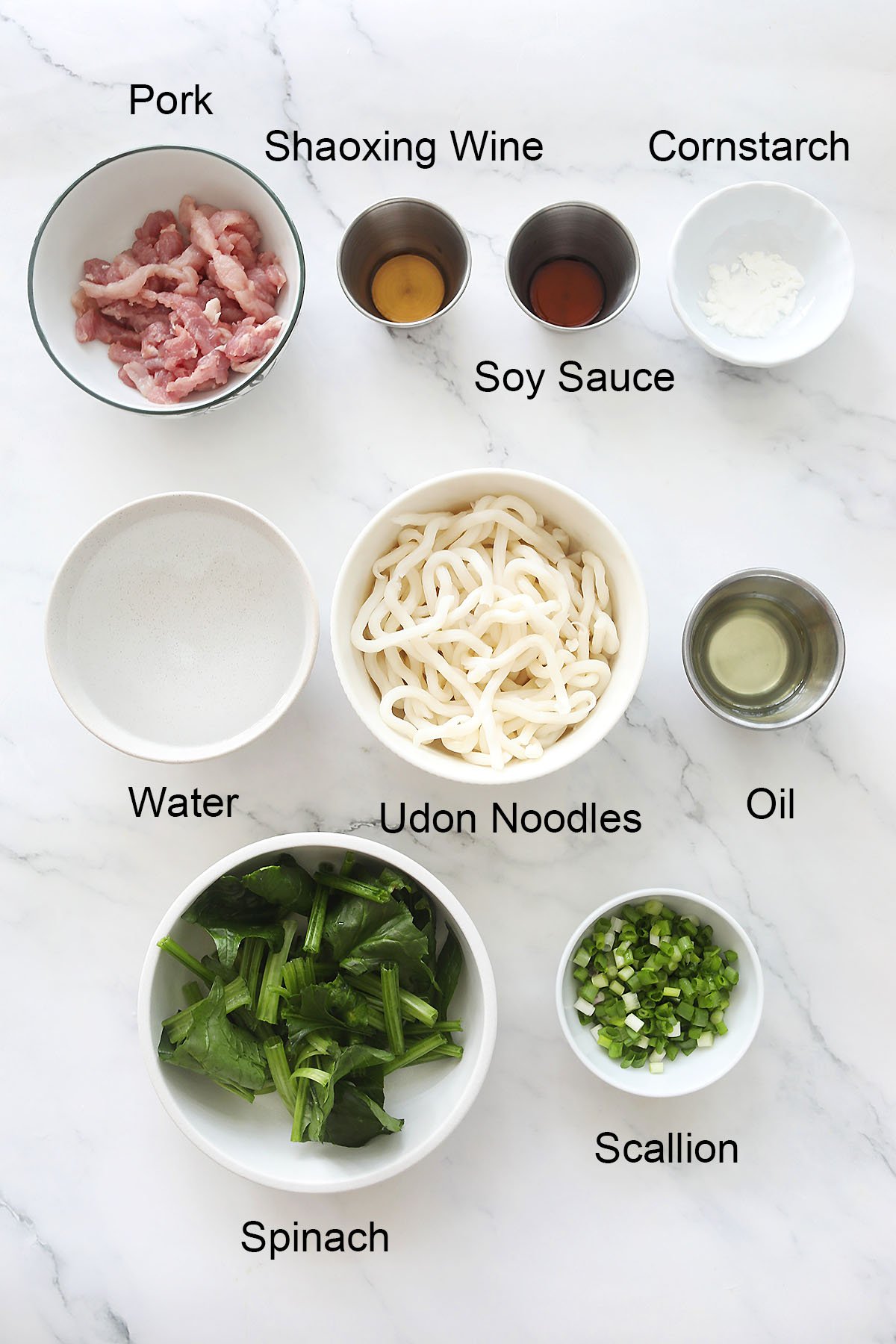
- Pork
- Shanghai noodles or udon
- Spinach
- Shaoxing wine
Seasonings
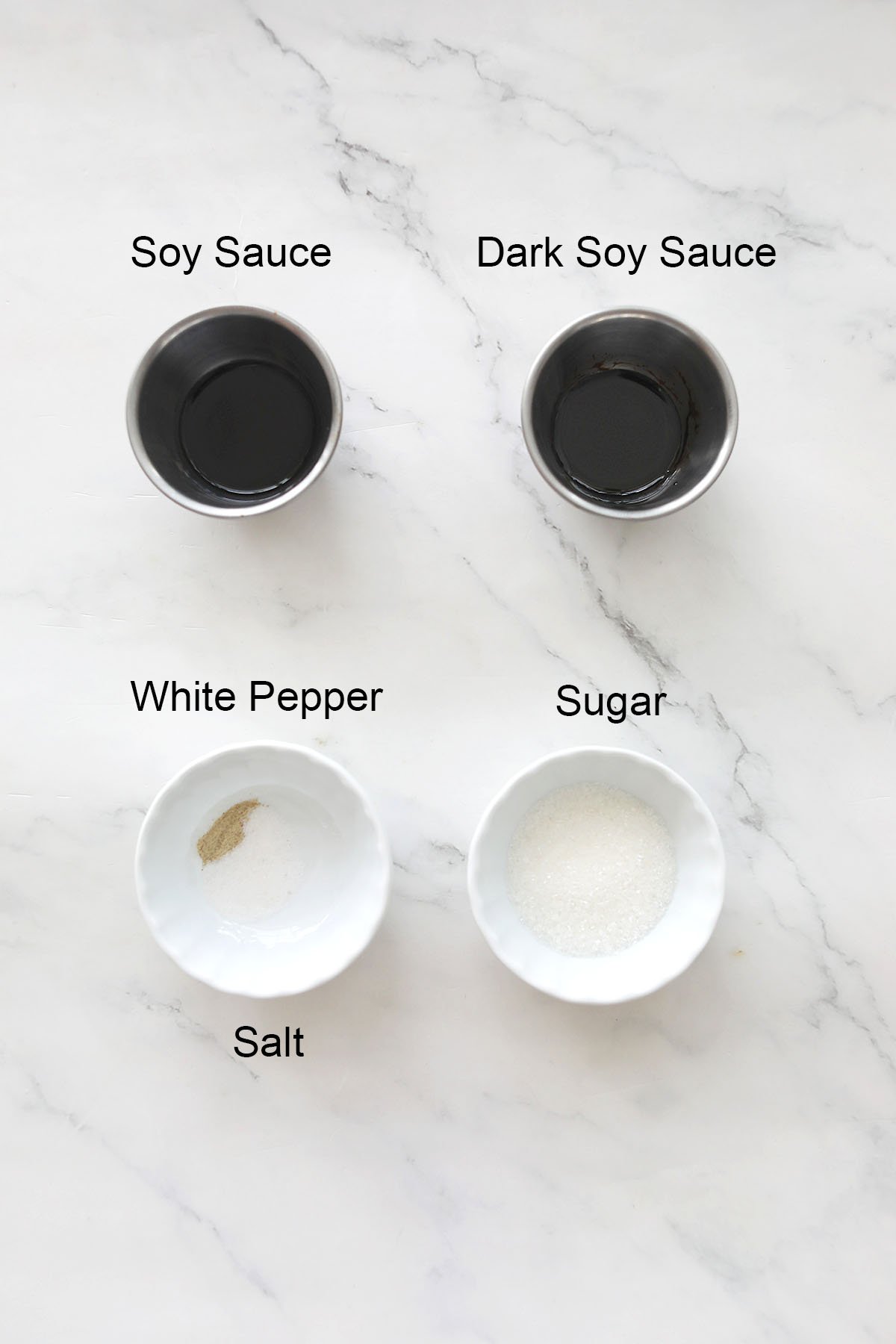
Check out the recipe card at the bottom of this post for the full measurements and details.
Pro Tip #1: Why I Use Pork Tenderloin Or Loin
I recommend using pork tenderloin or boneless pork loin because these cuts are lean and easy to slice. They stay juicy and tender even under high heat, whereas tougher cuts like pork shoulder can become chewy in a quick stir-fry.
Pro Tip #2: Why Fresh Spinach Is The Perfect Green
Fresh spinach is the perfect vegetable for this stir-fry. It wilts in seconds, and a quick rough chop means it blends seamlessly into the dish. It is a fast, low effort way to pack your bowl with greens while keeping the focus on those chewy noodles.
Pro Tip #3: Don’t Skip The Dark Soy Sauce
Dark soy sauce is essential for that deep mahogany color. It is thicker and less salty than regular soy sauce, adding a glossy finish and a hint of sweetness. I recommend brands like Lee Kum Kee or Pearl River Bridge for the best results.
Easy Substitutions And Swaps
- Chicken: Use chicken thighs or breast sliced into thin strips.
- Beef: Use flank steak or sirloin sliced thin against the grain.
- Ground Meat: Use ground pork or ground beef for no prep time.
- Vegetarian: Use tofu cubes or simply skip the meat and double the vegetables.
- Baby Bok Choy: Trim the ends and slice into halves or quarters.
- Cabbage: Shred into thin strips.
- Carrots: Peel and slice into thin matchsticks.
- Fresh Shiitake: Wipe clean with a damp paper towel, remove the woody stems, and slice the caps.
- Dried Shiitake: Soak in hot water for 20 minutes until soft. Squeeze out the water, remove the stems, and slice.
- Cremini or Brown Mushrooms: Wipe clean and slice the caps and stems together.
How To Make Shanghai Fried Noodles
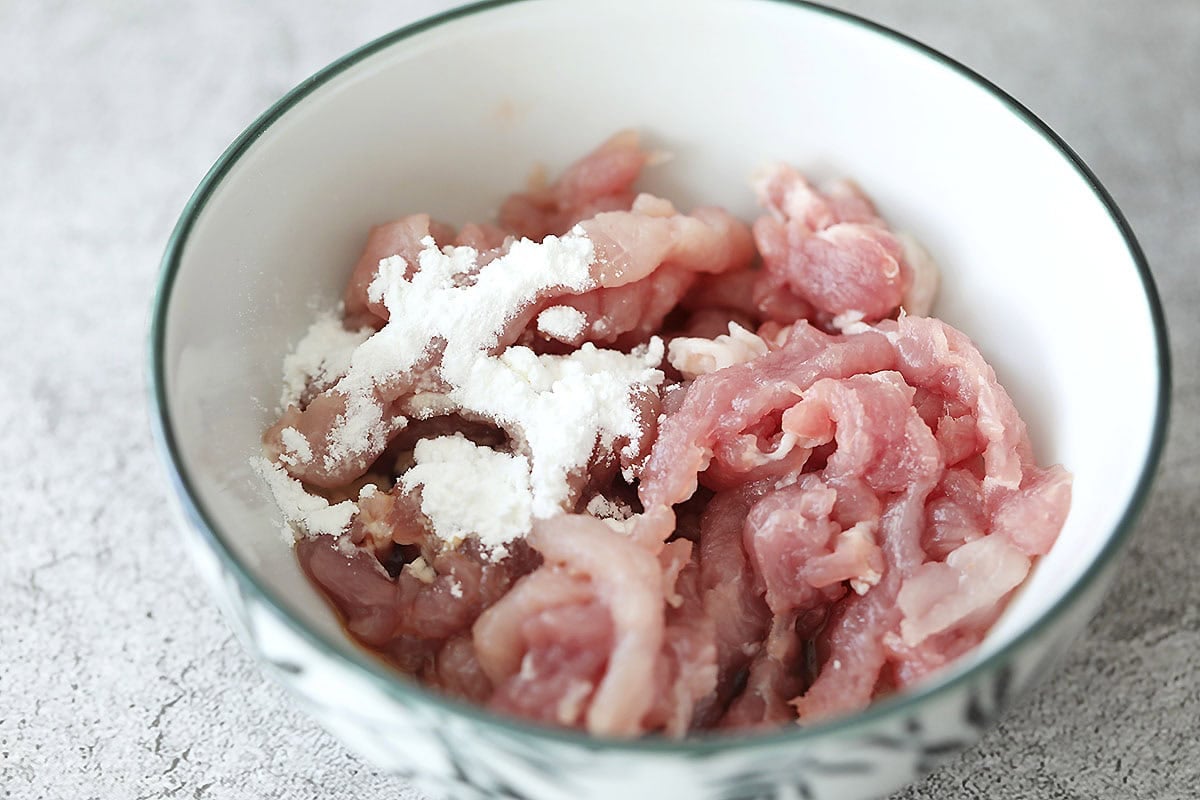
Start by marinating your pork in rice wine, soy sauce, and cornstarch for 10 minutes.
Pro Tip: This technique is called velveting. It is the secret to keeping the meat incredibly silky and juicy.
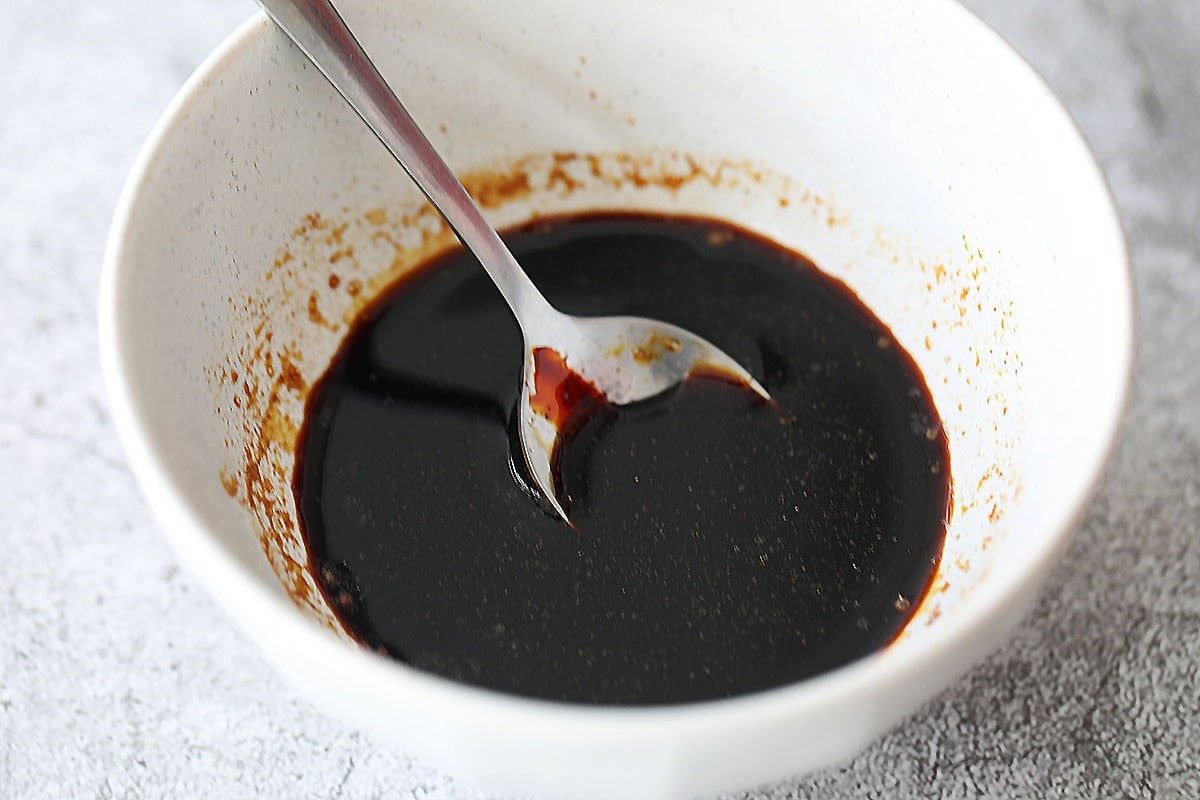
Mix your Seasonings in a bowl before you start cooking. Stir-frying moves fast, and having the sauce ready means you aren’t rushing to measure things out while the pork is searing.
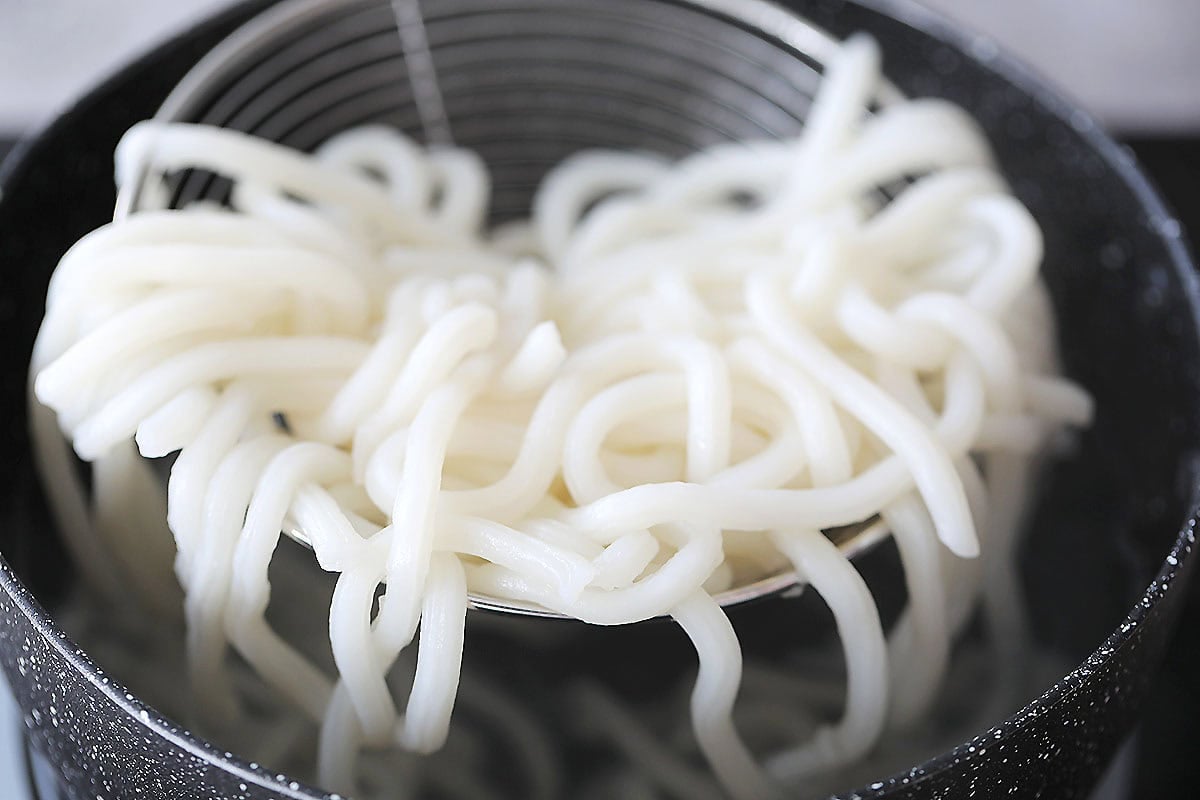
Boil your noodles for just 1 to 2 minutes until they are firm to the bite. If you are using udon, cook them for slightly less time than the package says.
Pro Tip: Keeping them a bit underdone now prevents them from turning into mush once they hit the wok.
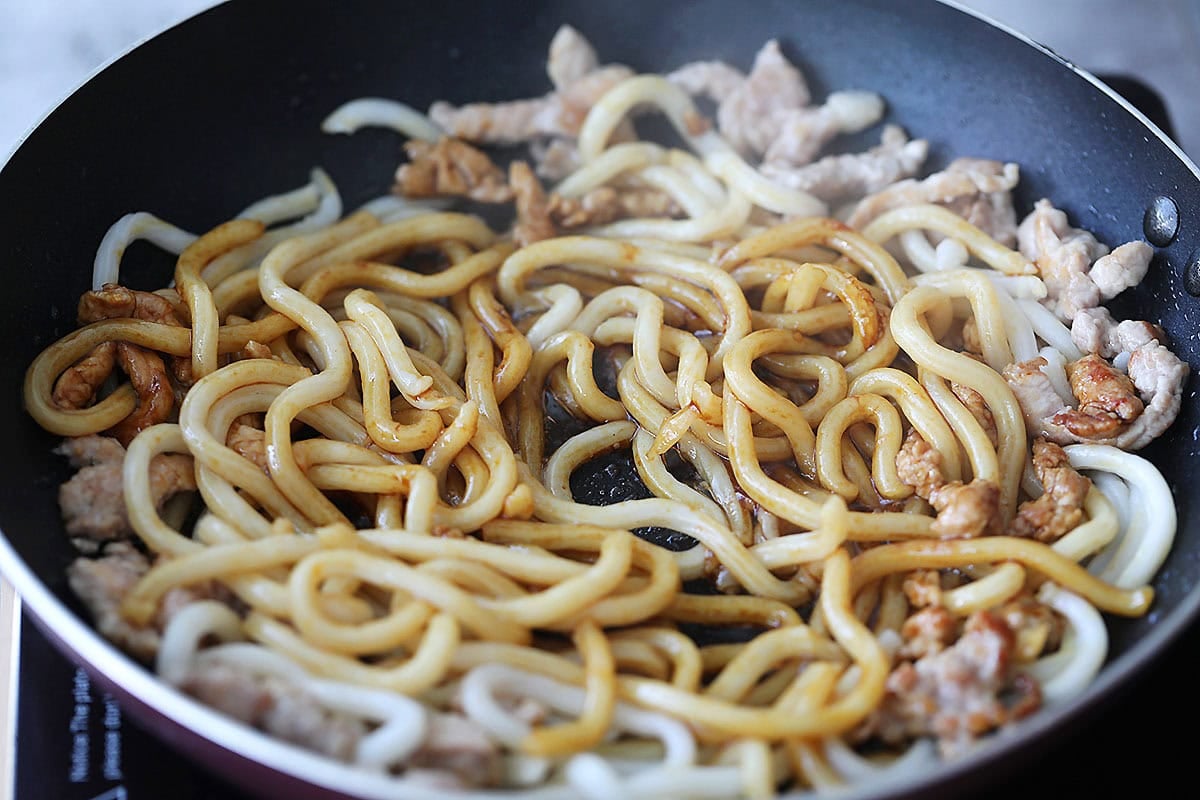
Get your oil shimmering in the wok before tossing in the pork. After a quick 30-second sear, throw in the noodles and the Seasonings. Stir everything together so every strand gets that beautiful, dark glaze.
Pro Tip: Look for the oil to ripple or “shimmer” in the pan. This means it is hot enough to sear the meat instantly and stop the noodles from sticking.
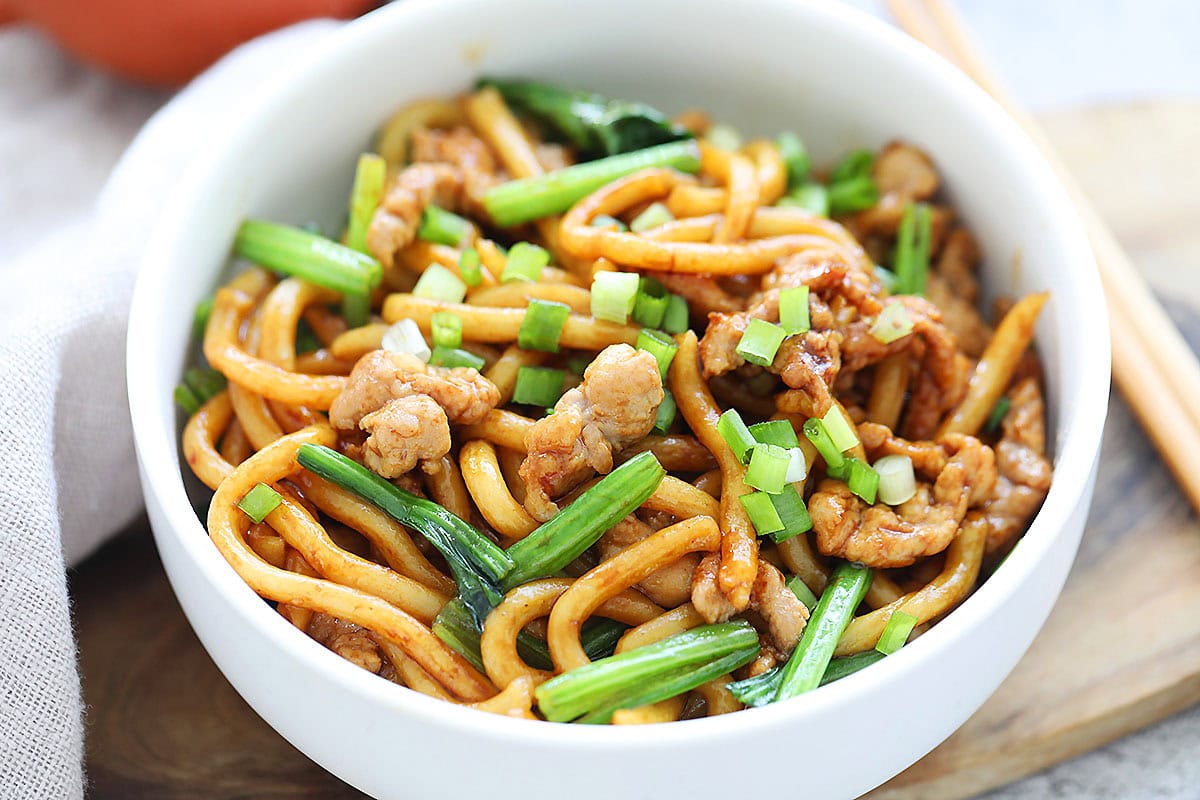
Toss in the spinach at the very end since it only needs a few seconds to wilt. Finish with the scallion and serve it immediately while it is still hot.
Frequently Asked Questions
If your noodles are sitting for a few minutes after boiling, toss them with a tiny splash of neutral oil. This creates a light coating that keeps them separated until they hit the sauce in the pan.
Spoon some chili crisp or Chili Oil over the noodles just before serving.
These noodles stay fresh in an airtight container in the fridge for up to three days. When you are ready to eat, reheat them in a pan with a splash of water or broth to loosen the sauce and bring the bouncy texture back to life.
Freezing is not recommended. Udon noodles lose their chewy texture and become mushy when thawed, and the spinach will turn watery. This dish is best enjoyed fresh or kept in the fridge for a few days.
This recipe is 827 calories per serving.
What To Serve With This Recipe
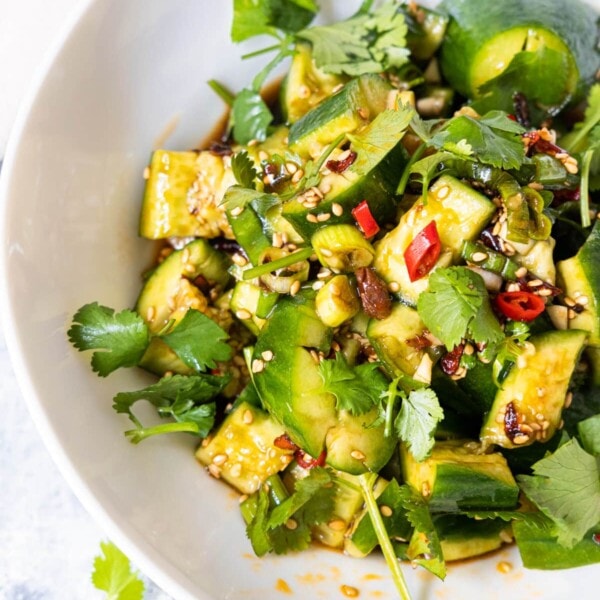
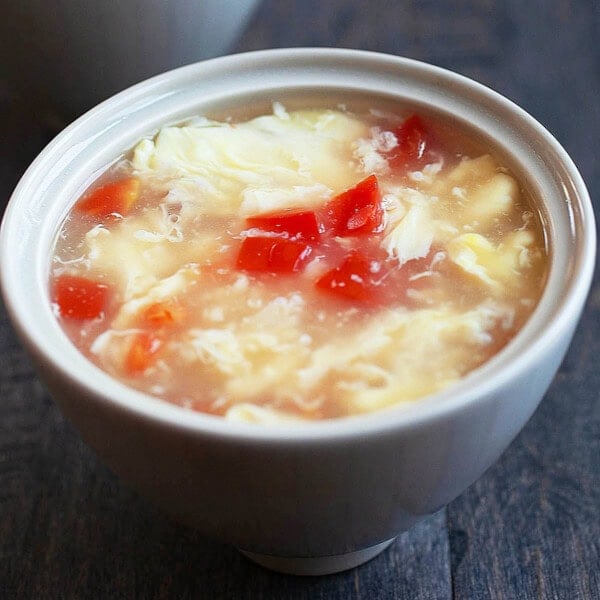
For an easy and wholesome weeknight dinner, I recommend the following recipes:
I hope you enjoy this post as much as I do. If you try my recipe, please leave a comment and consider giving it a 5-star rating. For more easy and delicious recipes, explore my Recipe Index, and stay updated by subscribing to my newsletter and following me on Facebook, Pinterest, and Instagram for new updates.
Other Easy Noodle Recipes You Might Like
Shanghai Fried Noodles
Ingredients
- 4 oz pork, cut into thin strips
- 1 teaspoon Shaoxing wine, or dry sherry
- ½ teaspoon soy sauce
- ½ teaspoon cornstarch
- water, for boiling
- 10 oz fresh Shanghai noodles , or 2 packs Udon noodles, discard the seasoning sachets
- 2 tablespoons oil
- 4 oz fresh spinach, stemmed and washed
- 1 scallion, cut into small rounds
Seasonings
- 2 tablespoons soy sauce
- 1 tablespoon dark soy sauce
- 1 tablespoon sugar
- 3 dashes white pepper
- ¼ teaspoon salt, or to taste
Instructions
- Marinate the pork with the Shaoxing wine, soy sauce, and cornstarch for 10 minutes.
- Mix all the Seasonings ingredients in a small bowl and set aside.
- Bring a pot of water to a boil and cook the noodles for 1 to 2 minutes, or until just cooked but still firm. Drain and set aside. If using udon noodles, cook them for 1 minute less than the package instructions so they stay firm.
- Heat the oil in a wok or skillet over high heat. Add the pork and stir-fry for 30 seconds. Add the noodles and Seasonings, stirring to combine well.
- Add the spinach and stir-fry until just wilted. Add the scallion, stir to combine, then dish out and serve immediately.
Video
Notes
Nutrition
Nutrition information is automatically calculated, so should only be used as an approximation.






Delicious and easy to make. I will do this again.
Hi Vera, thanks for trying my recipe and for the 5 stars! :)
Can I just use regular soy sauce and wine instead?
You can, but the noodles will look pale. Don’t substitute the dark soy sauce with regular soy sauce, as it will make the dish too salty. You can use dry sherry or a dry cooking wine.